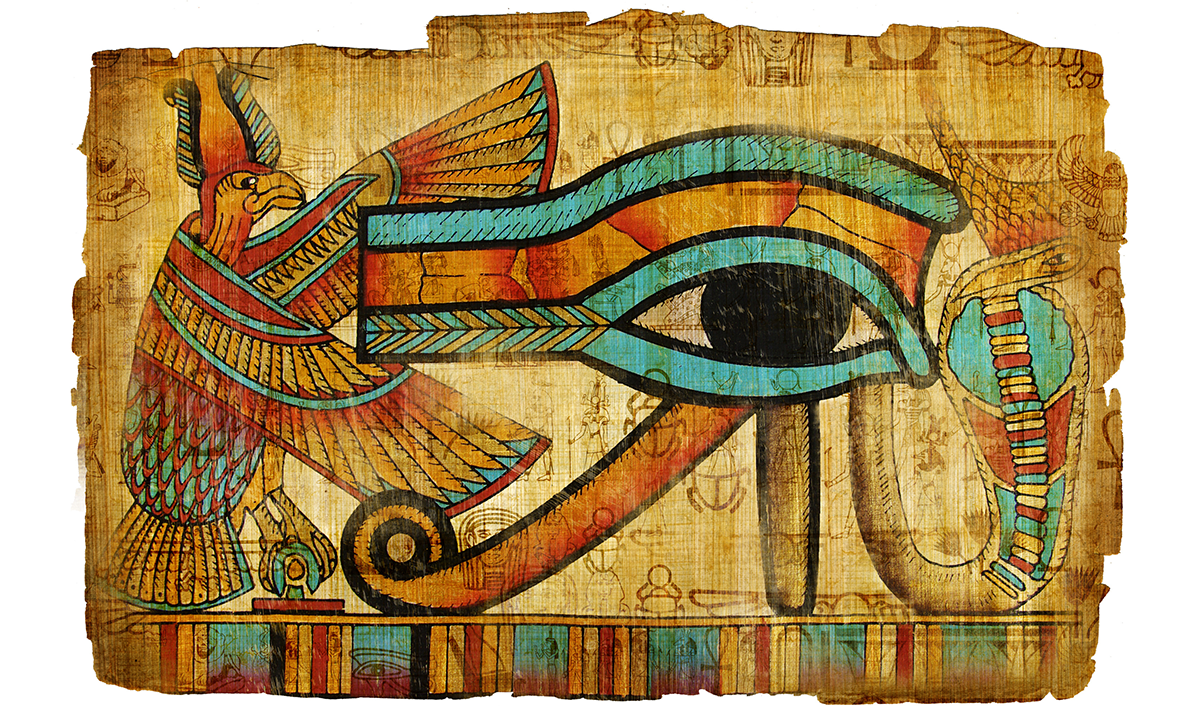
Popular depictions of Ancient Egyptians are not complete without a distinctive, thick application of dark eyeliner. This particular makeup, called kohl, was indeed popular in ancient Egypt and in what was then called Nubia, modern-day Sudan. But neither the beauty product nor the characteristic glass bottles it was stored in are prevalent in archaeological finds outside of that wide region.
This made it all the more surprising when an archaeologist recently suggested that a second-century A.D. bottle excavated in York in the United Kingdom was used to hold kohl. If true, this would be the first and only documentation of an Egyptian kohl bottle making it all the way to what was then Roman Britannia, thousands of miles away from Cairo.
Read more: “Ancient Roman Glass Reveals a Hidden “Language””
According to Hilary Cool, an archeologist at independent consultancy Barbican Research Associates, the bottle—which was initially excavated in the 1980s—is unlike other Roman-British glass from the same era and has the same blue-green, thick glass as other kohl bottles found throughout Egypt. The dig site where researchers originally recovered the bottle was likely a garbage dump for a fortress inhabited by Roman legions. Cool published her analysis of the bottle in an April issue of the archeology journal Britannia.
The unprecedented presence of the bottle all the way up in Roman Britannia suggested that a legionnaire stationed near York was either an Egyptian or had spent time in Egypt, and had taken to the custom of wearing kohl. Either scenario is possible as ancient Rome had a relatively intimate connection to Egypt—it was a province of the empire and had long traded and warred with the Romans—in the second century A.D.
In addition to indicating an underappreciated cultural exchange between Rome’s far flung northern provinces and ancient Egypt, the makeup bottle shakes up the popular image of the forces defending the powerful empire. “After all, wearing eyeliner is not a habit normally associated with the Roman military,” Cool told phys.org. 
Enjoying Nautilus? Subscribe to our free newsletter.
Lead image: Freesurf / Adobe Stock