Invading others’ lands doesn’t pay. Or does it? For a population of wild chimps in Uganda, forcibly taking their neighbors’ lands seems to have paved the path to a better life.
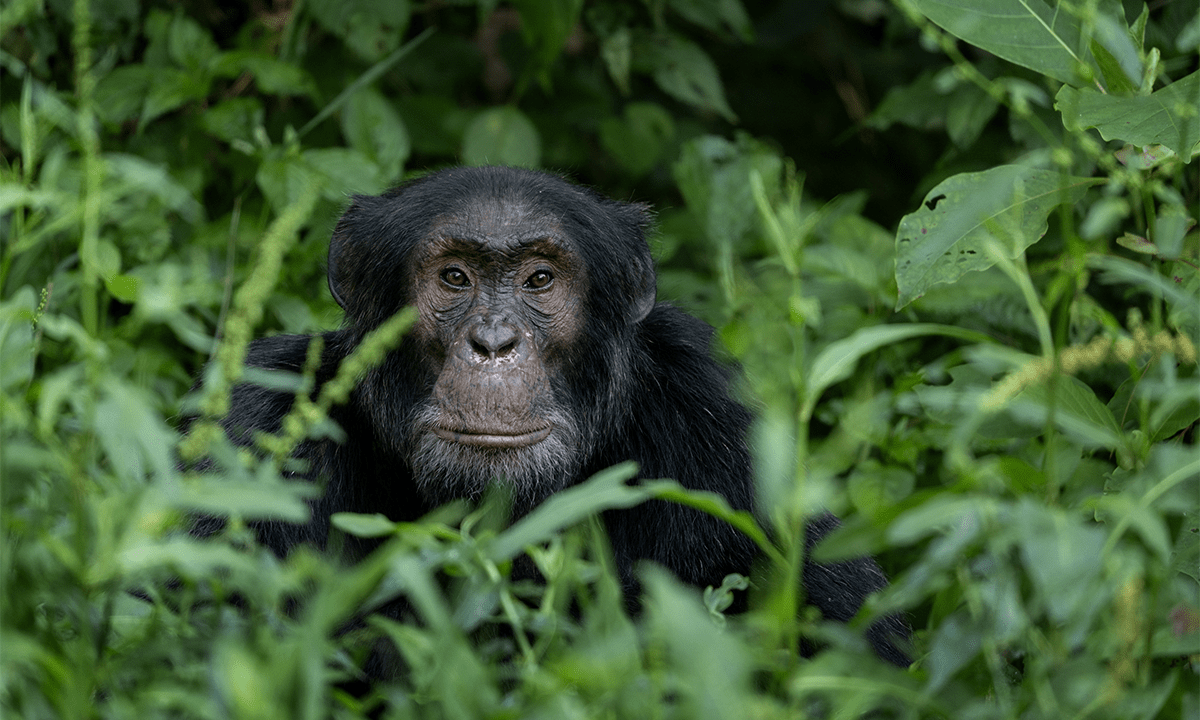
About 15 years ago, a group of chimpanzees known as the “Ngogo” in Kibale National Park, Uganda, went on a killing spree, invading neighboring territory and massacring 21 chimps from other groups. After the killings, the Ngogo chimps expanded their territory by more than 20 percent, colonizing areas where they had slaughtered their neighbors. University of Michigan ecologist John Mitani, co-author of a 2010 study of the violent episode, concluded that such “lethal intergroup aggression” was tied to territorial expansion.
Now, findings from a follow-up study in PNAS reveal that chimpanzee warfare against neighbors may have the additional benefit of boosting a group’s reproductive success. Mitani and colleagues assessed female fertility and infant mortality in the Ngogo chimpanzee group before and after the killing spree. The number of Ngogo chimp births more than doubled, from 15 offspring in the three years preceding the bloody takeover to 37 offspring in the three years after.
Read more: “Overthrowing the Patriarchy Through Ecstatic Sex”
“Chimps, ultimately, kill their neighbors to gain a reproductive advantage,” said Mitani in a statement. It was known from prior studies that better maternal nutrition in wild chimps leads to higher fertility, and adding the chunk of new territory apparently gave Ngogo females some type of resource boost. Their offsprings’ survival improved too, from a 59 percent chance of surviving beyond age 3 before the spree to a 92 percent chance after, according to Mitani’s team.
So the violent territorial expansion proved fruitful for the growth of the Ngogo chimpanzee group. But did similar gains extend to the common primate ancestor of chimpanzees and humans some 6 million to 8 million years ago? “Whether similar processes [of neighbor killing] played a role in human evolution remains an open question,” the authors wrote in the paper. The findings in the Ngogo chimps suggest that it’s at least possible that lethal land grabs gave the common ancestor of chimps and humans an evolutionary leg up.
Modern Homo sapiens, however, has written a different history, even if our species hasn’t entirely escaped cycles of war. “Humans have, thankfully, evolved an extraordinary capacity to resolve and avoid such conflicts, offering a way to escape cycles of food scarcity, territorial violence, and zero-sum competition among neighboring groups,” said Brian Wood, a University of California, Los Angeles anthropologist and co-author of the paper, in a statement. 
Enjoying Nautilus? Subscribe to our free newsletter.
Lead image: Martin Prochazkacz / Shutterstock