While Thomas Edison was at work on one of his greatest achievements, he may have accidentally produced a substance that wouldn’t be isolated for another century—and it’s currently in high demand.
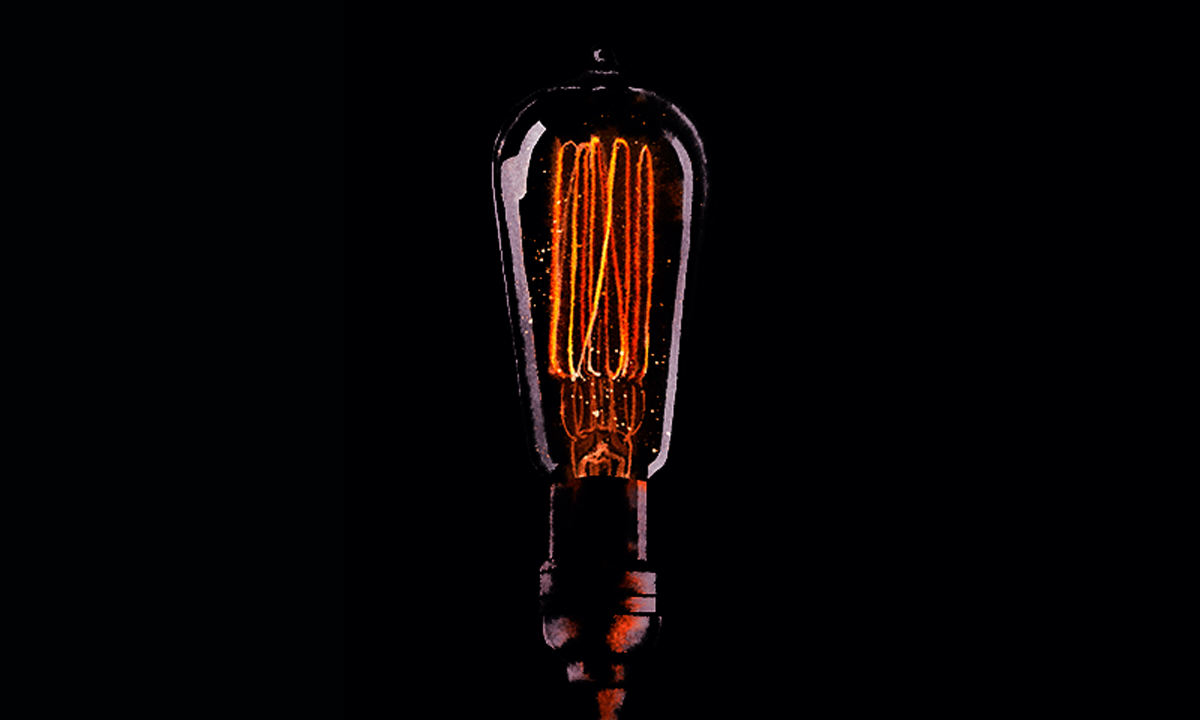
In 1879, Edison showed off the invention he’s best remembered for today: the light bulb, the world’s first practical electric incandescent lamp. It was a paradigm-shifting breakthrough, enabling people to safely illuminate their homes. In this design, electricity travels through a skinny filament in a glass vacuum bulb that grows hot enough to glow. Edison wanted to fashion the filament out of tungsten, but it wasn’t yet possible to manufacture tungsten filaments.
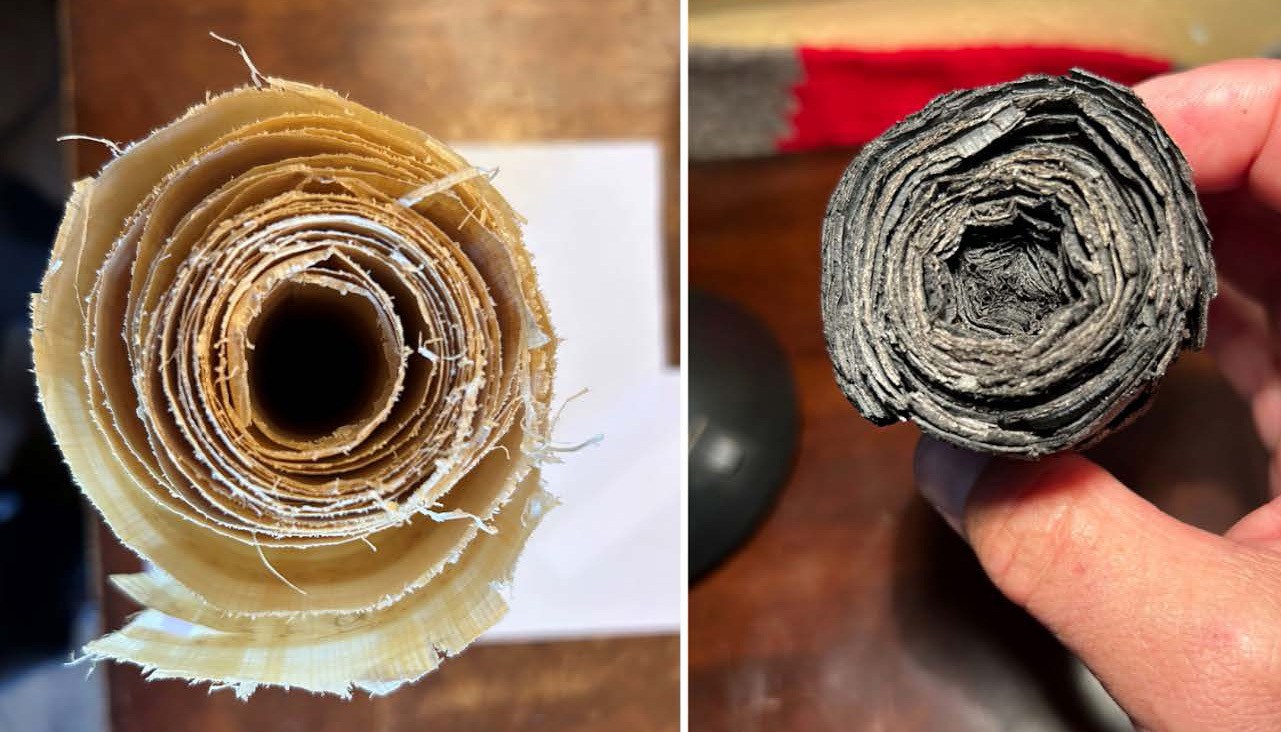
Edison ended up testing filaments made out of carbonized plant materials—these are organic substances that have been heated in the absence of air, which breaks them down and creates a residue that’s chock-full of carbon. He tried all sorts of plants, including palmetto and hemp, before landing on Japanese bamboo. This filament was able to light up for more than 1,200 hours before burning out.
“Before I got through, I tested no fewer than 6,000 vegetable growths, and ransacked the world for the most suitable filament material,” Edison explained of his groundbreaking experiments.
Read more: “Why Physicists Make Up Stories in the Dark”
Edison’s breakthrough not only made it possible to bring electricity into houses—it may have also produced graphene, a super strong and flexible substance that’s only an atom thick. It can serve as a powerful form of semiconductor, which is vital to technologies ranging from MRI machines to computer chips. Graphene could in fact play a key role in the tech of the future. Modern researchers hope to further develop it to make quick-charging fuel cells that can power electric vehicles, for example, and in systems that deliver drugs within the body. But producing graphene remains a challenge.
When he was a graduate student at Rice University, nanomaterials researcher Lucas Eddy wanted to figure out how to create graphene with easily accessible, affordable materials. One kind of graphene can be created by quickly heating up carbon-based materials to more than 3,600 degrees Fahrenheit, a technique known as flash Joule heating. He had a flash of inspiration, recalling that early light bulbs commonly incorporated carbon-based filaments. And he knew that Edison’s early light bulbs reached the ideal temperature threshold for graphene production.
Eddy tried to find Edison-style light bulbs with carbon filaments, but several of them were actually made with tungsten. “You can’t fool a chemist,” he explained in a statement.
He finally hunted down the right light bulbs at a small art store in New York City, which even had the same type of Japanese bamboo filaments.
Mimicking Edison’s experimental setup, Eddy attached the light bulb to a 110-volt direct current electricity source. He allowed it to flow for 20 seconds, as bouts of heating longer than that can form graphite, a much thicker form of carbon, instead of graphene.
By beaming lasers at the filament, Eddy and his colleagues confirmed that they had cooked up a form of graphene, a finding reported in the journal ACS Nano.
It’s hard to say whether Edison knew that his experiment produced graphene, and in his 1879 demonstration the bulb burned for over 13 hours—plenty of time for any resulting graphene to have turned into graphite.
Researchers didn’t even theorize the existence of graphene until 1947, and in 2004 scientists successfully extracted layers of graphene from graphite—a groundbreaking experiment that began with sticky tape. This innovation earned researchers Andre Geim and Konstantin Novoselov the Nobel Prize in Physics in 2010.
The recent finding begs the question: What other secrets might have emerged during historic experiments like Edison’s?
“To reproduce what Thomas Edison did, with the tools and knowledge we have now, is very exciting,” said paper co-author James Tour, a synthetic chemist and nanotechnologist at Rice University. “What questions would our scientific forefathers ask if they could join us in the lab today? What questions can we answer when we revisit their work through a modern lens?” 
Enjoying Nautilus? Subscribe to our free newsletter.
Lead image: Wondermilkycolor / Shutterstock