One question for Matt Killingsworth, a psychologist at the University of Pennsylvania and the creator of www.trackyourhappiness.org, a global research project that uses smartphones to study happiness in real-time during everyday life.
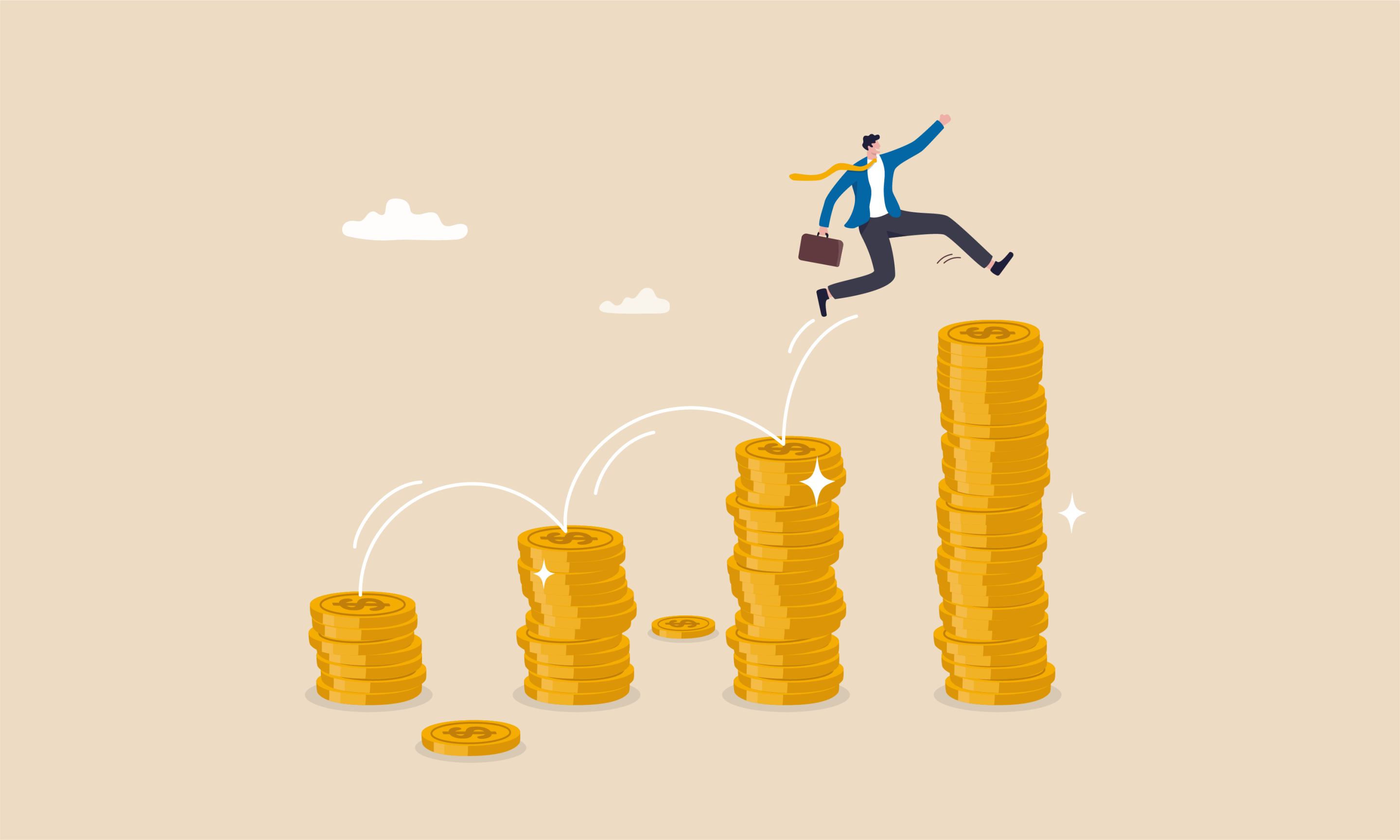
Does more money make us happier?
On average, happiness just keeps rising with income. In our new study, we have pretty good data up to around $500,000 a year. And happiness is rising incredibly systematically. So systematically, I strongly suspect it's going to keep rising for a while.
The vast majority of the positive relationship between higher incomes and greater happiness is explainable in terms of people having more control over their lives. That's like 75 percent of it. Most of it is the sense of being able to live the life you want to live. Part of it might also be the freedom to do the things that you find meaningful. Higher earners report having more meaningful lives. If there's any limit to money’s effect on happiness, it might be the point at which you can essentially do anything you want.
This elegantly resolves some big contradictory findings. A famous 2010 paper by Daniel Kahneman and Angus Deaton, with a very good dataset, found that happiness does rise with income, but then plateaus above $75,000. Then a couple years ago, I showed that no, happiness just keeps rising. It was like, What's the answer here? So I got together with Kahneman to figure out how we reconcile these two findings.
The key insight we had was the fact that, in the 2010 study, they were measuring the low end of happiness. Their measure of happiness relied on binary questions (like, “Did you feel happy a lot yesterday?”) It could tell if people were miserable or not, but couldn't necessarily detect variation above that. In my 2021 study, I used a continuous scale that was sensitive across the full range of people's happiness. Once we reinterpret that older study in a narrower way, it could be true that misery diminishes but then plateaus at the same time that happiness, on average, keeps rising. Those aren't necessarily incompatible.
Our results bore that possibility out beautifully. My data replicates exactly the same pattern. The least happy people get happier, up to around $100,000. And then they stop improving. But that plateau effect seems to be restricted just to that end of the happiness distribution. For most people, 80 to 85 percent, the relationships just keep going upward. So a 10-percent increase in income is associated with the same rise in happiness, no matter what level of income you're at. Of course that 10 percent is more dollars for someone who's richer than for someone who's poor. The changes tend to be proportional to the underlying value.
What I would want to caution people against is interpreting this as saying, "Money is really the secret, or the key, to happiness." That's not the right takeaway. It's more that it can probably make you a bit happier.
This raises the question of whether people’s happiness eventually reverts to a “hedonic setpoint.” I think this idea is a little bit overblown. It's true that if you have the most amazing day of your life, the next day is probably not going to be nearly as good because that was an anomalous event. But sometimes thinking around hedonic adaptation is taken to a much more extreme level. It would suggest that essentially nothing matters, because you just adapt to whatever you have—high income, low income, peaceful country, dangerous country, enjoyable job, miserable job. Within a short span of time, you just adjust.
That really doesn't seem to be the case. There's a very systematic gradient across lots of dimensions of life where, when you're in a better situation—whether it's income, the nature of your occupation, or the conditions in your family, the neighborhood, the country you live in, whatever it is—people are happier. 
Lead image: eamesBot / Shutterstock