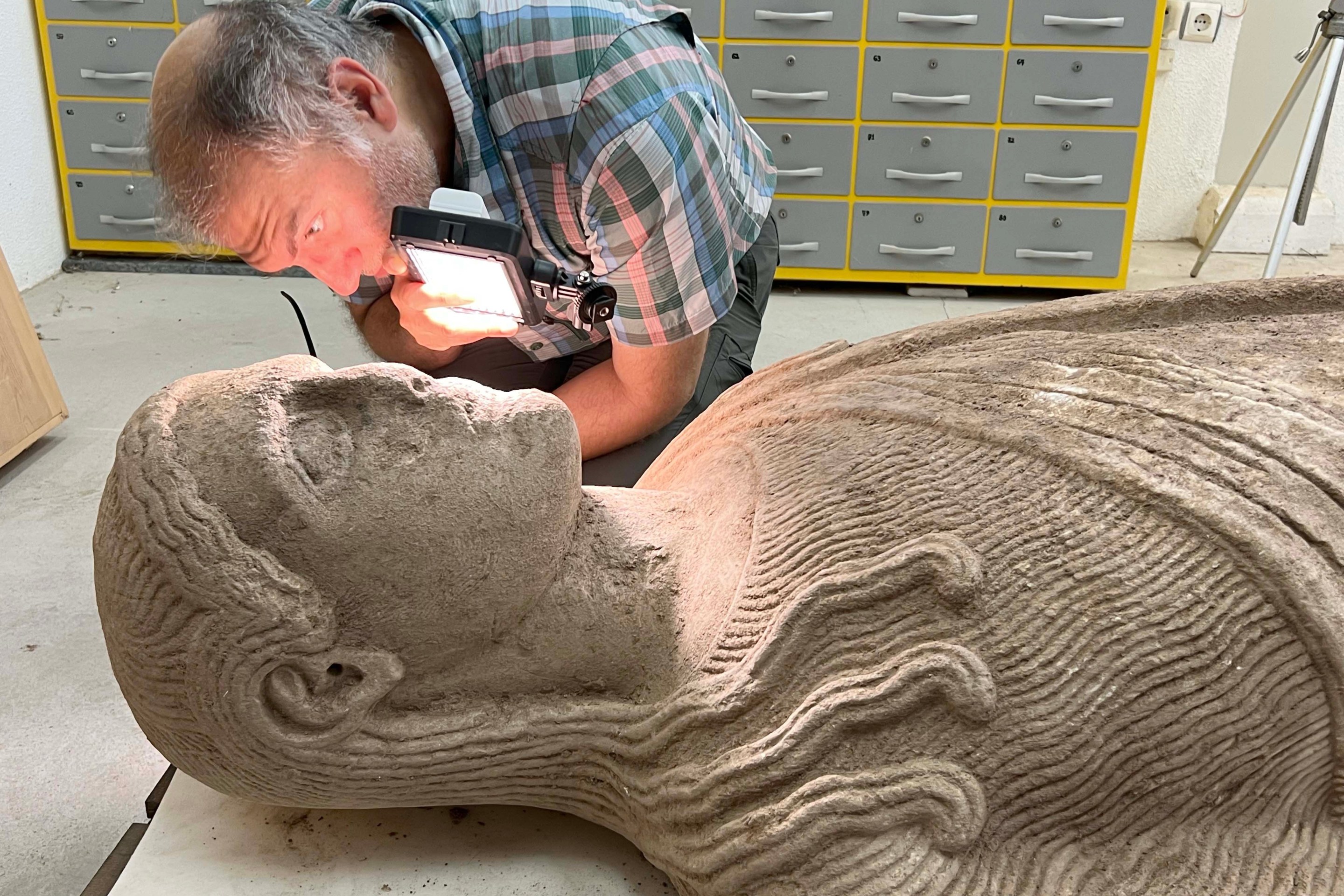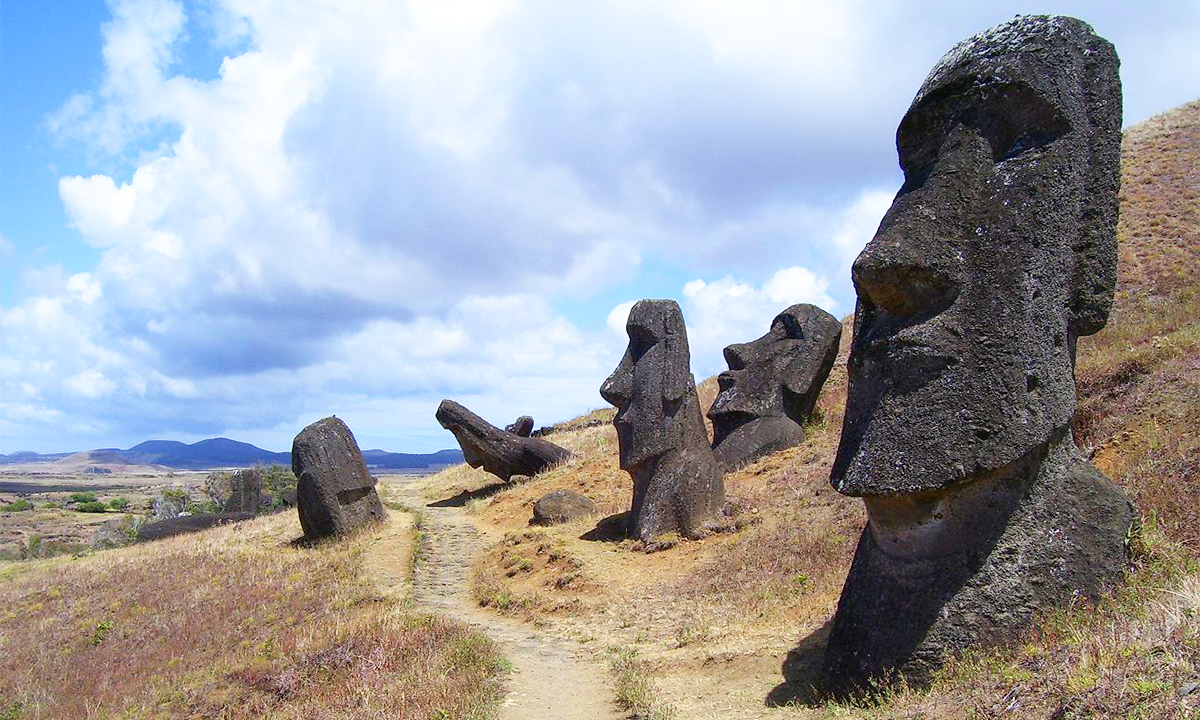
If anyone recently spotted advanced aircraft buzzing over Easter Island to surveil the mysterious moai statues, they weren’t UFOs. Instead, these drones belonged to terrestrial researchers, interested in answering a very down-to-earth question: Who was in charge of this megalithic endeavor?
Historic and archaeological investigations of the Rapa Nui people who carved the statues between 400 and 1,000 years ago suggest they lived in decentralized, close-knit family clans. However, many have assumed that their construction and transportation imply a more top-down hierarchical civilization, like the ancient Egyptians who built the pyramids. New research published in PLOS One suggests that, unlike the statues themselves, there was no big head at the top of the Rapa Nui directing the work.
Read more: “An Ancient Site with Human Skulls on Display”
Using more than 11,000 aerial images taken by drones of the site, Carl Lipo of Binghamton University and Terry Hunt of the University of Arizona constructed a detailed 3-D model of the primary quarry, Rano Raraku. This model showed a hodgepodge of moai carved from multiple sites with statues in various stages of completion. Analysis of the statues remaining in the quarry revealed a variety of carving types as well. Rather than a centralized, top-down construction effort, the authors say, it more closely matches the works of a patchwork of freelancers consistent with their decentralized living arrangements.
This new finding is bolstered by Lipo and Hunt’s earlier research, which showed that it only takes a handful of humans to move these moai, around 18 in a test case. If anything, these studies make the construction and transportation of these magnificent megaliths an even more impressive achievement. 
Enjoying Nautilus? Subscribe to our free newsletter.
Lead image: Horacio_Fernandez / Wikimedia Commons