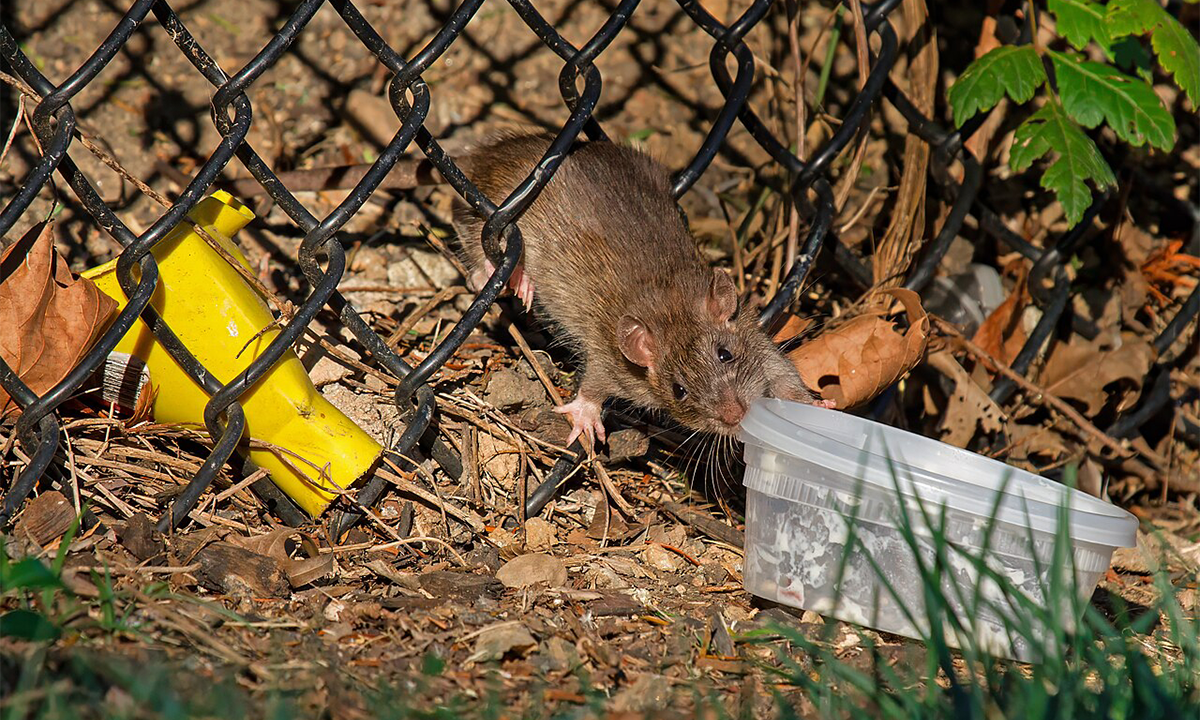
The pesky rodent species that most often invade our living spaces are the house mouse (Mus musculus domesticus) and Norway rat (Rattus norvegicus). Aside from damaging wires and insulation by chewing on them, introduced rodents may also decimate natural ecosystems. Yet, despite billions of dollars spent annually on eradication, research shows that rodents are on the rise in cities worldwide.
A new study in Pest Science Management led by a team of entomologists at Rutgers University has unearthed a big clue as to why—at least in the northeastern United States.
Postdoc Jin-Jia Yu and his coauthors sampled 147 house mice and 143 Norway rats from New York, New Jersey, Pennsylvania, and Washington, D.C. Pest control agents took tissue samples of the tails and ear tips of dead rodents and mailed them to Rutgers for laboratory DNA sequencing. DNA analysis showed that 84 percent of house mice carried at least one genetic mutation that allowed them to survive rodent poisons. Thirty-five percent of rats carried such mutations, mostly in the gene Vkorc1.
Read more: “Central Park Mice Don’t Get Out Much”
Normally, rodenticide kills mice by administering anticoagulants, such as warfarin, that cause internal bleeding, but mutations in Vkorc1 and several other genes confer resistance to the poisons. Moreover, several new gene mutations were discovered in both house mice and Norway rats that may also play a role in rodenticide resistance.
As these mutations keep rodents alive, they will naturally continue to spread in their populations through survival of the fittest. As such, the study results can inform the development of new poison compounds as well as motivate alternative strategies for rodent control.
“Rodents are more than a nuisance,” explained study author Changlu Wang. “As resistance becomes more common, it becomes even more important to use science-based management strategies that protect both public health and the environment.”
It’s a new kind of rat race—their fight for survival against our need to limit their spread. 
Enjoying Nautilus? Subscribe to our free newsletter.
Lead image: Chuck Homler / FocusOnWildlife.Me