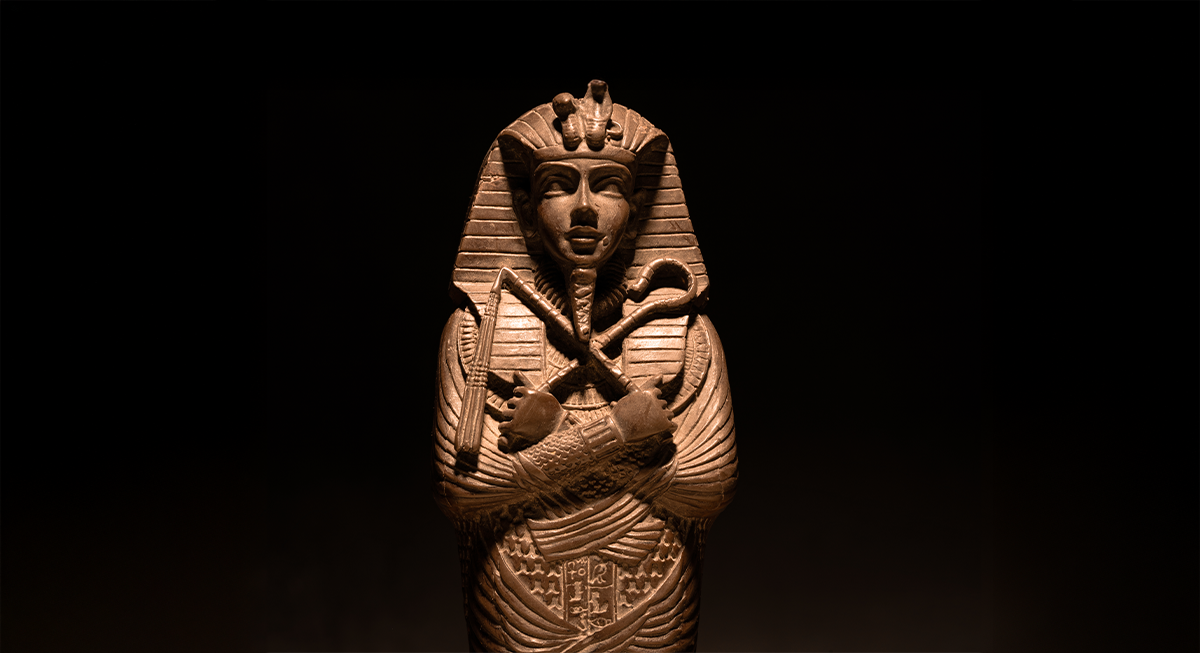
Carved from volcanic rock, the mysterious statues of Easter Island—the moai—have loomed large in imaginations for centuries. The provenance of these massive stone sentinels has long been the subject of outlandish theories, including extraterrestrial transporters and artisans from long-lost civilizations. But some archaeologists have focused on a logistical question: How did these multi-ton giants get to their final resting places from the quarry from which they were carved several kilometers away?
One school of thought holds that the statues were transported lying flat on their backs, rolled along a series of constantly repositioned logs. According to the oral traditions of the Rapa Nui people who carved them between 400 and 1,000 years ago, the statues walked there. New research published in the Journal of Archaeological Science suggests that’s exactly what happened.
Binghamton University anthropologist Carl Lipo and the University of Arizona's Terry Hunt studied more than 900 moai, focusing on the statues clustered around Easter Island’s roads. After creating high-resolution, digital 3-D models, Lipo and Hunt determined these inland road moai show some distinct characteristics that distinguish them from the coastal ahu moai.
According to Lipo and Hunt, it’s all in the head and the “feet.” The road moai have rounded, D-shaped bases that are broader than those of their coastal counterparts. They’re also missing the deep-set eyes that give the ahu moai their iconic expression. These two features working in concert may have allowed the Rapa Nui to “walk” the statues several kilometers with relatively minimal—but highly coordinated—effort, the researchers say.
According to Lipo and Hunt, two ropes attached to moai heads could be wielded by teams of movers on either side to rock the statues in a zig-zag pattern, toddling them forward, while a third rope held from behind kept them from tipping over completely. The road moai’s rounded base facilitated this rocking motion while their heavier eyeless heads kept them tilted forward to maintain momentum.
To test their walking moai hypothesis, the researchers created a 4.35-ton moai of their own. Using only 18 people divided into three teams, they successfully walked their massive test subject more than 325 feet in only 40 minutes. "Once you get it moving, it isn't hard at all—people are pulling with one arm. It conserves energy, and it moves really quickly," Lipo said in a statement. "The hard part is getting it rocking in the first place.” The speed of the iconic, walking statues may not have been enough to win a foot race, but it’s an impressive pace—and feat—for people working several millennia ago without the benefit of modern technologies. 
Enjoying Nautilus? Subscribe to our free newsletter
Lead image: Carl Lipo / Binghamton University