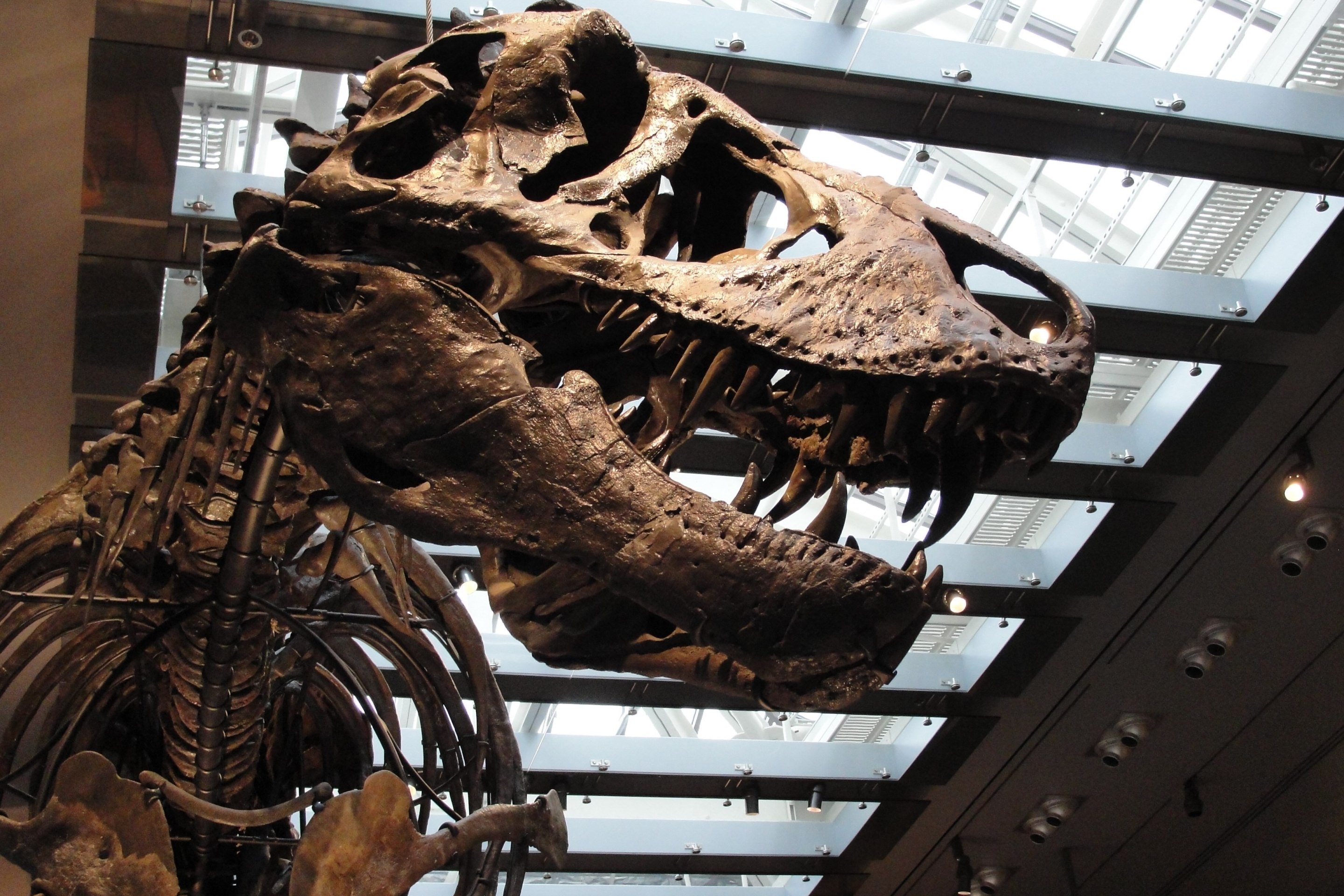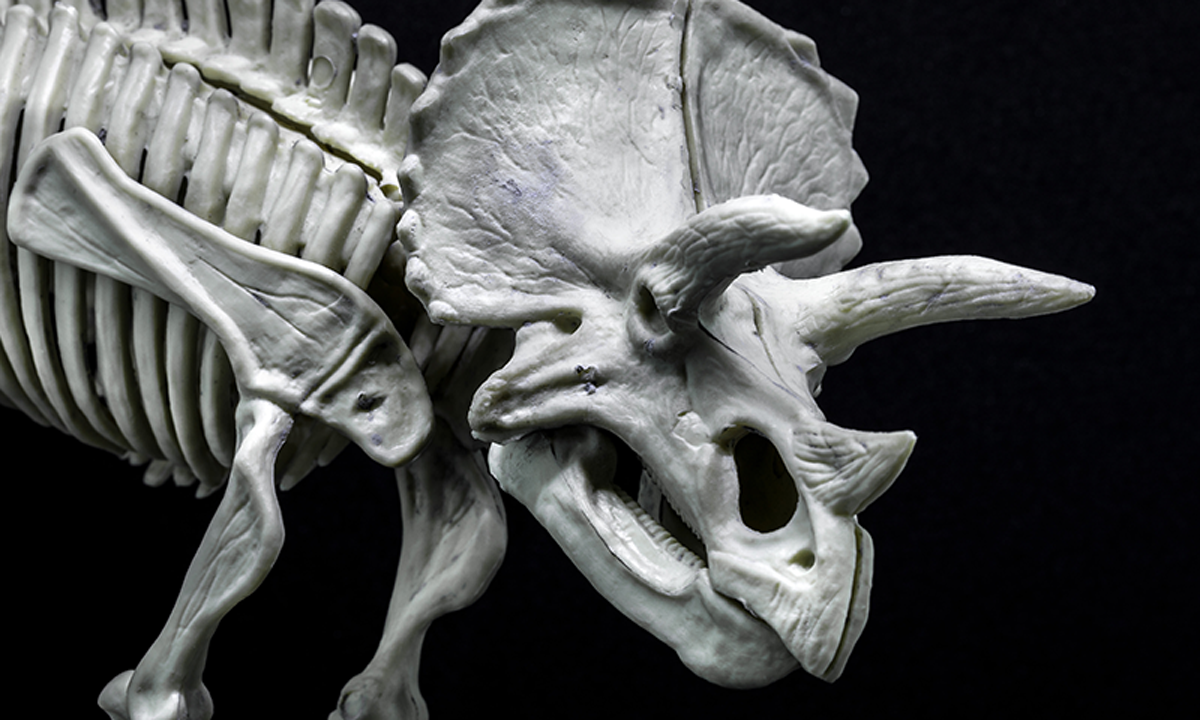
In looking at a Triceratops skull, your gaze is naturally drawn to its trio of horns. But, nestled between the head horns and the nose horn is another iconic feature: a pair of huge nasal cavities. The physiological function of such large cavities is illuminated by a new study published in The Anatomical Record.
“Triceratops in particular had a very large and unusual nose, and I couldn’t figure out how the organs fit within it,” noted first author Seishiro Tada from the University of Tokyo Museum in a press release.
Tada and colleagues from natural history museums in the United States, Canada, Japan, and China used X-ray-based CT-scans to take a close look at the internal structure of a Triceratops nose with an eye to reconstructing its soft tissues. Based on knowledge of other reptile nasal architecture, the researchers inferred the locations of nasal organs and neurovascular pathways within the nose.
Read more: “Using Science and Art to Visualize the Long-Extinct Animals of the Deep Past”
The reconstruction showed unusual architecture in Triceratops, in which the largest cranial nerve—the trigeminal nerve—that typically runs along the jawline and confers sensitivity to an animal’s nose, instead runs through the nostrils. “In most reptiles, nerves and blood vessels reach the nostrils from the jaw and the nose. But in Triceratops, the skull shape blocks the jaw route, so nerves and vessels take the nasal branch,” explained Tada.
In addition, the researchers found evidence of “respiratory turbinate,” structures that are common to birds and mammals but rare in dinosaurs. These narrow, curved bone shelves in the nose help with the exchange of oxygen and heat by providing extra surface area. Triceratops weren’t likely as warm-blooded as either birds or mammals but, nevertheless, may have benefited from respiratory turbinate for regulation of temperature and moisture in its massive nose. Their huge heads would have been slow to heat up or cool down, given the low surface area to volume ratio.
Basically, the block-headedness of Triceratops required some unique, specialized nasal adaptations. 
Enjoying Nautilus? Subscribe to our free newsletter.
Lead image: Openfinal / Shutterstock