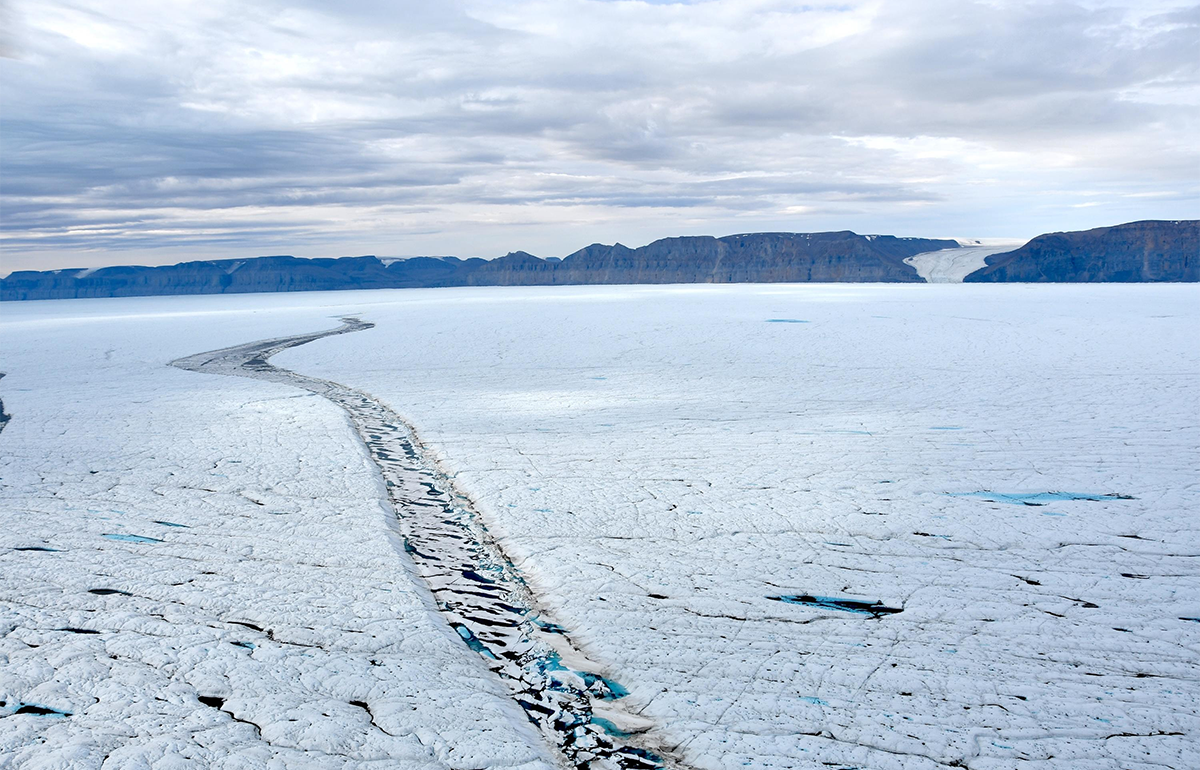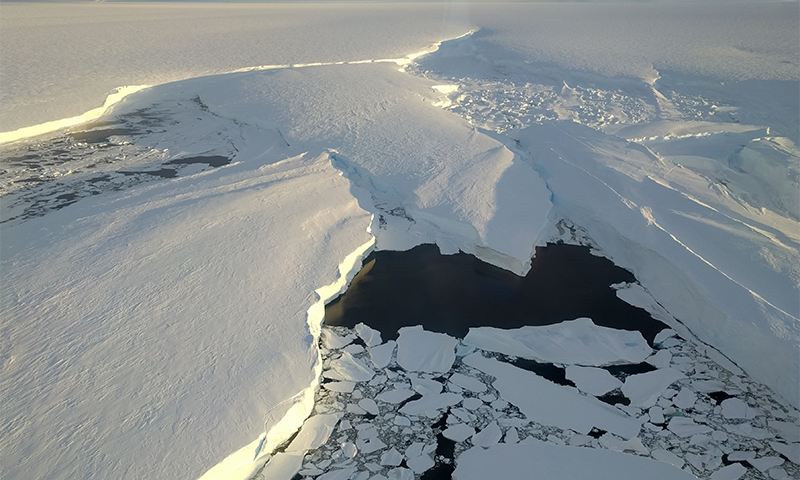
Glaciers around the globe are retreating. And they might be picking the pockets of their neighbors as they go.
Using satellite data, researchers have observed a phenomenon called “ice piracy” occurring at an unprecedented pace among glaciers at the fringes of Antarctica: One glacier stealing ice from a neighbor as it flows toward the sea.
Usually, when glaciers come into contact they merge and continue flowing together. They have also been recorded stealing ice from one another, but this is the first time such theft was observed over such a short period. It was previously thought to happen at timescales that were only observable over centuries or millennia. But the new satellite data suggests that at least one big glacier known as Kohler East has been pilfering ice from its slower-moving neighbor Kohler West at a noticeable rate over the course of fewer than 18 years, according to findings recently published in The Cryosphere.
The study’s authors, led by scientists at the University of Leeds in the United Kingdom, noted that while most glaciers in the region were accelerating toward the sea, Kohler West actually slowed down by 10 percent between 2005 and 2022. They reasoned that this glacier decelerated because Kohler East, which was among the fastest moving glaciers in the area, was stealing some of Kohler West’s ice flow. This transfer of ice to the faster moving glacier contributed to the slowdown of Kohler West, which was not thinning and stretching as much as its quicker neighbors at the boundary layer between ice and land.
Detailing such unusual ice flow dynamics—especially from a satellite’s-eye-view—can help researchers better predict future glacier behavior and its impact on sea level rise. As the climate warms, glaciers will continue their march into the sea, some of them carrying pilfered ice along the way. 
Lead photo by Pierre Dutrieux