Step aside, Cocaine Bear.
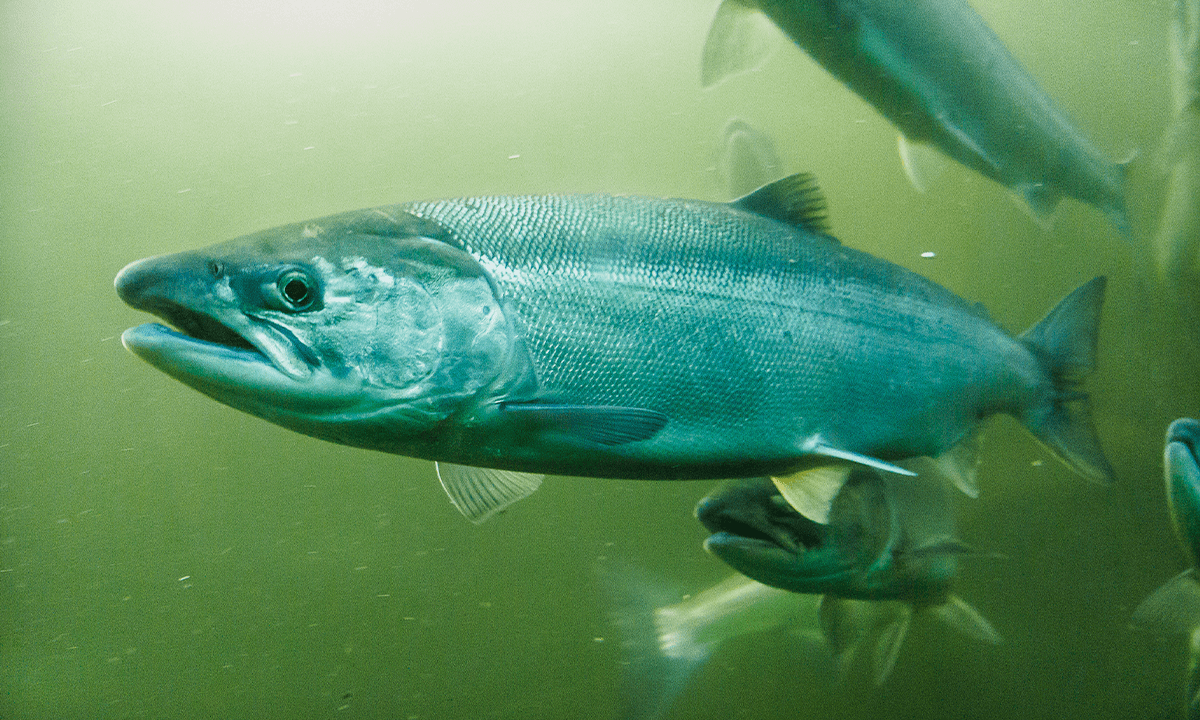
As rivers and lakes are contaminated with chemicals that wastewater treatment plants are ill-equipped to remove, cocaine is increasingly turning up in fish and other aquatic organisms, which can significantly alter their behavior. For example, a study published today demonstrates the effects of cocaine contamination on juvenile Atlantic salmon (Salmo salar).
“Where fish go determines what they eat, what eats them, and how populations are structured,” said co-author Marcus Michelangeli from Griffith University’s Australian Rivers Institute. “If pollution is changing these patterns, it has the potential to affect ecosystems in ways we are only beginning to understand.”
An international team of researchers implanted 105 hatchery-reared smolts with slow-release chemical patches and then tracked them with telemetry for eight weeks in Sweden’s Lake Vättern. The fish were divided into three sets of 35: a treatment group with cocaine in the patch; another treatment group with a cocaine metabolite (benzoylecgonine) in the patch; and a control group with no drug.
Read more: “Blissed-Out Fish on Prozac”
During the eight-week monitoring period, the smolts gradually settled in and became less active. But the fish receiving drugs were less prone to settling, continuing to swim longer distances, especially during the final two weeks of the study. So, while fish in the control group “became more resident over time,” wrote the study authors, fish on cocaine or its metabolite swam farther away from the release site.
Benzoylecgonine, the main product of cocaine metabolism in humans, had a larger effect in disrupting fish movements than straight-up cocaine. Smolts in the benzoylecgonine group swam up to 1.9 times farther per week than control group fish and dispersed up to 12.3 kilometers farther across the lake.
With more than 4 million people in the world using cocaine, per recent estimates, its entry into waterways, along with benzoylecgonine, isn’t likely to stop anytime soon. “The idea of cocaine affecting fish might seem surprising, but the reality is that wildlife is already being exposed to a wide range of human-derived drugs every day,” said Michelangeli.
Human-derived rehab might not be far behind. 
Enjoying Nautilus? Subscribe to our free newsletter.
Lead image: Jeffrey / Adobe Stock