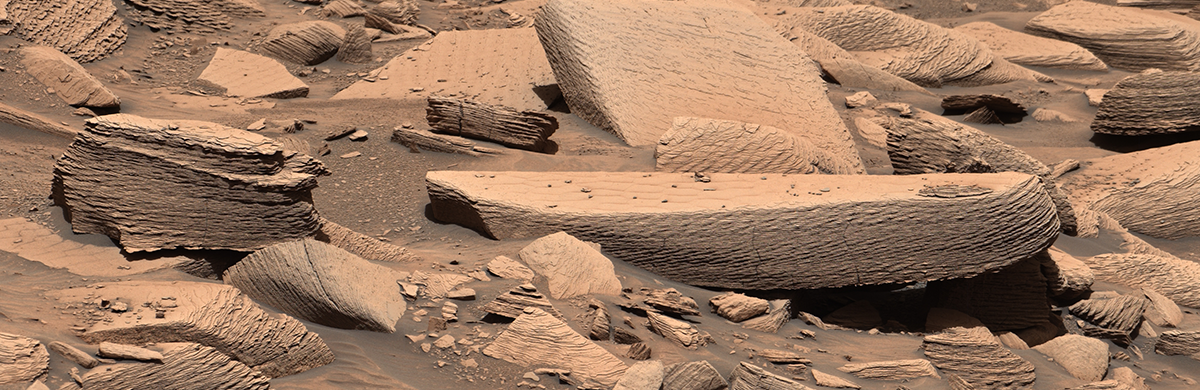
When I wrote The Martian, the general belief was that Mars had very little water, and what supply it did have would be at the poles. After the book came out, Curiosity landed and discovered enormous amounts of ice mixed in with the Martian soil. All that hard work Mark Watney did to make water was a waste of time. He could have just heated up some dirt.
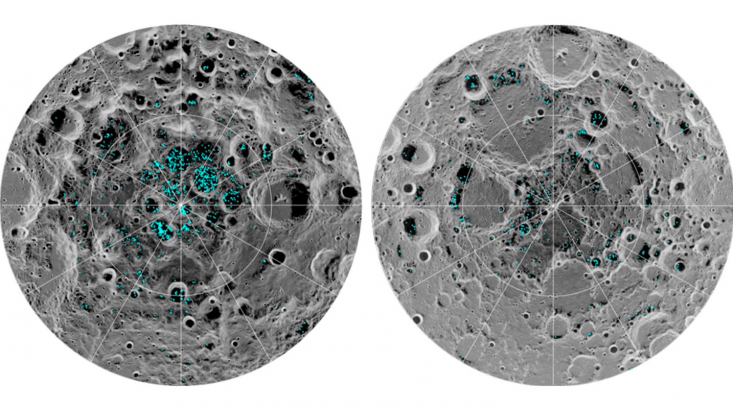
My next book, Artemis, features a city on the Moon. It released back in November of last year. And now, a recent announcement by JPL has confirmed the existence of icy patches on the lunar poles. Have I been bitten in the ass yet again by the March of Science?
Personally, I’m stoked by the discovery. I’m looking forward to seeing how it will affect space exploration in the real world. It may be possible to send automated systems to collect water, electrolyze it into hydrogen and oxygen, and manufacture rocket fuel. Having a large store of rocket fuel already outside Earth’s gravity well could mean a lot for deep space exploration.
But to the fictional citizens of Artemis, it’s largely irrelevant. And the reason is simple economics.
The drinking water in Artemis is a closed system.
Artemis takes place in a setting where the cost of putting mass into Low-Earth Orbit (LEO) has been driven down by competing space industries. And the cost of soft-landing mass on the Moon is low enough that an entire lunar vacation would run about $70,000 in today’s money. I wrote a whole article about those economics for Business Insider if you want to check it out.
Here’s the bottom line: Within the story, you can ship six kilograms of mass from Earth to Artemis for $1,000 (in today’s money). Also, one of Artemis’s main industries is aluminum smelting. Aluminum ore is plentiful on the surface, and the smelting process creates oxygen as a byproduct.
Water has two uses for future lunar colonization: Humans drink it, and it can be used to make fuel. Let’s take them one at a time.
The drinking water in Artemis is a closed system. People drink it, they urinate it, it gets purified, and it just goes round and round. So the city doesn’t actually consume water. It just moves the water around in an out of humans and treatment facilities. As the population increases, they do need to add more water, but this can be done very cheaply by importing hydrogen. For $1,000 they can bring 6 kg of hydrogen from Earth. Mix that with their ample oxygen supply and it makes 54 kg (which is 54 liters) of water. That means creating water on Artemis effectively costs $18.50 per liter.
Artemis’s main source of income is tourism. The city is next to the Apollo 11 landing site, which is right near the lunar equator. So it’s about as far it can be from either lunar pole. Transporting water from a polar facility would require a pipeline 2,700 km long (that’s 1700 miles in Freedom Units). There’s just no way the cost of building that pipeline would be economical compared to the price of importing hydrogen.
As for fuel, Artemis already manufactures rocket fuel, just not out of hydrogen and oxygen. They use aluminum and oxygen instead (the products of their aluminum smelters). Powdered aluminum and oxygen was the main propellant used by the Space Shuttle’s solid rocket boosters. It’s an extremely good fuel, and Artemis can make as much as they want.
Polar ice is an incredibly important find here in the real world. But in the fictional setting of Artemis’s economy, it’s just not worth the effort to collect.
Andy Weir is the author of The Martian and Artemis.