Ants are known for their eusociality, in which one or several queens, tended by infertile females, produce all the offspring. Fertility of the worker females is suppressed by a juvenile diet of hormones that limit ovary development, as well as by the ongoing secretion of pheromones by the queen. Now, a recent study published in Nature reveals that naked mole rat queens have a similar trick to keep their colony-mates from reproducing.
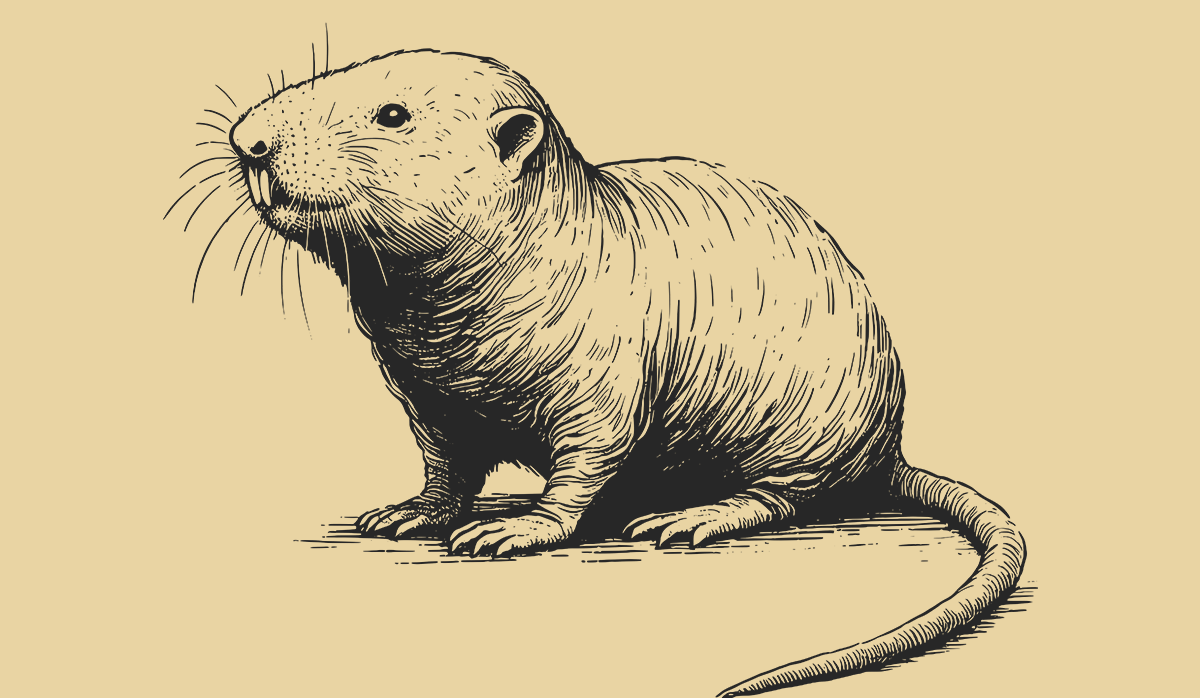
Along with one close relative, the East African naked mole rat (Heterocephalus glaber) is the only known eusocial mammal. These nearly hairless mammals live a subterranean life in colonies where only the queen reproduces. She and the several thousand offspring she produces during her lifetime are cared for by a bevy of workers, both male and female, who gather food, raise the young, and keep the colony clean.
Researchers from the Max Delbrück Center for Molecular Medicine in Germany led the new study to understand how the queen maintains her sole reproductive status. “We suspected that scent cues might play an important role, as they do in insects,” said senior study author Gary Lewin in a press release, “particularly because we had already found that naked mole rats use smell to distinguish members of their own colony from those from foreign colonies.”
Read more: “The Machiavellians of the Animal Kingdom”
The researchers used mass spectrometry to identify the airborne compounds emitted by queens and discovered a chemical enriched in queens but nearly absent in workers: isopropyl myristate. It binds with the scent neurons of naked mole rats and alters their reproductive state. Exposure to isopropyl myristate was found to dampen both progesterone (the hormone that prepares the uterus for fertilization) and prolactin (the hormone triggering milk production).
By isolating isopropyl myristate and introducing it to a mole-rat colony, the researchers established the potency of the effect. When the queen was removed from the colony, chaos erupted, with lots of infighting over reproductive opportunities. But spraying the chemical daily into the colony was enough to quell the riots. Similarly, a male and female placed together with no queen became sexually active; exposing them to the chemical daily, however, prevented the blossoming of such interest.
“The idea that a single scent can maintain peace and prevent violence may sound like science fiction,” said first author Mohammed Khallaf. “(But) in the world of naked mole-rats, it’s reality.”
So, the queen gets what she wants—babies—and the workers get to enjoy a peaceful life caring for those babies. 
Enjoying Nautilus? Subscribe to our free newsletter.
Lead image: Ratcha / Adobe Stock