You have rocks in your ears.
Deep inside the inner ear are tiny calcium carbonate crystals called otoliths that swish around in fluid-filled sacs when we move, helping our brains detect acceleration. Plants have similarly situated calcium carbonate crystals called “statoliths” in their root cells. Instead of detecting acceleration, however, the crystals tell the plants which way is down so the roots can grow in that direction. While the otoliths in our ears don’t help us hear, the statoliths in plant roots could help plants hear, according to a new study published in Scientific Reports.
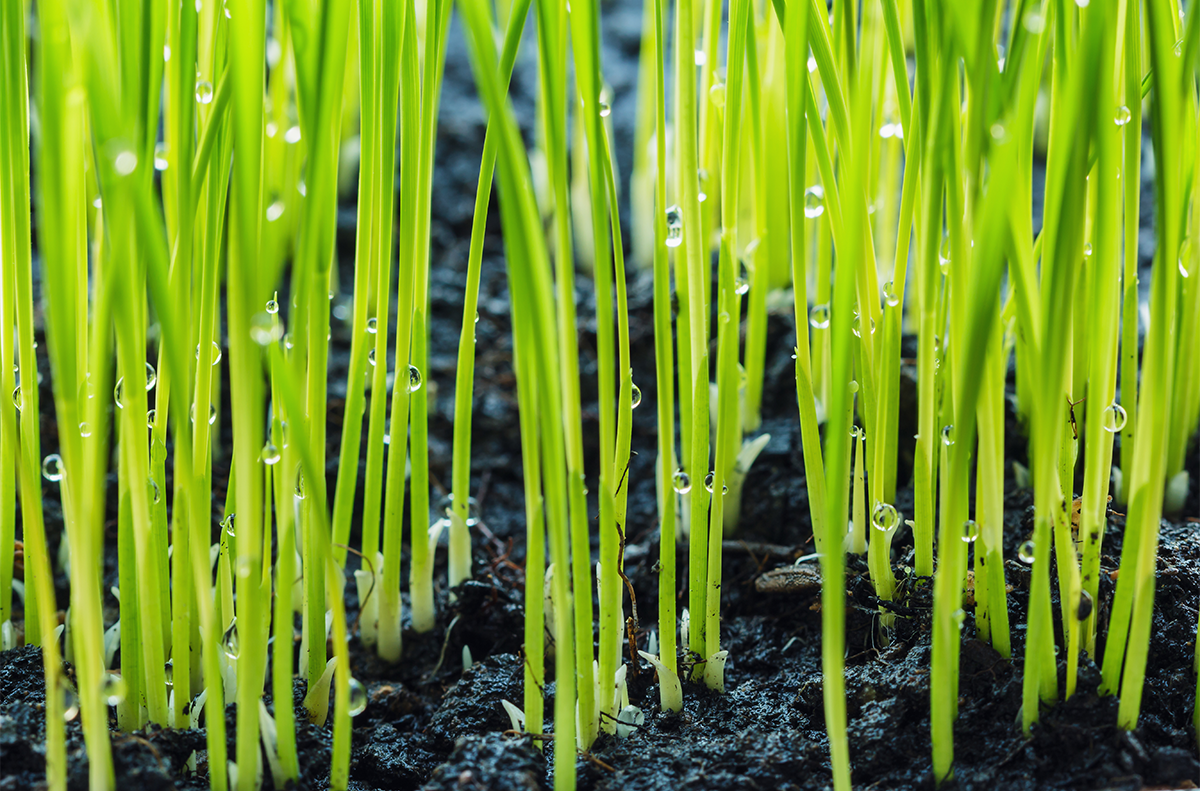
Researchers from the Massachusetts Institute of Technology wanted to find out if sound waves from natural phenomena like rain could be energetic enough to jostle the stratoliths in plants and facilitate germination. To test their theory, they used rice seeds, which typically grow in shallow water, an environment that can transmit sound waves more efficiently.
“Water is denser than air, so the same drop makes larger pressure waves underwater,” study author Nicholas Makris said in a statement. “So if you’re a seed that’s within a few centimeters of a raindrop’s impact, the kind of sound pressures that you would experience in water or in the ground are equivalent to what you’d be subject to within a few meters of a jet engine in the air.”
Read more: “Plants Feel Pain and Might Even See”
The team submerged around 8,000 rice seeds in tubs of water, exposing some sections to dripping water. To ensure they were mimicking natural conditions, they measured the sound of their “rain” with underwater microphones and found it matched field recordings. They discovered that the groups of seeds subjected to a shower of raindrops germinated 30 to 40 percent faster than those left undisturbed.
According to the researchers, seeds at optimum depths for germination can sense the sound of falling rain, which indicates a favorable environment to start putting down roots. “Brilliant research has been done around the world to reveal the mechanisms behind the ability of plants to sense gravity,” Makris said. “Our study has shown that these same mechanisms seem to be providing plant seeds a means of perceiving submergence depths in the soil or water that are beneficial to their survival by sensing the sound of rain.”
So the next time you’re listening to a pleasant spring cloudburst, remember your plants are, too. 
Enjoying Nautilus? Subscribe to our free newsletter.
Lead image: chaphot / Adobe Stock