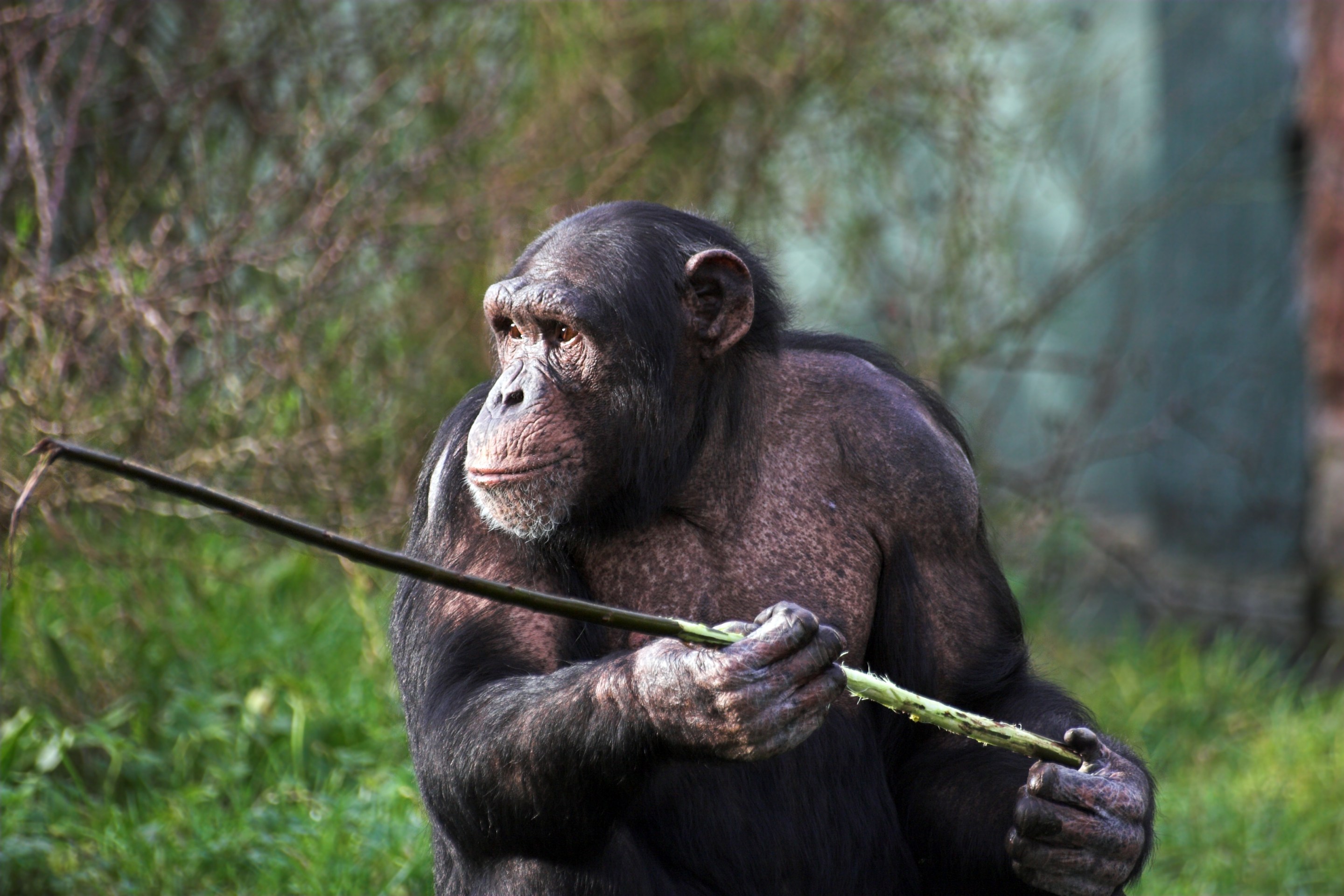
If cows could use tools, imagine the scenes that might unfold: cutting wires to escape from their pastures; extracting themselves from milking machines; or removing the twine on hay bales. Cows haven't been seen doing any of these things, of course. But a study published today in Current Biology demonstrates a cow named Veronika effectively using a deck broom as a scratching tool, satisfying the scientific definition of tool use as “the manipulation of an external object to achieve a goal via a mechanical interface.”
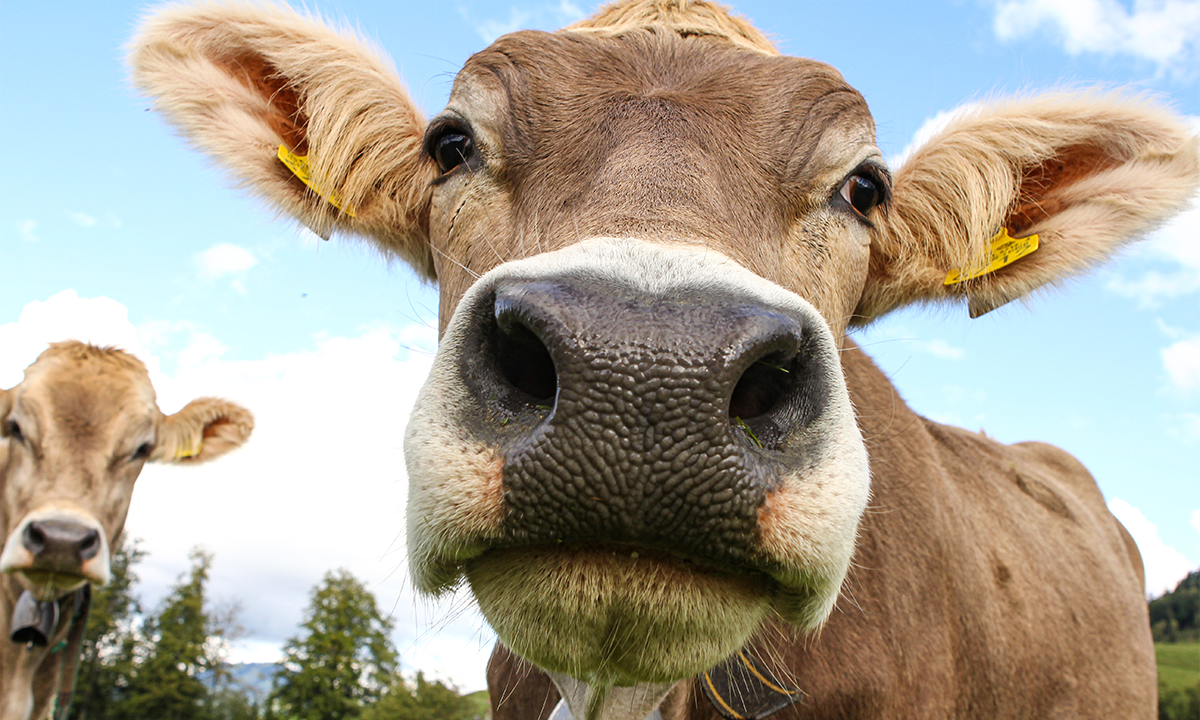
Veronika is a pet Brown Swiss cow (Bos taurus) kept as a companion by a farmer. In a series of 10 trials, researchers from the University of Veterinary Medicine Vienna presented her with a deck broom tossed on the ground in a random orientation. Each trial, they recorded which end of the brush she selected and how she used it. Veronika manipulated the broom with her mouth, positioning it under her tongue, then wedging it into the gaps between her incisors and molars for a stable grip.
Veronika adeptly used the deck brush to scratch her itches, manipulating it to target different areas. Across the randomized trials, she chose the bristled end to scratch her hindquarters but switched to the stick end for softer lower-body areas. Across repeat trials, she made consistent choices about how to wield the broom. “When I saw the footage, it was immediately clear that this was not accidental,” said study author and cognitive biologist Alice Auersperg in a statement.
Read more: “Scratch My Back and I’ll Scratch Yours”
Veronika’s tool use is considered “egocentric” tooling because it’s directed at herself. Although it’s simpler than “allocentric” tool use, wherein the tool is directed at something outside of oneself, it’s nevertheless a cognitive feat. Other than in primates, such adaptive use of a tool by a mammal has never been reported before.
The findings suggest that the abilities of cows have been underrated, since tool use offers a “stringent test of cognitive flexibility,” wrote the study authors.
Perhaps that shouldn’t surprise us, since cows have been associated with humans for more than 10,000 years as domesticated animals. The researchers point out that Veronika may have had ample time to experiment and learn this behavior during prolonged contact with a human-built environment. Her status as a companion animal to the farmer might also have provided more opportunities to observe a cow’s behavior.
“The findings highlight how assumptions about livestock intelligence may reflect gaps in observation rather than genuine cognitive limits,” said Auersperg.
What will cows, sheep, or goats be doing next? 
Lead image: Peter Hofstetter / Shutterstock