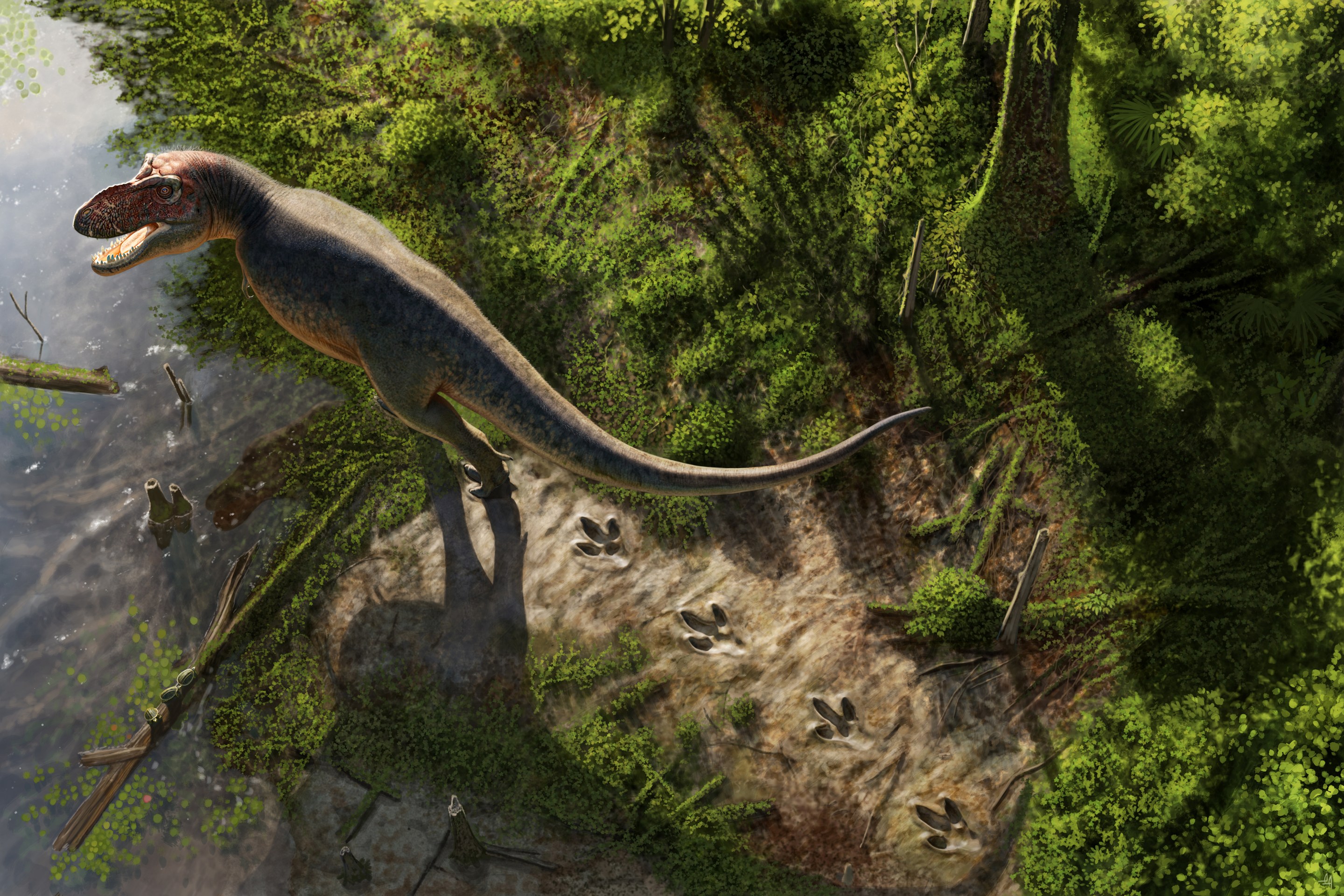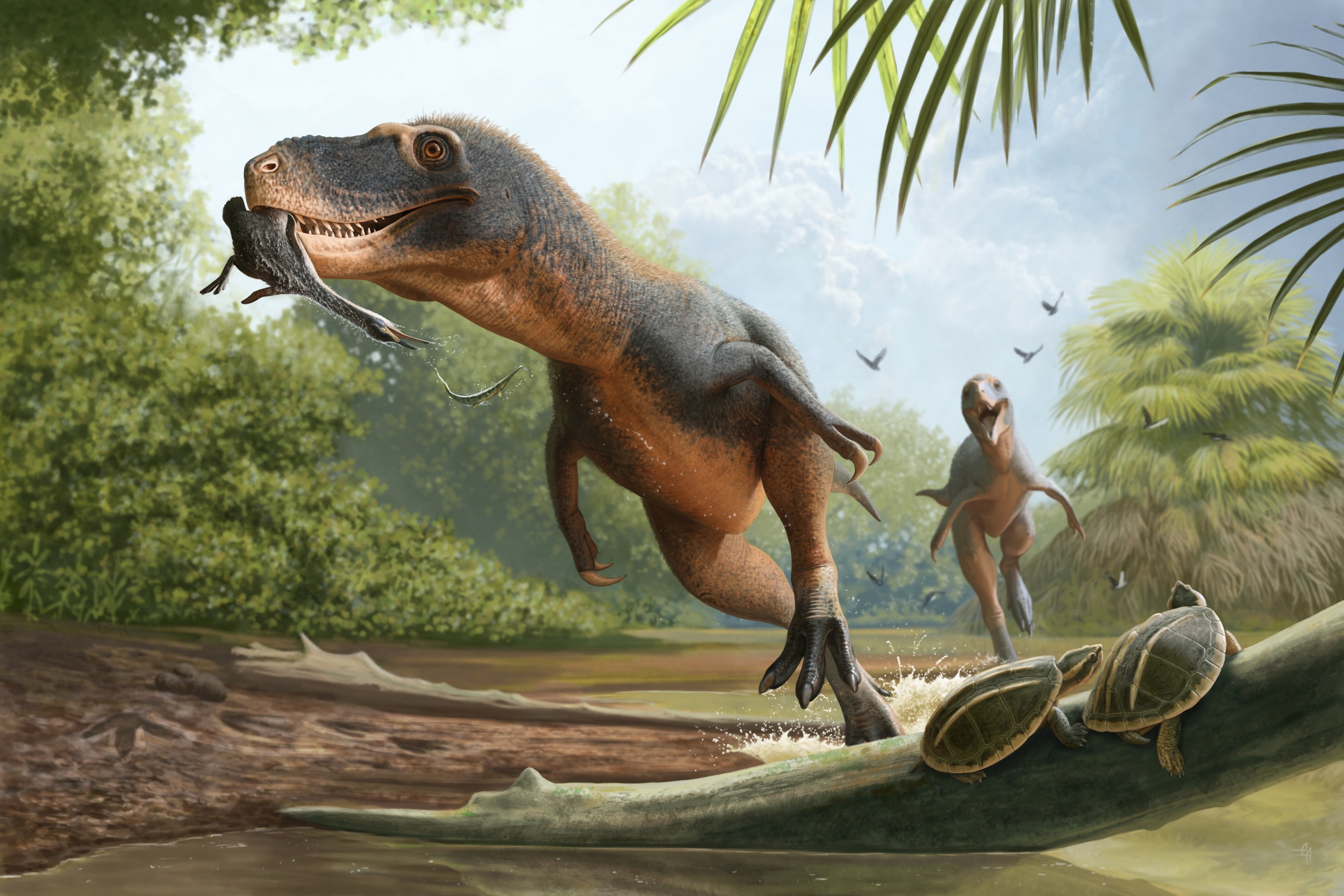
Ostriches, kiwi birds, and penguins are among the tiny sample of birds that can’t lift their wings (or flippers) and fly. Now, scientists have identified a feathered dinosaur that also seems to have lacked this skill.
This creature belongs to a lineage of feathered dinos called pennaraptorans, who came onto the scene around 160 million years ago. They’re distant ancestors of today’s birds, and the only dinosaur lineage known to live through an extinction event around 66 million years ago that killed off up to roughly three-quarters of all the world’s animals.
Scientists have long sought to understand how flight emerged in dinos, but some species make this task complicated. Scientists can’t tell whether this ability evolved once or multiple times in pennaraptorans. Plus, some of them might not have flown at all, including a taxon called Anchiornis—scientists have debated whether these ancient creatures did indeed flap through the skies.
Read more: “Unraveling the Evolution of Flight”
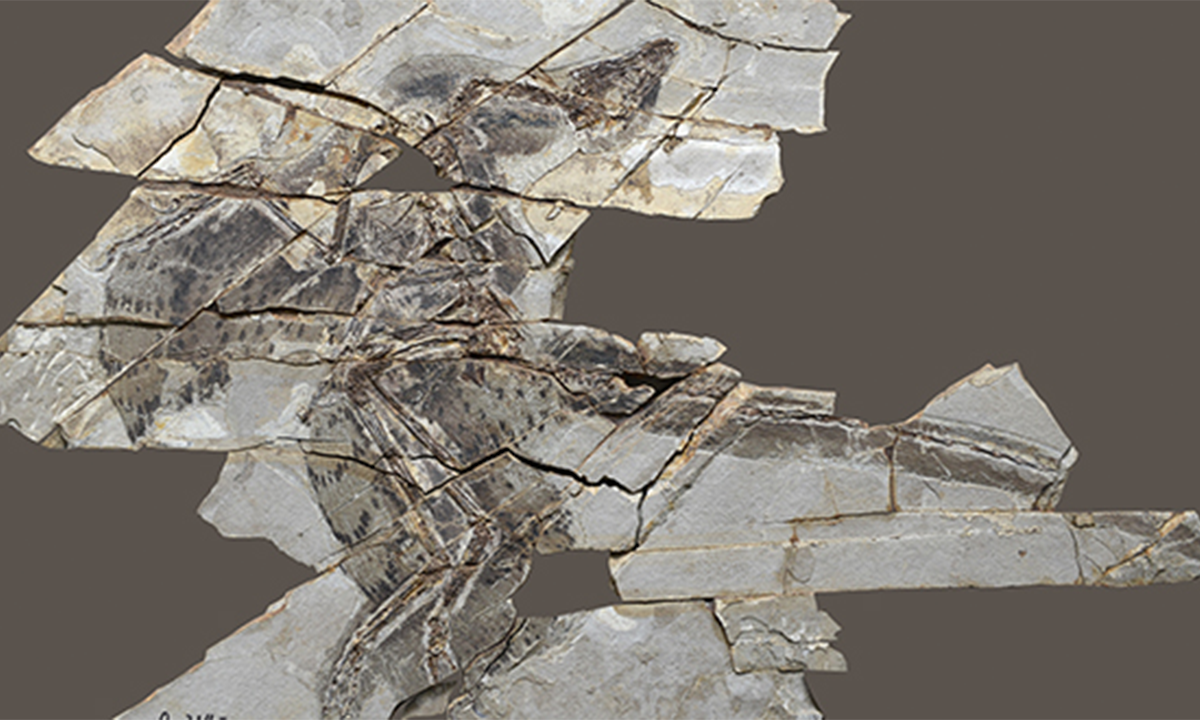
To help settle this question, an international team of scientists analyzed rare, “exceptionally preserved” fossils from the species Anchiornis huxleyi, which were discovered with feathers intact. They closely inspected nine of these specimens from what’s now eastern China to learn about how the dino molted—in this process, feathers grow for a few weeks before they’re shed and replaced.
Today, birds that depend on flight to survive “molt in an orderly, gradual process that maintains symmetry between the wings and allows them to keep flying during molting,” said lead study author Yosef Kiat, an ornithologist and feather expert at Tel Aviv University in Israel, in a statement. “In birds without flight ability, on the other hand, molting is more random and irregular.”
Kiat and his colleagues noticed that the Anchiornis fossils showed evidence of chaotic molting—the feathers had an uneven color pattern that hints at a “gradual replacement of flight feathers without a fixed or predictable sequence and often lacking symmetry between the two wings,” they noted in a paper published in Communications Biology.
These feathers might have served another purpose besides flight, but future research with biomechanical models could offer more detailed insights into these mysterious appendages and contribute to scientists’ evolving understanding of dino plumery. According to the new findings, they do suggest that some species perhaps gained and lost the ability to fly during their evolution.
“Feather molting seems like a small technical detail—but when examined in fossils, it can change everything we thought about the origins of flight,” Kiat said. “Anchiornis now joins the list of dinosaurs that were covered in feathers but not capable of flight, highlighting how complex and diverse wing evolution truly was.” 
Enjoying Nautilus? Subscribe to our free newsletter.
Lead image: From Kiat, Y., et al. Communications Biology (2025)