As a cruise ship holding nearly 150 people and serving as the scene of a deadly outbreak of hantavirus floats in limbo off the coast of Africa, global headlines keep constant tabs on the situation. The World Health Organization has confirmed that three passengers died after infection with the Andes strain of the virus, which is known to circulate in Argentina, the South American country from which the MV Hondius set sail.
Until 1993, hantavirus was only known to spread in Asia and Europe. But in May of that year a young Navajo couple who lived near the Navajo reservation outside Gallup, New Mexico, died of a mysterious respiratory illness, the cause of which investigators eventually identified as a hantavirus. It was the first time scientists had identified a hantavirus infection in the Western Hemisphere. And the clinical presentation of the viral infection was drastically different from the disease caused by viruses in the same genus (Orthohantavirus) in the Eastern Hemisphere.
The newly described hantavirus pulmonary syndrome (HPS) had killed that young couple, and more cases emerged from the Four Corners region as public health researchers tracked the outbreak. Eventually, investigators confirmed 33 cases of infection in Four Corners states (Arizona, Colorado, and New Mexico) with a hantavirus strain that virologists first named the Muerto Canyon hantavirus, then the Four Corners virus and, after objections from local residents, came to be known as the Sin Nombre virus (SNV). More than 50 percent of those infected people died from HPS.
Prior to this outbreak, hantaviruses, RNA viruses that use rodent species, such as rats and mice, as their natural reservoirs, were only known to spread in Europe and Asia. And those hantaviruses, less deadly than their New World counterparts, cause a different form of physiological insult—hantavirus hemorrhagic fever with renal syndrome (HFRS).
Read more: “Losing His Sight, a Scientist Sees an End to a Deadly Disease”
Both Old- and New-World hantaviruses infect endothelial cells and immune cells called macrophages. But Old-World hantaviruses enter cells via a complex pathway that depends on a particular structural protein called clathrin, while New World hantaviruses, such as SNV and the Andes strain, can enter cells without the assistance of clathrin. In addition to targeting the more immediately critical respiratory organ system, New World versions of the virus tend to cause the immune systems of the infected to react more rapidly and severely, causing lungs to fill with fluid as capillaries there are damaged. Old-World hantaviruses target kidneys and can cause kidney failure, which is more readily survivable with treatment.
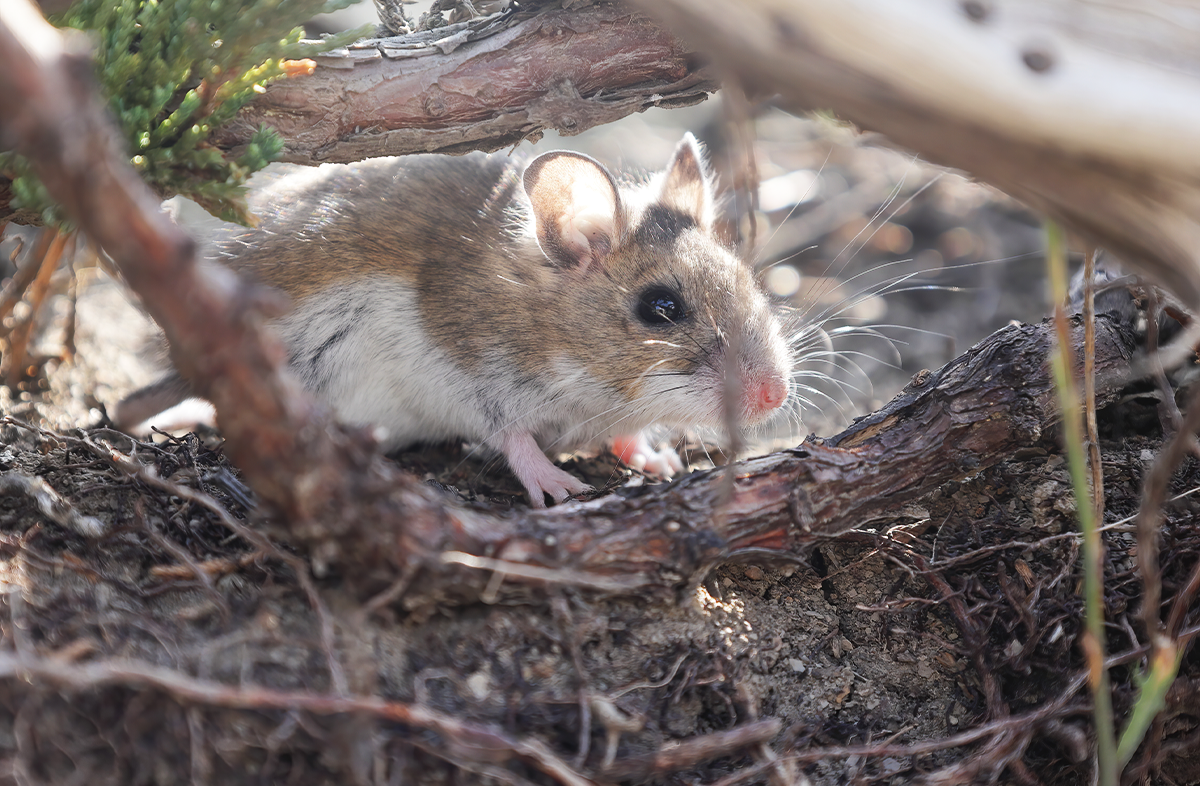
Back in 1993, scientists identified the western deer mouse as the reservoir for the virus, and biologists who had been studying the rodents in the Four Corners area noted that their populations had boomed from 1992-1993, likely a response to the 1991-1992 El Niño event, which brought warm, rainy conditions to the region and led to an abundant crop of the types of vegetation used for food and shelter by rodents.
As 1993 wore on, more cases of HPS cropped up outside the Four Corners region, in Texas, Nevada, Montana, Kansas, and elsewhere.
It turns out that hantavirus outbreaks have likely been occurring in the New World much earlier than 1993. Navajo oral tradition points to mass illness events in 1918, 1933, and 1934, and geneticists studying SNV have suggested that the disease has been affecting humans since 1959, and that the virus has occurred in deer mice in the Americas long before humans populated the land.
After the 1993 Four Corners outbreak, subsequent hantavirus research turned up footprints of the virus in South America. In 1998, University of Pennsylvania researchers reported fairly widespread evidence of antibodies for a hantavirus—which indicate previous infections—in Indigenous communities in Paraguay and Argentina.
The Andes strain that has taken the lives of cruise passengers this week is thought to be transmissible from person to person. This fact, combined with the lethality of New World hantaviruses, makes the situation taking shape aboard the MV Hondius all the more serious and worthy of careful and considered action. 
Enjoying Nautilus? Subscribe to our free newsletter.
Lead image: Cephas / Wikimedia Commons