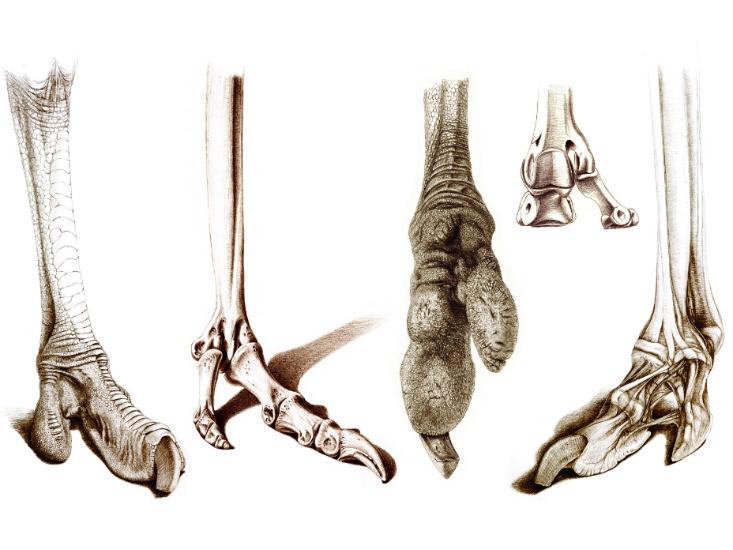
If you were to design a leg for a bipedal animal from scratch, what would it look like? Don’t bother looking down at your own body for inspiration—you won’t find a good model there.
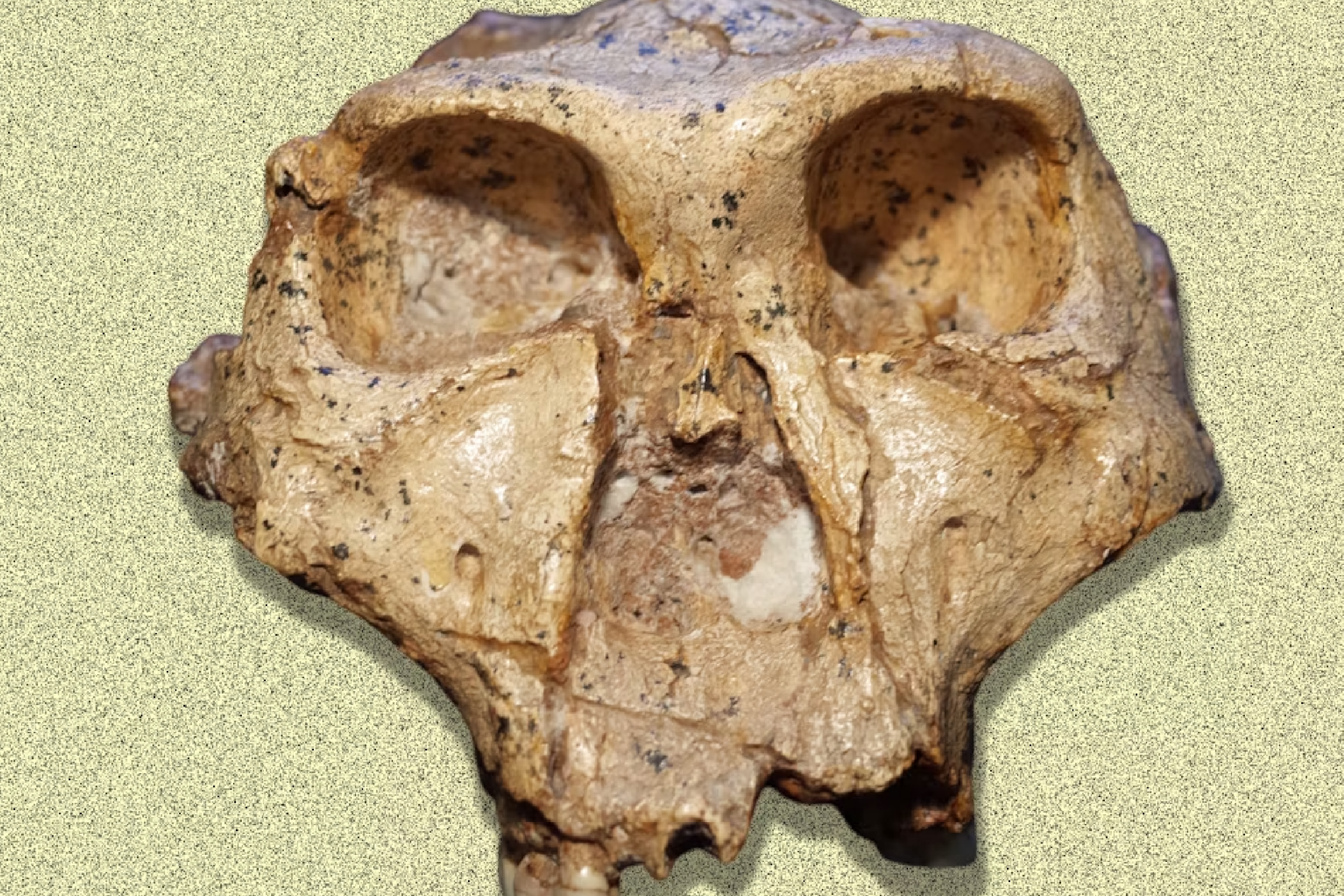
If you want to make a really good bipedal leg, you should make one a lot like an ostrich’s, and nothing like a human’s. That’s because they and their ancestors have been walking and running on land for around 250 million years, and their limbs are optimized for the crash, vault, and push motion of a bipedal run. Humans, on the other hand, just got down out of the trees yesterday in evolutionary terms—a mere 5 million years—and it shows.
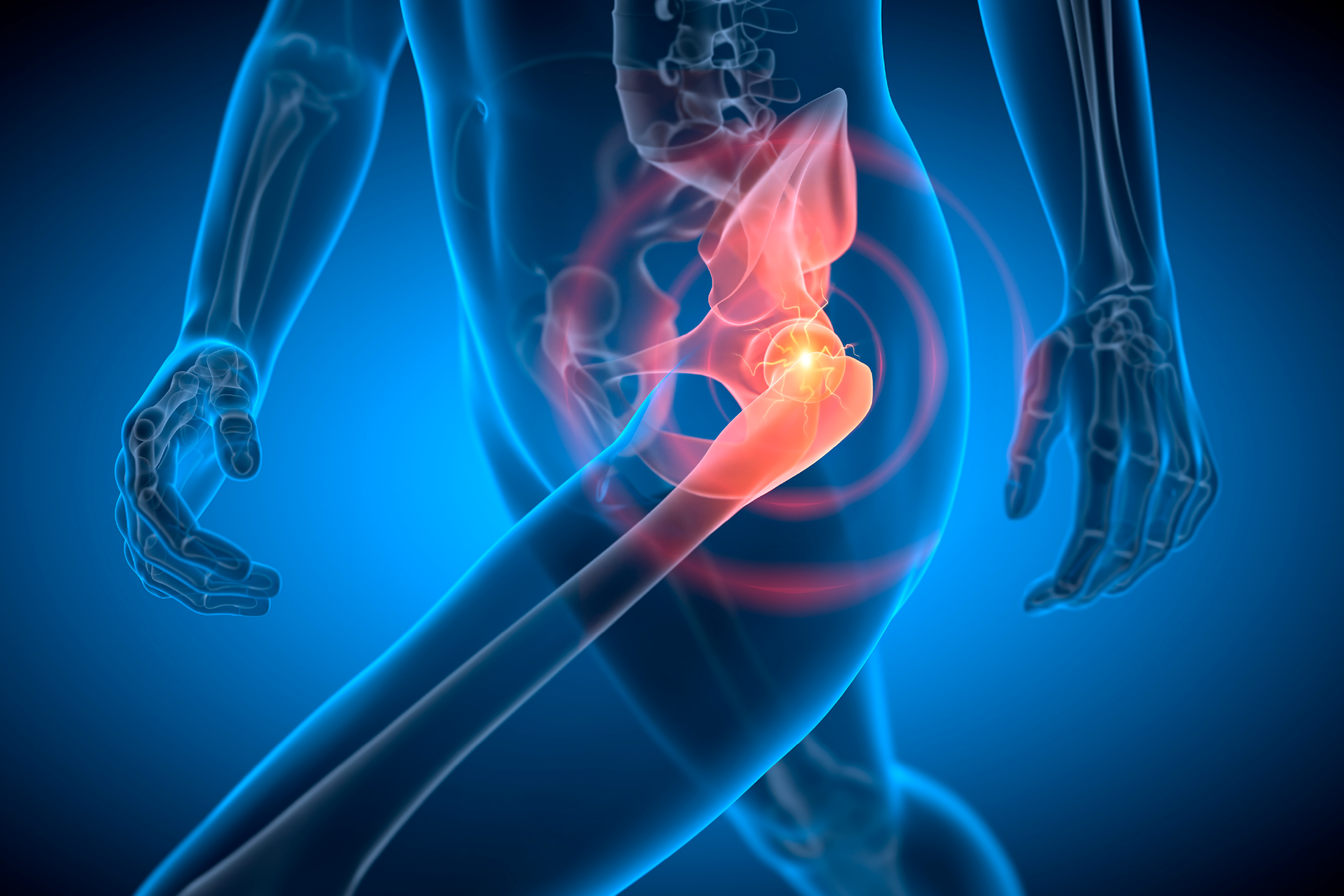
These widgets we use for walking, a physical anthropologist can tell you, are beautifully honed tools—honed for gripping trees, that is, and only lately subjected to last-minute additions to handle standing upright. The musculature that used to handle the fine motions of our ancestors’ grasping toes is now handling the task of supporting our arches. Our ankles—complicated nightmares of tiny bones held together with band-aid-like ligaments—do a decent job of staying stiff, a requirement for a bipedal gait, but they are out of their league: Humans and our ancestors have been rolling and twisting their ankles for as long we have fossil records.
As illustrated in the image above from The Unfeathered Bird, a gorgeous book by Katrina van Grouw (on Amazon here), an ostrich’s legs and feet are mainly tendon and bone, with its running musculature concentrated in the body. This arrangement means that their leverage is better than ours, allowing them to take long strides and take them more frequently than do humans can. (For a great explanation of the biomechanics of how ostriches run, check out biologist Nina Schaller’s account here.) Overall, an ostrich can run a marathon in 40 minutes, easy, while no human has ever run that distance in under two hours. And they don’t have the encyclopedia of foot complaints that plague us; injuries from plantar fasciitis to rolled ankles can be traced to our faulty “design.”
Looked at another way, though, the fact that our feet and legs work as well as they do is remarkable and deserves some appreciation, says Jeremy DeSilva of Boston University, who spoke about the evolution of bipedalism at the meeting of the American Association for the Advancement of Science earlier this year. After all, the changes that let us walk, like all those ligaments hold our ankles together, are the evolutionary equivalent of duct tape and paper clips, he noted in his presentation.
But if you’re one of the many who’ve experienced orthopedic injuries, it may come as some comfort that it’s not just you—that the human walking apparatus wouldn’t pass muster at any decent engineering firm. This solution, especially our ankles, are reminiscent of taping a raincoat to a leather armchair. It doesn’t get you lawn furniture. It just gets you…a chair that might not get wet quite as quickly as before.
Don’t feel too self-conscious about the living compromises you walk around on, though. This just-good-enough system is typical of how evolution works. And if we’d waited for the perfect foot to get down out of the trees, we might not ever have gotten anywhere.
Veronique Greenwood is a former staff writer at DISCOVER Magazine. Her work has appeared in Scientific American, Popular Science, and the sites of Time, The Atlantic, and The New Yorker. Follow her on Twitter here.