When you play the game of thrones, you win or you die,” Cersei Lannister told Ned Stark after the death of her husband, the king. “There is no middle ground.” But according to new research published in the journal Animal Behaviour, she was wrong—at least when it comes to wasps.
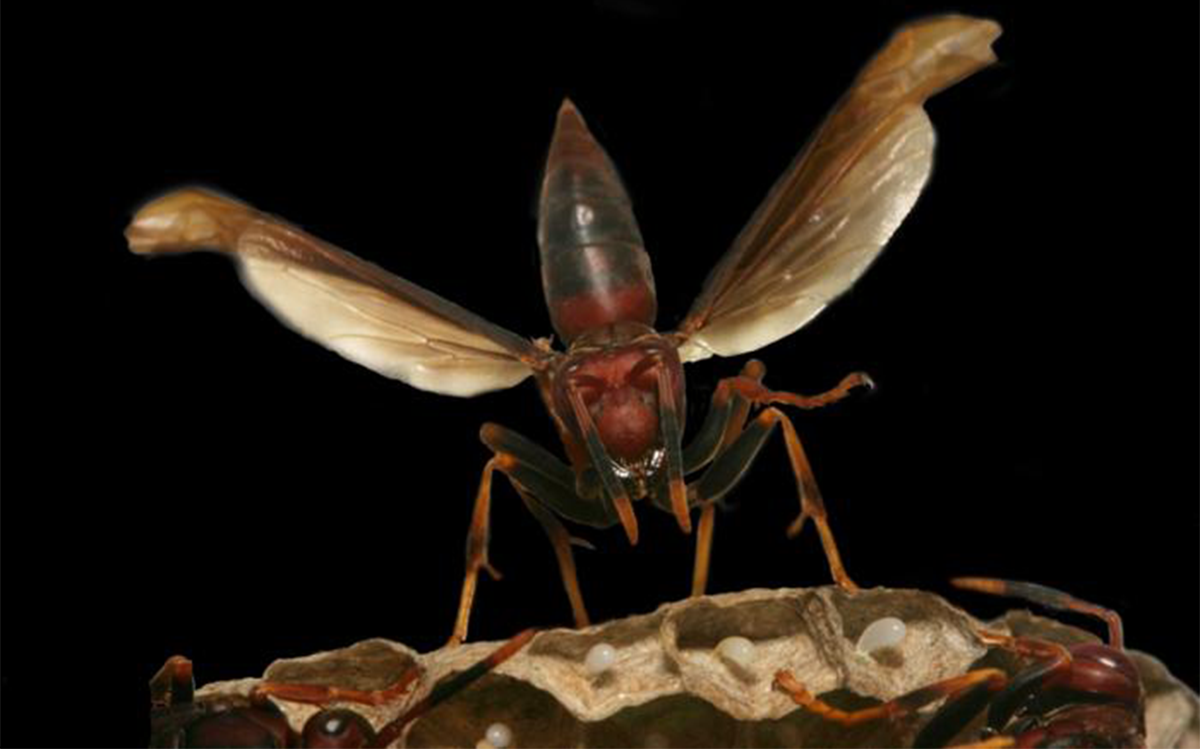
Like many other social insects, paper wasp colonies consist of a single breeding female: the queen. Unlike many other social insects, the other subordinate female workers retain their fertility, so when the queen gets too old or dies, they aggressively jockey for the top spot.
To find out just what happens when wasp colonies have a power vacuum at the top, researchers from the University College London removed the queens from colonies of paper wasps and recorded the ensuing power struggle. Aggressive conflicts between female workers shot up tenfold as they vied for the throne.
Read more: “Loyalty Nearly Killed My Beehive”
But while the power vacuum triggered the monarchical desires of some workers, it triggered much different behaviors in others. The researchers noticed that a select group of wasps eschewed combat entirely, busying themselves with foraging and caring for offspring. Instead of competing, they compensated. “While some individuals fought over dominance, others completely avoided the conflict and quietly stepped up to keep the colony running,” study author Owen Corbett said in a statement. “Cooperation didn’t disappear; it was redistributed.”
These “compensators” were able to prevent the colony from collapsing until a new queen was crowned, but researchers aren’t sure why they opted out of the battle royale. There was nothing obvious like age or sexual development that separated them from the ambitious workers. Rather, the researchers believe their actions reflect strategic choices to boost their own fitness indirectly by caring for the offspring from the queen, who was their sibling.
The queen is dead, long live the queen’s genes. 
Enjoying Nautilus? Subscribe to our free newsletter.
Lead image: UCL