The first animals to crawl out of the muck for a life on land may have made the voyage on a lot of tiny legs. They were the millipedes, and 425-million-year-old fossils indicate they were among the first animals on Earth to breathe air. For a time, millipedes ruled the surface world, with some growing over nine feet in length. Now we have a more complete picture of their evolutionary history, thanks to research recently published in Current Biology.
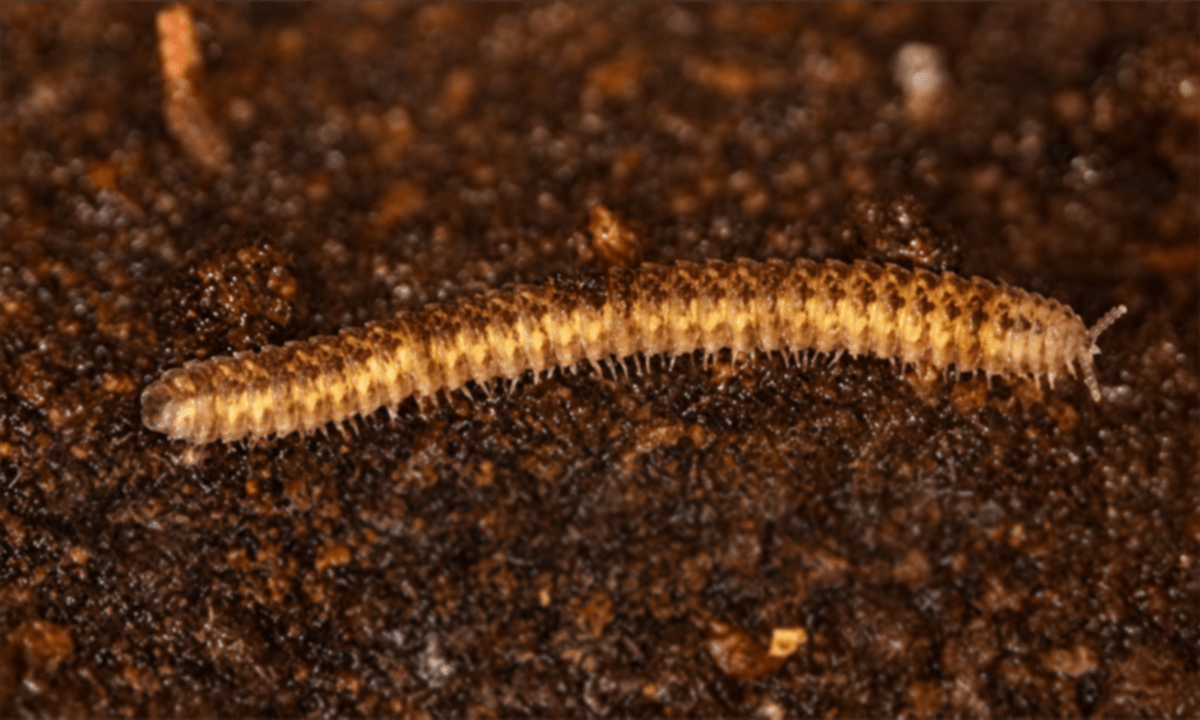
The missing pieces of the millipede puzzle were two groups that were known to science but lacked fresh specimens for DNA analysis. So a team of entomologists traveled to Los Tuxtlas, Mexico, and Spain’s Canary Islands to find them. It was no easy task. “It took 10 people over a week just to find this one tiny 10-millimeter adult,” study co-author Luisa “Fernanda” Vasquez-Valverde of Virginia Tech said in a statement. “Finding them in the field was hard because we were just seeing this little white nematode. We didn’t know for sure it was a millipede until we looked under the microscope.”
Read more: “Strange Worms Are Taking Their Place on Your Family Tree”
By sequencing their DNA, comparing it with existing millipede genomes, and incorporating those results with data from the fossil record, the team was able to construct the most complete evolutionary tree of millipedes to date. They also discovered some surprises. According to their analysis, millipedes actually colonized land 460 million years ago—35 million years earlier than previously thought (and 80 million years before vertebrates). Two hundred and sixty million years ago, they had evolved the ability to manufacture terpene alkaloids, chemicals used to thwart predators. By the Jurassic period, all existing orders of millipedes except one were well established on Earth.
The land they conquered during the Ordovician period was an alien landscape compared to today. “There were no vertebrates, no trees, no leaves, no flowering plants, no plants with seeds,” study co-author Paul Marek also of Virginia Tech said. “Millipedes were feeding on decaying mosses, decomposed slime, and primordial gunk on the surface of the Earth.”
As detritivores, millipedes played an important role (then and now), breaking down organic material and returning the nutrients to the ecosystem.
So the next time you see one of the many-legged critters wriggling through the leaf litter, show a little respect for an early pioneer of life on land. 
Enjoying Nautilus? Subscribe to our free newsletter.
Lead image: Rafael Garcia and Paul Marek for Virginia Tech