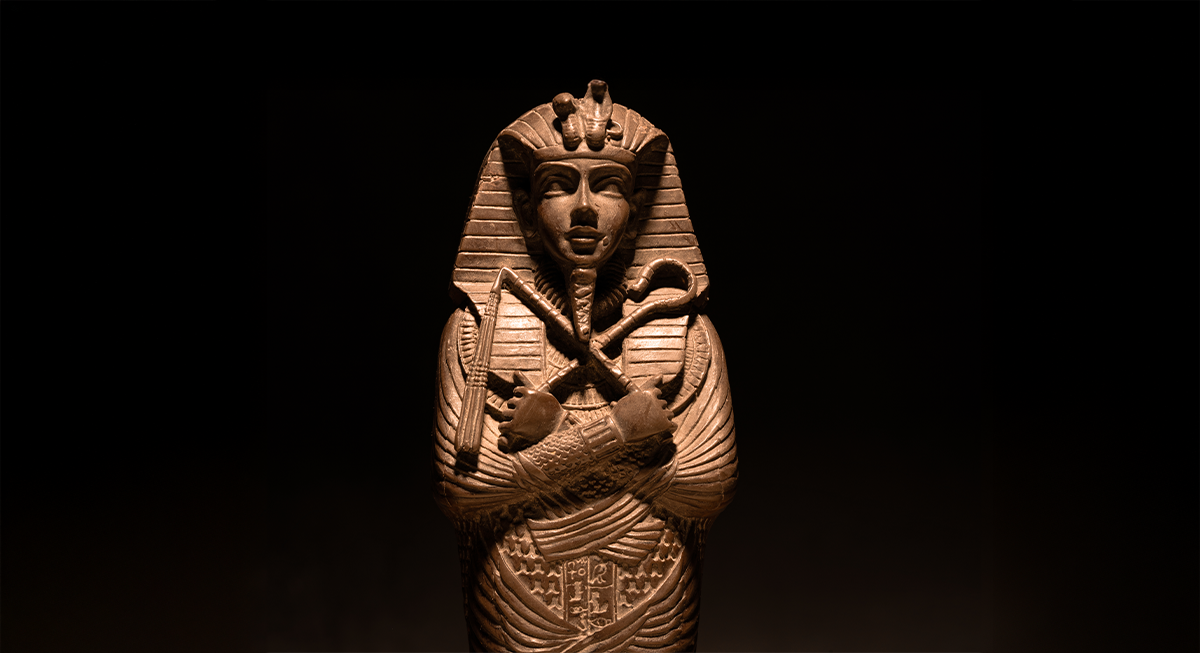
Few burial practices are as elaborate and well known as those of Ancient Egypt. The mummification process employed by that desert culture from about 4000 to 945 B.C. has inspired literature, cinema, and Halloween costumes for generations. Indigenous Chinchorro people living in what is now northern Chile mummified their dead up to 2,000 years before the earliest recorded purposeful mummies of Ancient Egypt. But now, we have discovered that mummies were on the scene even earlier than that.
Researchers have documented evidence of human remains that were smoke-dried and tightly bound in crouched postures and that are between 12,000 and 4,000 years old across southern Asia. The international team of scientists recorded 54 instances of mummification in a variety of hunter-gatherer cultures spread across Southeastern Asia (which includes southern China). They reported their findings this week in the Proceedings of the National Academy of Sciences.
Although the researchers documented variations across these ancient mortuary practices, some commonalities emerged: a crouched or squatting posture for the deceased, tightly bound remains, and some degree of burning or smoking of the bones. Some Indigenous cultures in the New Guinea Highlands still smoke-dry remains as part of their burial processes today, and societies in southern Australia had once also employed the technique, the scientists note in the paper.
The researchers used a suite of technologies to analyze remains from dozens of archaeological sites spread across the region. These included X-ray diffraction and a form of infrared spectroscopy to help identify microfeatures in bone and confirm the heating of bones with low-temperature smoking—a process that might leave minute traces too difficult to discern with the naked eye.
The existence of similar mortuary practices across a wide region may reflect a shared tradition across many cultures in the area, the researchers suggest. “Our findings highlight a deep and enduring biological and cultural continuity, linking ancient hunter-gatherer populations in Southeastern Asia with modern Indigenous communities in New Guinea and Australia,” they write. “The tradition of smoked mummification serves as compelling evidence of long-term cultural persistence between ancient Southeastern Asian and ethnographic Papuan and Australian mortuary practices.”
Smoked and crouched remains from long-dead people just might be the ethnographic lynchpin in a theory that posits a contiguous culture that united human beings millennia ago. These humans may have even radiated out of Africa with these traditions to populate tropical climes of southern Asia and Australia. That’s fascinating stuff, no mummy costumes or Brendan Fraser movies needed. 
Lead image: Modern hyper-flexed, smoke-dried mummy of the Dani people, kept in a private household in the Baliem Valley of Wamena, Jayawijaya Regency, Papua (Indonesia). Credit: Hirofumi Matsumura and Hsiao-chun Hung, PNAS.