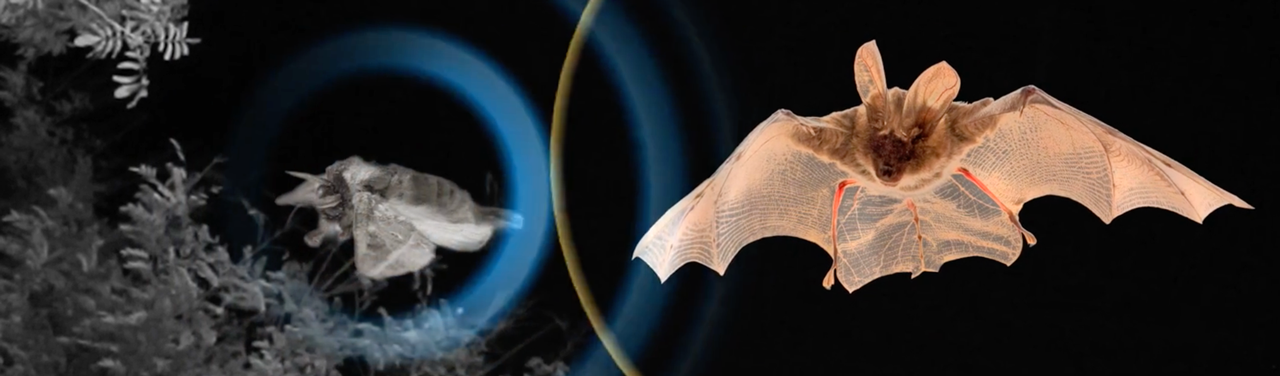
Most people don’t go fishing at night—but most people aren’t fishing for bats. Jesse Barber and his colleagues are, in Mozambique’s Gorongosa National Park. Barber studies how bats and the moths they eat interact with each other. He’s discovered that some moths have a cunning trick to avoid would-be diners: They copy the sounds of other moths that bats don’t find tasty.
It’s an interesting twist on a phenomenon reported in 1861 by naturalist Henry Walter Bates. Bates was studying butterflies in the Amazon when he noticed it was surprisingly difficult to identify species based on sight. Individual butterflies would sport similar wing markings, but on closer examination would show distinctive traits of another type of butterfly, like a hairy fringe on the wing. In the first example of what became known as Batesian mimicry, the butterflies were dressing up as unrelated species that carry toxins, which predators recognize by their markings.
Barber’s moths are doing the same thing—but bats hunt by echolocation, not by sight, so the moths dress themselves up with ultrasonic signals, not visual ones. In this video, Barber and his team test that hypothesis in Africa for the first time. They gathered local moths, used fishing reel to set them as lures, then recorded what happened as bats flew by. Bats easily snagged silent moths, but veered away from noisy ones. When the loud moths were silenced, and the bats started eating them, they spat some out but happily ate others—suggesting that at least some of the loud moths were faking what’s on the menu.