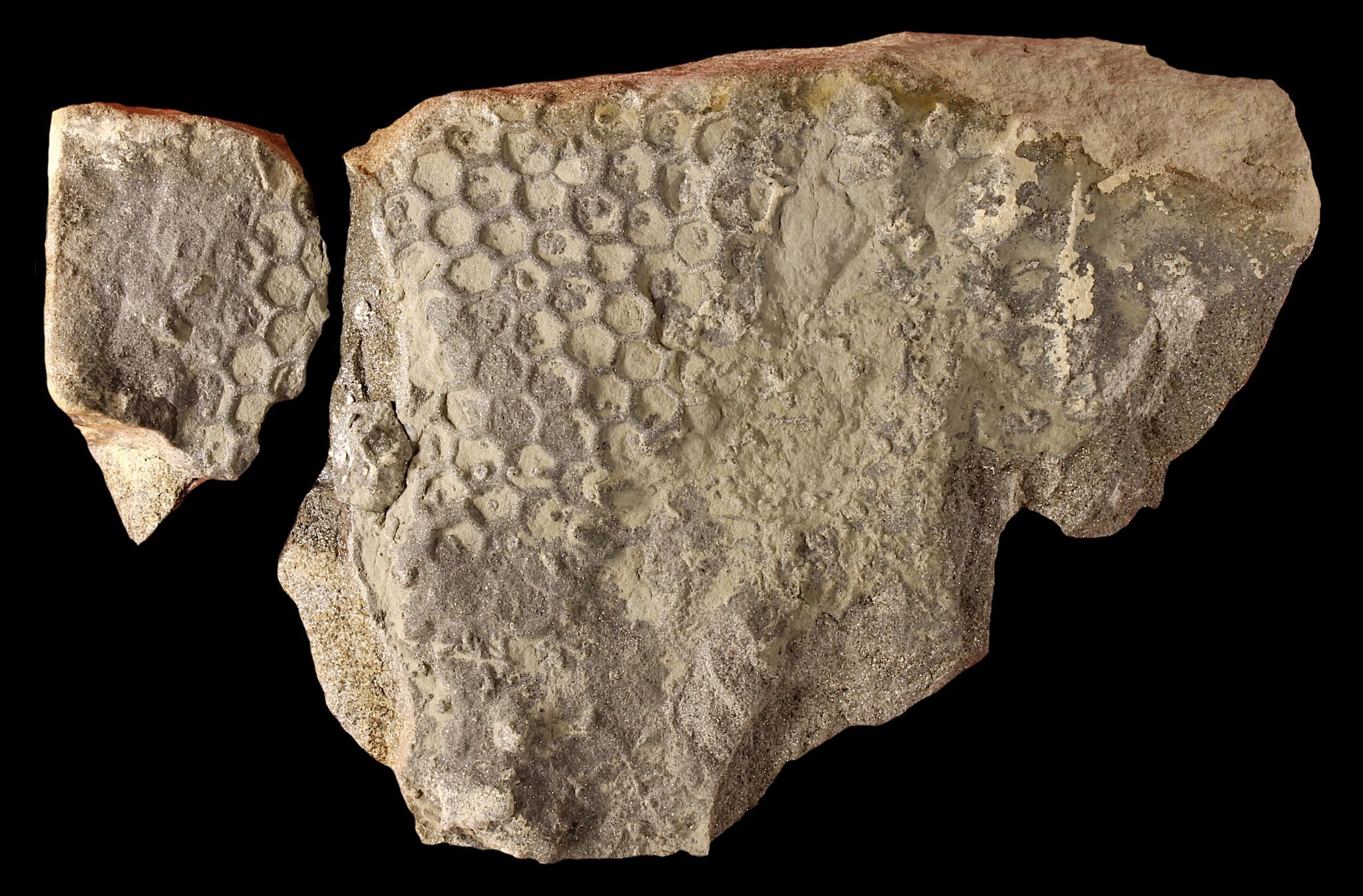
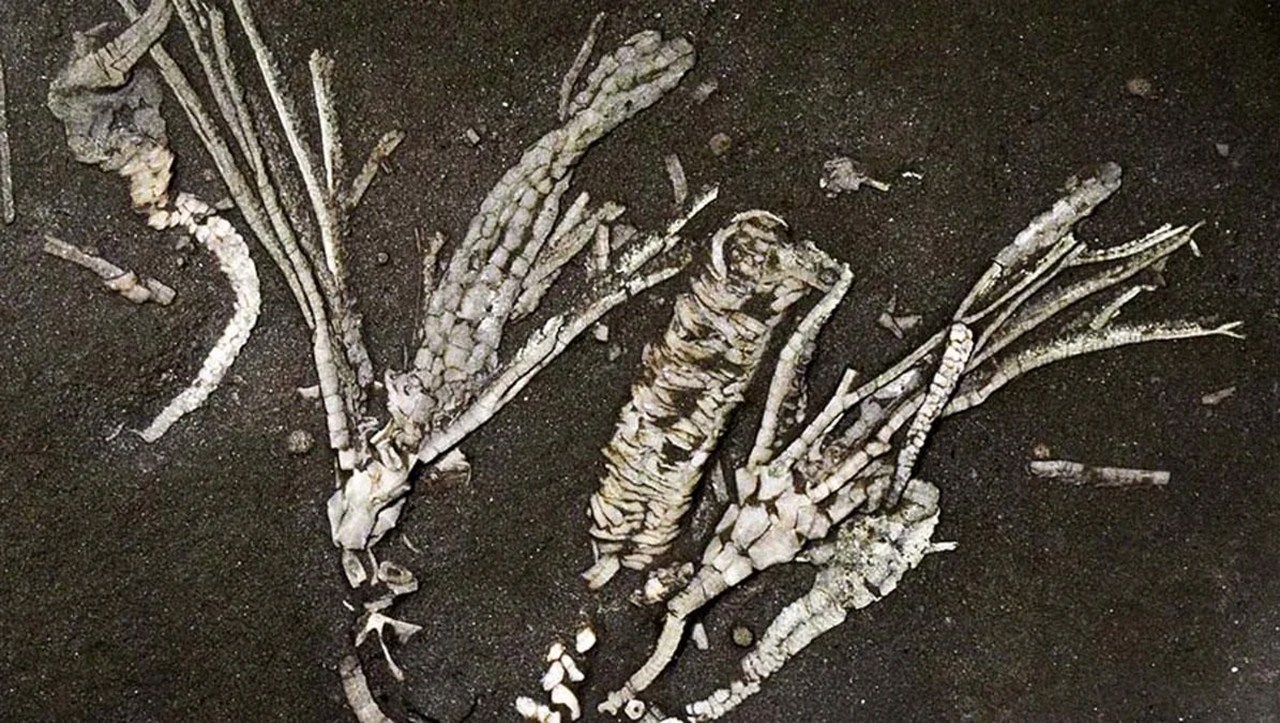
You’ve likely heard of coprolites, or fossilized feces, from which paleontologists can tell a lot about the ancient animals who deposited them. You’ve maybe even heard of gastroliths, stones swallowed by herbivorous dinosaurs to help grind their fibrous diets. These trace fossils often contain a wealth of knowledge that scientists can use to reconstruct the ancient world and the beasts that inhabited it. Now there’s a new trace fossil on the scene—the regurgitalite. That’s right, it’s fossilized puke.
And researchers claim to have identified an entirely new species of pterosaur, ancient flying reptiles that soared through Cretaceous skies, in the fossilized puke of an unknown predator that ate and then spit up the creature.
A team of scientists examining fossils in the Araripe Basin of Northeast Brazil reported their discovery of Bakiribu waridza gen. et sp. nov. today in Scientific Reports. In addition to being a newly described species, the animal is the first filter-feeding pterosaur—which used mouth structures similar to those of baleen whales to sift small food particles from water—from the tropics.
Not only did the fossil vomit contain traces of this new species, it also revealed volumes about the ecology and food web (or trophic) dynamics of the Gondwanan ecosystem in which these animals lived. The mineralized lump also contained remnants of fish that could have been ralphed up by an ancient predator.
Read more: “Conjuring Imaginary Creatures”
“The exceptional preservation of the specimen within a regurgitalite, alongside head-aligned fish remains, provides rare direct evidence of trophic interactions in the Early Cretaceous Araripe paleoecosystem,” the authors wrote. The researchers suggest that the clustered position of the fish in the regurgitalite support their classification of the accretion as fossilized vomit and not just the result of a carcass floating in the water until it became mineralized over time.
Fossil puke. Just another trace of ancient life that contains more insight than one could ever imagine. 
Enjoying Nautilus? Subscribe to our free newsletter.
Lead image: Julio Lacerda / Scientific Reports (Sci Rep)