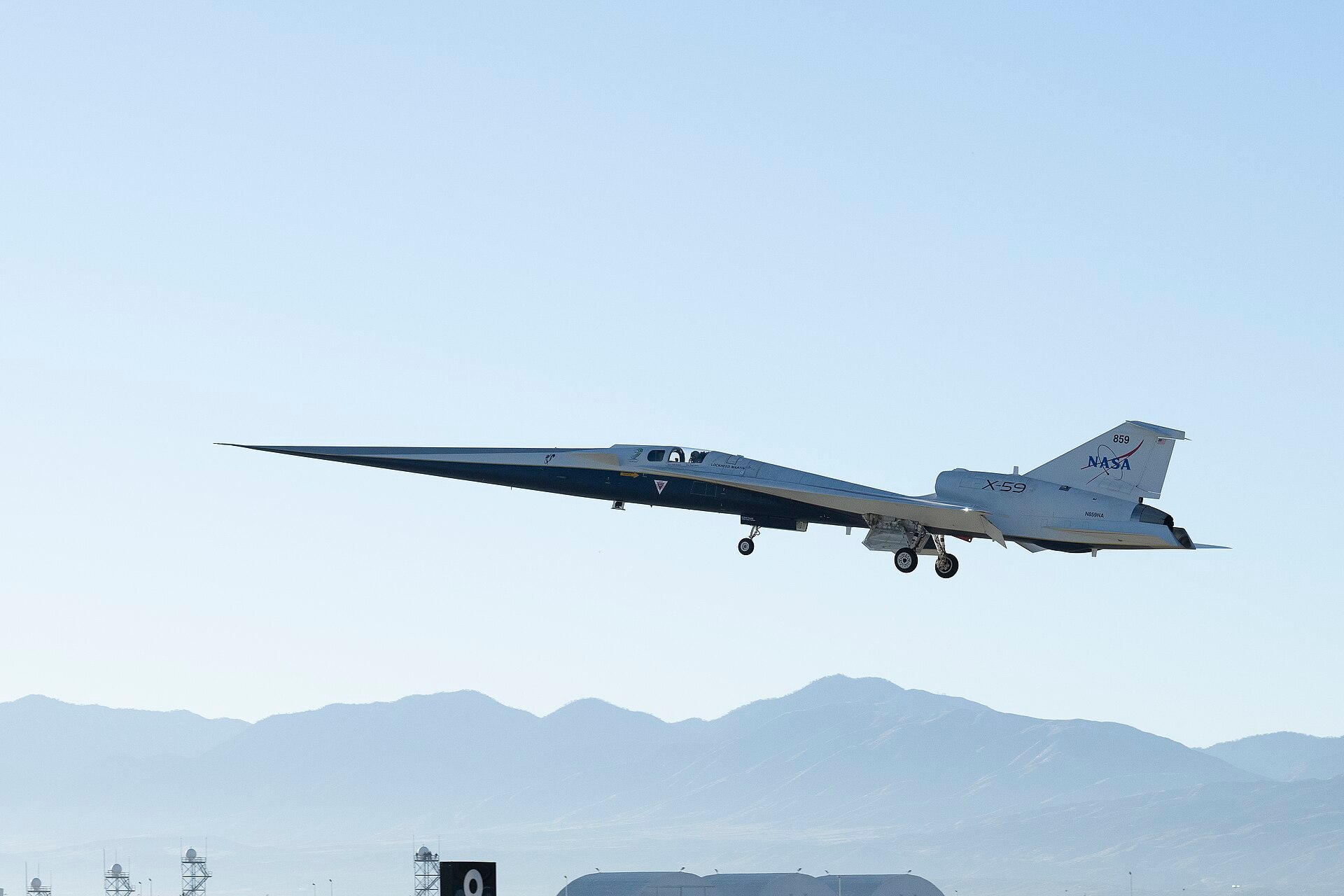
It was once possible to zip across the pond from New York City to London in under three hours. British Airways set this record in 1996 thanks to the stupendously speedy Concorde, the only successful supersonic passenger plane so far—it reached speeds over 1,300 miles per hour, more than twice the speed of sound. In comparison, today’s quickest commercial jumbo jets can hit around 700 miles per hour at most.
The jet was developed by various British and French companies in the 1960s, and its first commercial flights took off 50 years ago today. Over the next three decades, Concorde jets whisked passengers around the globe, sometimes in half the time of a normal trip.
It broke records for multiple routes, including Boston to Paris and back in just over six hours in 1974, and in 1995, the jet circled the entire world in under 32 hours.
Concorde jets owed their mind-blowing speed to powerful turbojet engines that provided 38,000 pounds of thrust—two times more powerful than other large jet engines at the time, allowing the jet to accelerate from zero to 225 miles per hour in just 30 seconds. The plane’s structure, including a triangle-shaped delta wing often used on fighter jets and a skinny passenger cabin, was designed to keep it aloft despite intense drag at such speeds.
This jet also reached dizzying cruising altitudes, between 55,000 and 60,000 feet, where thinner air reduced drag and enabled quick travel. Up there, in fact, passengers could glimpse the Earth’s curvature.
Flights sat between 92 and 128 passengers, and tickets were far from cheap—round-trip flights cost up to around $10,000 in the 1990s—but their quick turnaround offered an ideal option for the jet-setting elite. Flight crews served ritzy refreshments, including caviar, lobster, and Dom Perignon. One business executive remembers traveling among rock stars like Paul McCartney, Bruce Springsteen, and Sting. Even royalty like Queen Elizabeth and Princess Diana opted for the Concorde on several occasions.
Read more: “Fear in the Cockpit”
Despite its A-list fan club, the Concorde came with a host of issues that ultimately led to its retirement in 2003. For one, the staggering price tag could only attract so many passengers. It also gobbled up to four times more fuel than jumbo jets at the time, making it the least fuel-efficient passenger plane of its era. The jets were also suspected to damage the ozone layer by releasing pollution at high altitudes.
Adding to these issues, a Concorde jet crashed in Paris in 2000 after a tire hit a piece of sheet metal on the runway. The incident killed 113 people.
The Concorde was loud, too—these jets sent out shockwaves powerful enough to crack windows on the ground below, and some cities sent in noise complaints when a Concorde passed by. One passenger recalled the plane as “extremely noisy.” In 1973, the Federal Aviation Administration effectively banned commercial planes from flying at supersonic speed over the United States, which prevented Concorde routes from traveling inland.
But freakishly fast flights might soon return. The U.S. House Transportation and Infrastructure committee recently passed a bill that would allow civilian supersonic flight over the country, and this past June, President Donald Trump demanded the removal of the FAA restrictions on these planes.
The regulatory push coincides with a flurry in development of new supersonic planes, including the Overture aircraft from Colorado-based Boom Supersonic. The company’s website notes that it’s received orders from multiple airlines, including United, for which the first commercial flights are slated for 2029.
After more than two decades on the ground, these swift aircraft might soon slice through the skies once again. 
Enjoying Nautilus? Subscribe to our free newsletter.
Lead image: SDASM Archives / Wikimedia Commons