Every time us humans make big changes to landscapes, we risk altering the geographic distributions of other species. A recent study published in the Journal of Animal Ecology by zoologists at Tel Aviv University analyzed the invasions of fish from the Red Sea to the Mediterranean via the Suez Canal. Upon its completion in 1869, the 120-mile-long waterway became a conduit not only for ships, but for aquatic life as well.
The study authors used data from 247 underwater video cameras deployed in a prior study at depths ranging from about 15 to 300 feet at the northern tip of the Red Sea and along the east coast of the Mediterranean. At both sites, they chose areas with little or no fishing to avoid the confounding effect of fish harvest on the results.
The footage detected 230 fish species, some of which showed up only in the Red Sea and others of which had already invaded the Mediterranean via the canal. By comparing the fish populations (defined as two or more individuals) that had reached the Mediterranean to those that remained confined to the Red Sea, the researchers deduced the traits that support successful invasions.
Read more: “The Wisdom of Fish Schools”
Among the most prominent traits was the ability to survive in the novel habitats of the Mediterranean, including in shallower waters without coral reefs. These fish species shifted from their reliance on coral reefs in the Red Sea to other substrates more typical of the Mediterranean (such as sandy bottoms). This flexibility allowed them to eventually become indistinguishable from Mediterranean natives in their habitat use.
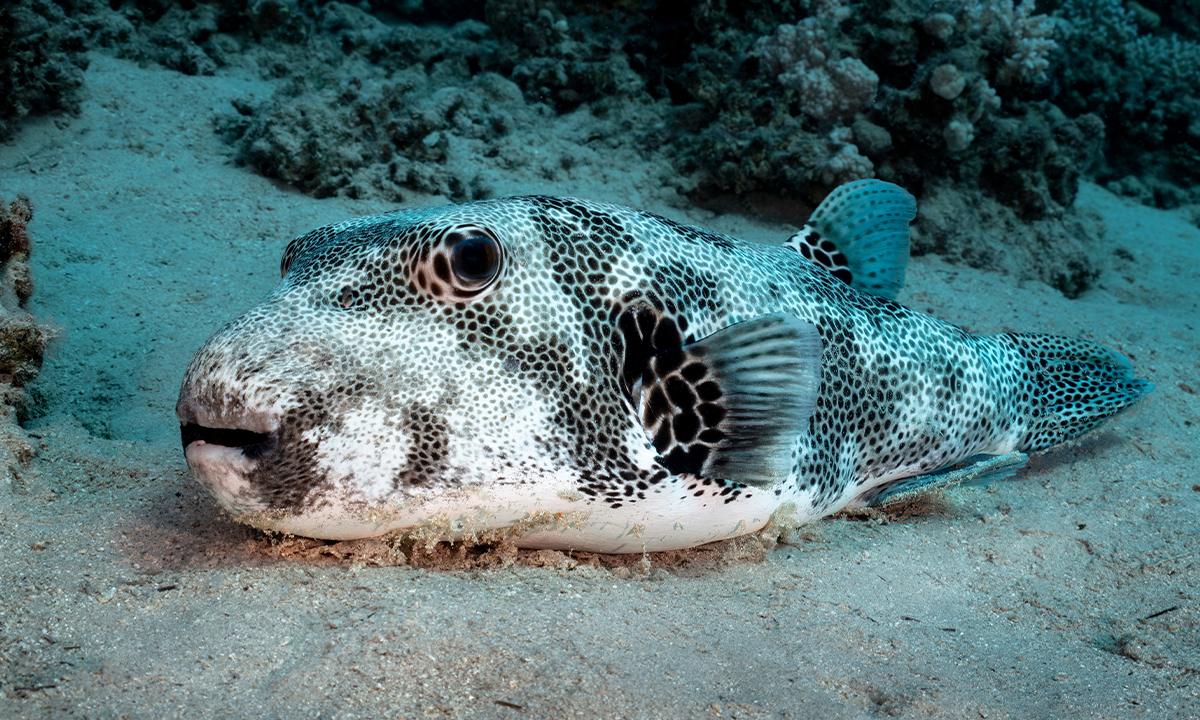
By extrapolating the data on the current traits of successful invaders, the study authors forecasted which Red Sea fishes might invade in the future. Those less reliant on corals, including the cinnabar goatfish (Parupeneus heptacantha), the starry puffer (Arothron stellatus), and the yellowspotted trevally (Turrum fulvoguttatum), ranked high on the list.
“Until now, researchers have tried to understand biological invasions primarily by examining species that had already reached the Mediterranean,” said senior study author Jonathan Belmaker in a statement. “We took a step back and asked what characterizes these species before they begin their journey.” 
Enjoying Nautilus? Subscribe to our free newsletter.
Lead image: David Keep / Adobe Stock