A plant hedges its bets for genetic survival by spreading its seed in a variety of different manners—by wind, by water, and by animal. On the latter count, fruits have long been considered a perfect lure for animals, who devour all that fruity flesh and drop or excrete the leftover seeds afterward. Thus, the mystery surrounding a plant from a Japanese tropical forest.
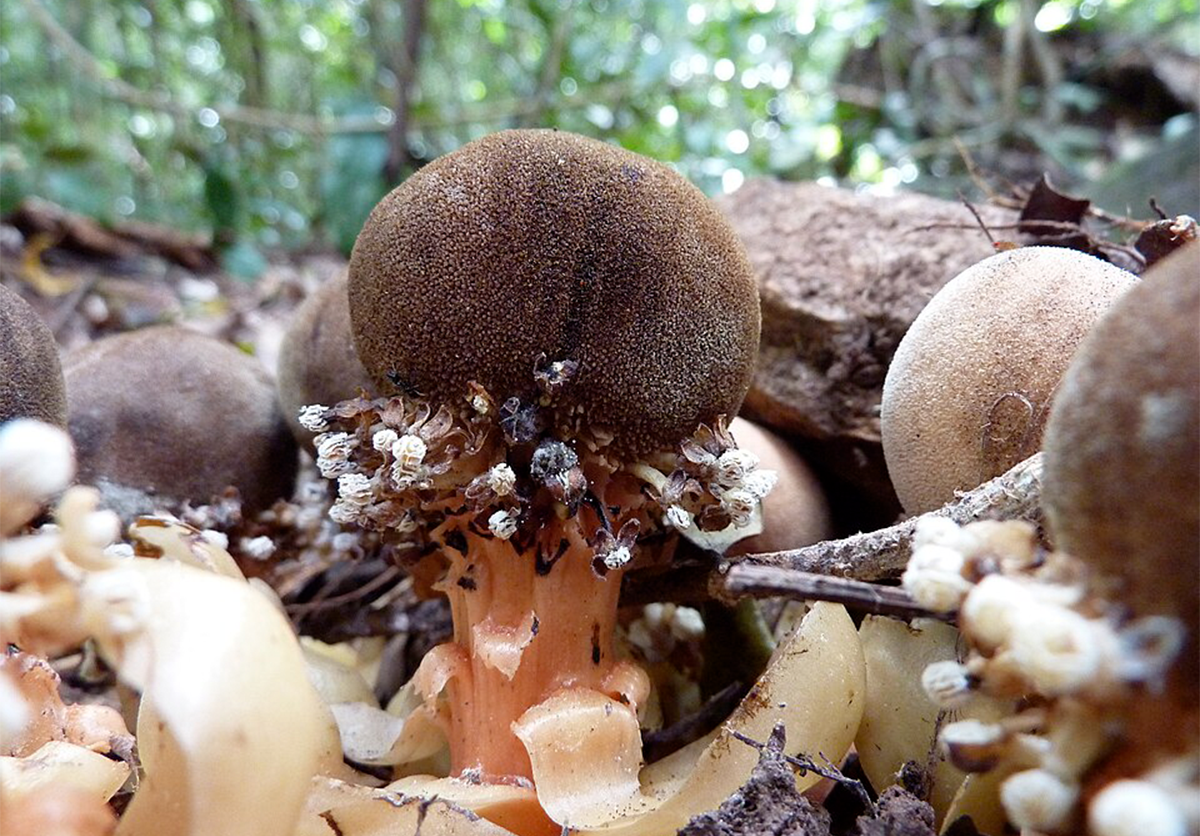
On an island near Okinawa, a mushroom-like parasitic plant called fungus root (Balanophora fungosa) sprouts from the bases of trees. It has no roots, no leaves, and no chlorophyll (hence its resemblance to a mushroom), but it can suck nutrients from tree roots and, in some cases, clone itself underground. Still, the fungus root produces up to a million tiny seeds enclosed in dry fruits. In its sheltered, damp understory locales, wind isn’t an effective seed disperser. So, what is?
In a study published today in the journal Ecology, researchers from Kobe University solved the mystery. They had figured that a likely candidate was ants, since some other Balanophora plants use ants for seed dispersal. However, when the researchers covered the plants with fine nets through which only ants could pass, dispersal came to a halt.
Read more: “The Seeds That Sowed a Revolution”
To identify other potential suspects, they trained time-lapse cameras on the plants. The footage revealed clusters of cockroaches (Periplaneta australasiae) noshing on the fruits, visiting them often and pooping out the seeds. That wasn’t necessarily that novel—cockroaches are known to disperse seeds in another Balanophora species—but the researchers were surprised to find hermit crabs (Coenobita brevimanus) scraping the fruits off the plant using their pincers. Pieces of fruit got stuck on the crabs’ bodies and were incidentally carried up to several meters away. Meanwhile, seeds from the fruits eaten by the crabs passed through their digestive tracts, potentially landing up to 100 meters away (roughly the distance that land hermit crabs travel).
“I was excited to find this because these [crabs] have usually been regarded as omnivores, scavengers, or seed predators rather than potential plant partners,” explained lead study author and ecologist Kenji Suetsugu in a press release.
Crabs were seen only on mature B. fungosa plants, suggesting that they and the cockroaches may be attracted to mature plants by the yeasty smell from the volatile organic compounds released to attract pollinators such as ants, moths, and bees.
Either way, the crabs and roaches did the job the fungus root plants needed—spreading their seeds far and wide. 
Enjoying Nautilus? Subscribe to our free newsletter.
Lead image: Geoffrey Derrin / Wikimedia Commons