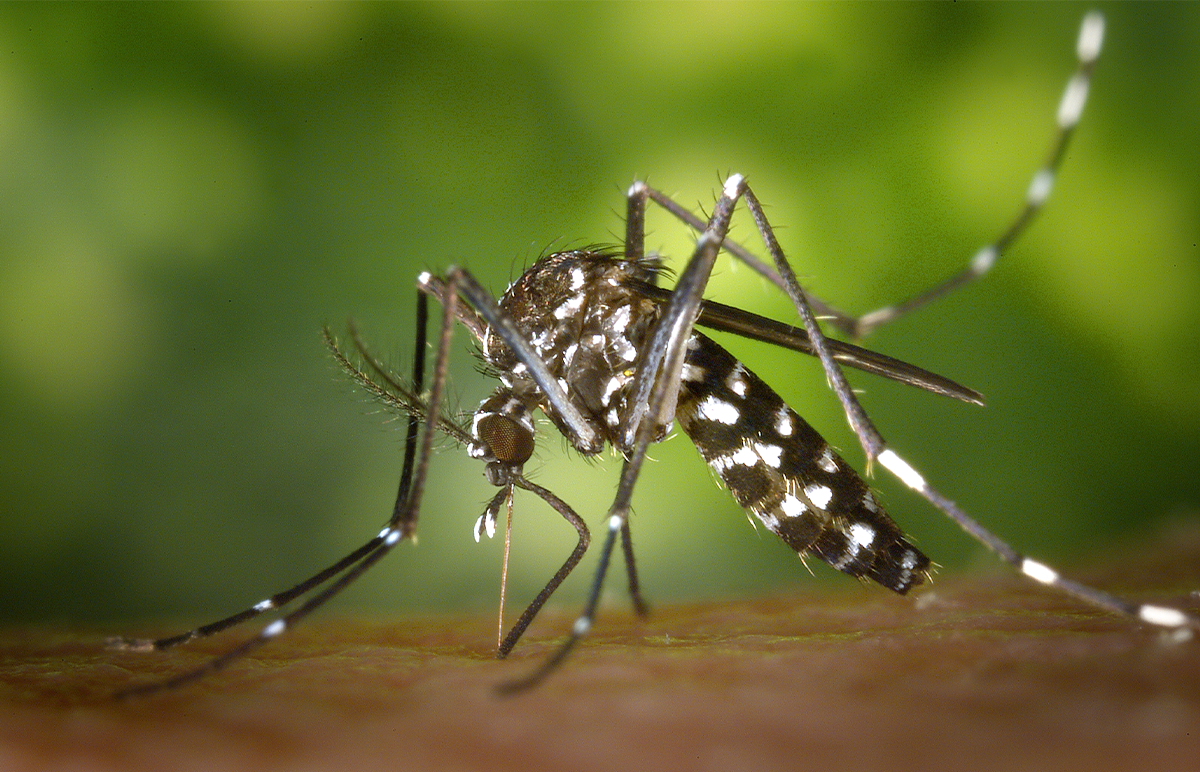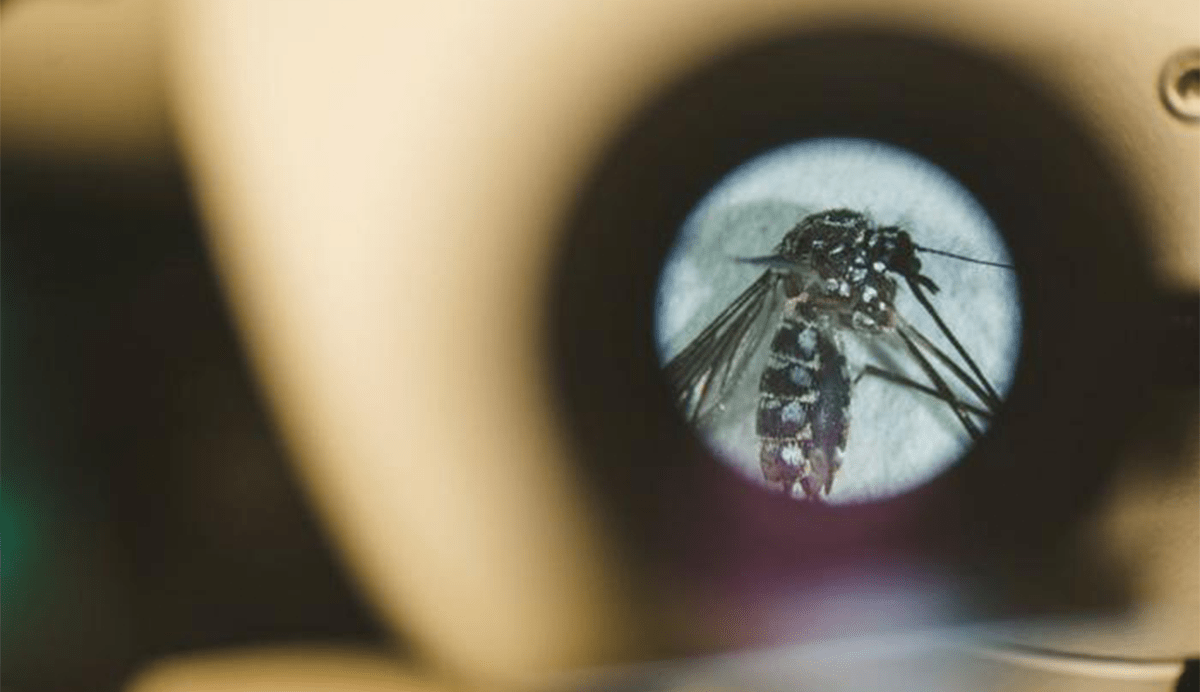
There’s a mosquito buzzing around my apartment as I write this. While I can’t tell you what species it is, I’m pretty confident it’s one of the few with a taste for human blood. It might not feel like it (especially during summer), but out of more than 3,500 mosquito species, only a handful actually seek us out.
Unfortunately, these brave few are also vectors for diseases—and they all live in the United States. Aedes aegypti and Aedes albopictus carry dengue, Zika, and yellow fever, while Culex quinquefasciatus can pass on West Nile Virus. Now, a new study published in iScience investigates just what it is about us that attracts these three little bloodsuckers.
A team led by scientists at Florida International University recruited 119 people willing to stick their arms inside a mosquito-filled tube (protected from bites by a screen of fine mesh, of course) and recorded how many of the mosquitoes swarmed. Afterward, they selected the least and most enticing people to each species and vigorously swabbed their skin to sample both their microbiome and any odor-causing volatile compounds.
Read more: “Here’s Why Mosquitoes Won’t Leave You Alone”
The good news is that no single person was especially attractive to all three species, so you’re probably not a universal mosquito magnet. The bad news is you’re not a universal mosquito repeller, either (every participant proved tempting to at least one species). Additionally your skin microbiome—which is fairly resistant to change—could be naturally alluring. “We didn’t expect the species to prefer different people when we started the study,” study author Kaylee Marrero said in a statement. “Each species having a distinct microbial signature that they use as a cue was so surprising to me.”
While the researchers found some skin bacteria were particularly tantalizing, others garnered little interest. Culex quinquefasciatus, the southern house mosquito, appeared to be turned off by the bacterium Actinomyces oris, which has also been used as biological agent to kill mosquito larvae.
According to the team, mosquitoes aren’t responding to the bacteria themselves, but the volatile organic compounds they produce as they feed on our many skin secretions (fun fact: It’s these compounds that give us our unique smell). And there were plenty of olfactory cues that drew their attention. Aedes albopictus, for example, went wild for ketones (sorry high-protein diet folks and intermittent fasters), as well as plant-like volatile compounds. Aedes aegypti preferred men to women, likely because they had more skin bacteria that produced fatty acid volatiles. And all three species seemed to be attracted to ethyl 2-methylbutanoate, a substance with a fruity aroma that’s used in commercial fragrances.
These differences, researchers say, point to the distinct evolutionary paths each species took on their way to becoming human-seeking bloodsuckers. “It’s clear to me now that our skin microbiomes define our human odor signature,” study author Matthew DeGennaro said. “Each species found its own way to decode that signature.”
Figuring out which chemical cues make mosquitos go gaga could help us come up with better repellents. All I’ll say is: Hurry up. 
Enjoying Nautilus? Subscribe to our free newsletter.
Lead image: Christopher Necuze/Florida International University