“Wealth and splendor—what befit mankind—
Are bestowed, multiplied, and regally granted.”
You’ve just read the lines of a hymn lost to history for a millennium, praising the ancient metropolis of Babylon. This 250-line text was recently rediscovered after researchers pieced together more than 30 fragments of clay tablets inscribed as early as the seventh century B.C. They combined these cuneiform texts with the help of artificial intelligence—a task they say would’ve taken decades otherwise, according to a study published in the latest installment of the journal IRAQ.
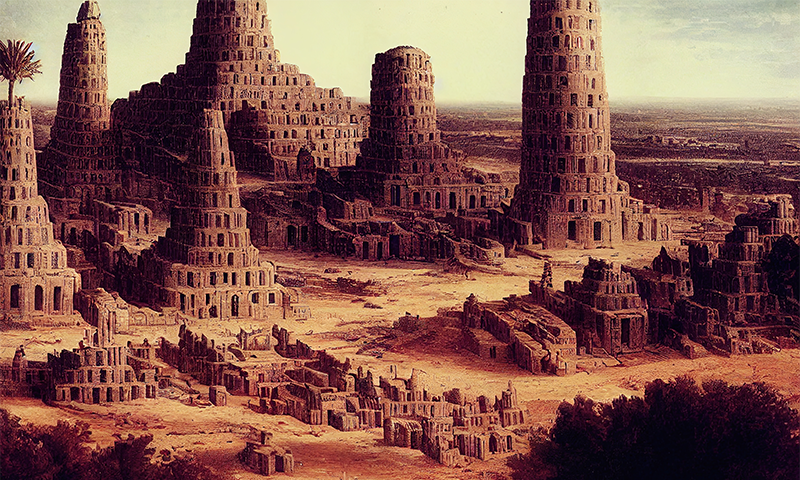
Babylon was established around 2000 B.C., and it was once among the world’s largest and wealthiest cities. Today, the ruins of Babylon sit some 50 miles from the Iraqi capital of Baghdad. Remains, writings, and unearthed artifacts have long painted a picture of Babylon in its heyday—a bustling, carefully arranged Mesopotamian city filled with grand temples and a towering structure that likely inspired the myth of the Tower of Babel.
Now, the rediscovered hymn—which was likely widely circulated and memorized by schoolchildren—offers new insights into ancient Babylonian culture. For example, the hymn provides a valuable peek into the role of some Babylonian women as priestesses and their duties, including wet-nursing. And the hymn reveals that Babylonians “respect the foreigners who live among them,” referring to priests from other regions.
The text also touches on the flora of the region, including mentioning fields that “burgeon with herbs and flowers” and meadows that “in brilliant bloom, sprout barley.”
“This is all the more spectacular as surviving Mesopotamian literature is sparing in its descriptions of natural phenomena,” said study author Enrique Jiménez, a Babylonian literature researcher at Ludwig Maximilian University of Munich, in a statement.
Jiménez and his co-author Anmar A. Fadhil of the University of Baghdad are currently harnessing AI to comb through and stitch together hundreds of cuneiform tables from the Sippar Library, located in what is now Baghdad Province—aiming to ensure that these ancient works aren’t lost to time. 
Lead image: Altitude Visual / Shutterstock