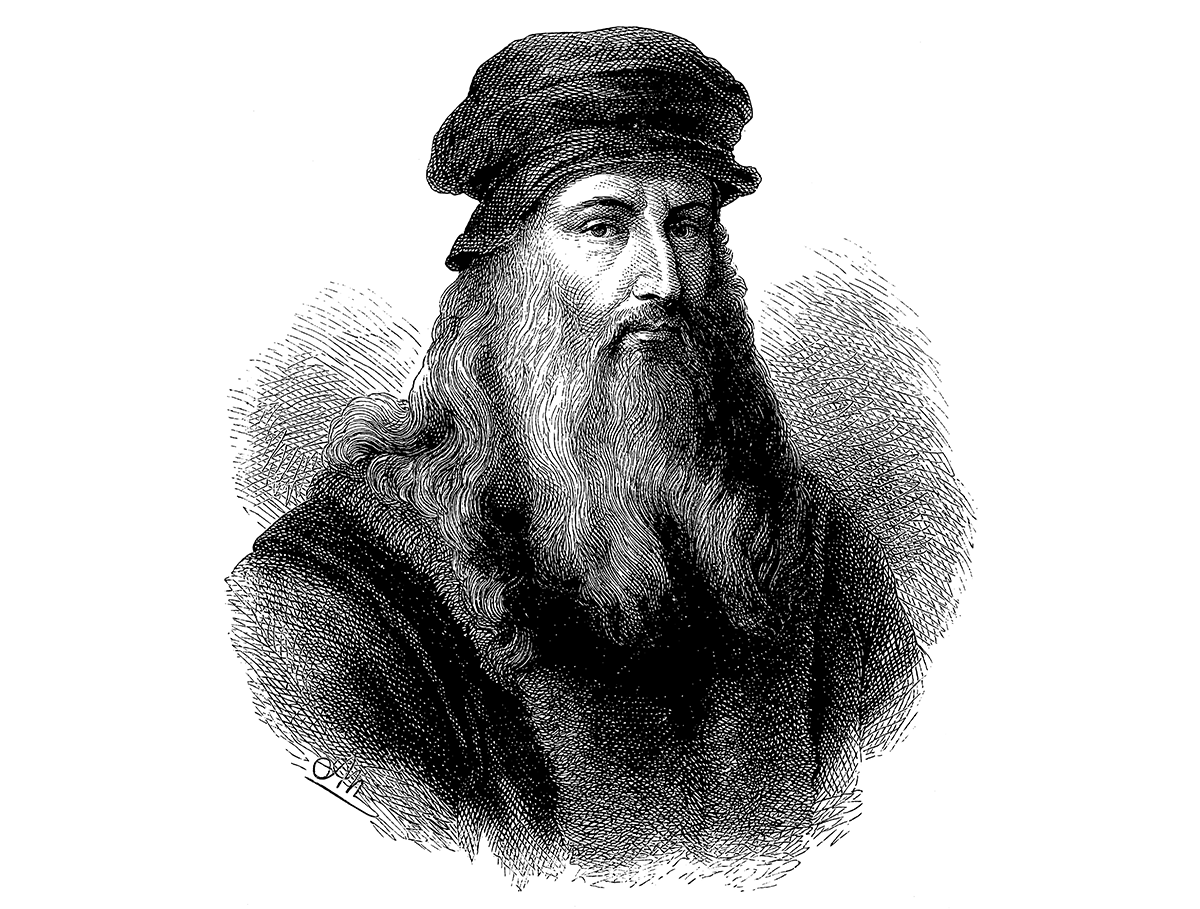
You could call Leonardo da Vinci a lot of things: genius, polymath, or master. Born on this day in 1452, he was—in time, geography, and intellect—the quintessential Renaissance man. He was also subject to the whims of science funding that fueled the bursts of discovery and innovation that defined his era.
The multi-talented painter, anatomist, sculptor, engineer, botanist, and geologist was supported by a string of wealthy patrons who held positions of privilege and influence throughout Renaissance Europe. These benefactors, including Duke of Milan Ludovico Sforza, King Francis I of France, and the powerful Medici family of Florence, clearly recognized da Vinci’s brilliance. But their funding did not come without strings attached. When their patronage was designed to fuel da Vinci’s artistic endeavors, the deliverables were clear—mainly the paintings and sketches that have placed him in the pantheon of the Renaissance masters.
When funds were earmarked for da Vinci’s more scientific pursuits, concrete outcomes were still expected, though sometimes the funding came with an understanding that the genius would also need the freedom to pursue less-applied goals. Sforza, for example, employed da Vinci as his court engineer, tasking him with military and hydraulic projects, but afforded him considerable leeway to explore the mechanics of flight, esoteric mathematics, and the complexities of human anatomy.
Read more: “The Loneliest Genius”
Da Vinci’s science also had the benefit of access to the Renaissance medical complex. Specifically, he performed his human corpse dissection thanks to access granted by the Hospital of Santa Maria Nuova in Florence and later by the Hospital Maggiore in Milan and Rome’s Hospital of the Holy Spirit, the oldest hospital in Europe. These explorations yielded some of da Vinci’s most famous contributions to anatomical science as he fastidiously drew the 30 or so human corpses that he was able to dissect.
But just as scientists of today have to nimbly navigate a shifting landscape of funders—federal, philanthropic, commercial, and so on—so too did da Vinci. In the 1480’s da Vinci left his hometown of Florence and the embrace of the Medicis, an influential banking family that were patrons of many Renaissance artists and thinkers, to set up shop in Milan. This meant a new funder, Sforza, became the primary driver of da Vinci’s inquiries, which were to include more practical research in addition to the artistic pursuits that dominated his youth. From Milan, da Vinci traveled to Hungary, whose king commissioned him to paint a depiction of the Madonna, and was set on various engineering and artistic projects. In 1550, Sforza was overthrown by France, so da Vinci was forced to flee to Venice, where he devised ways to protect that city from naval attack before eventually returning to Florence.
This passing around between different patrons, urged to work on their pet projects from Milan to Rome to France, would continue until da Vinci’s death in 1519. It’s no surprise that many of the polymath’s greatest works were unfinished, his boldest plans unrealized.
The scientific community of today is, of course, much different than the intellectual milieu of da Vinci’s day. But I have to think that the dynamic and uncertain nature of where the money was coming from to fuel the Renaissance master’s tireless exploration of life, art, light, and the universe would be recognizable to researchers trying hard to find the best ways to fund their work in our own uncertain times.
Anyway, happy birthday, Leo! 
Enjoying Nautilus? Subscribe to our free newsletter.
Lead image: Sergey Kohl / Adobe Stock