When cities effectively shut down during the early days of the COVID-19 pandemic, wildlife took notice. As humans retreated into their homes, curious animals started to venture more closely to urban areas, and photos of feral animals traipsing through city streets quickly went viral.
While the COVID-19 pause in human activity amounted to more of a “rolling stop,” during the Black Death in the 14th century, humanity screeched to a halt—and even reversed. Now, new research published in the Proceedings of the National Academy of Sciences shows how oak trees took advantage of this plague to spread their roots and flourish.
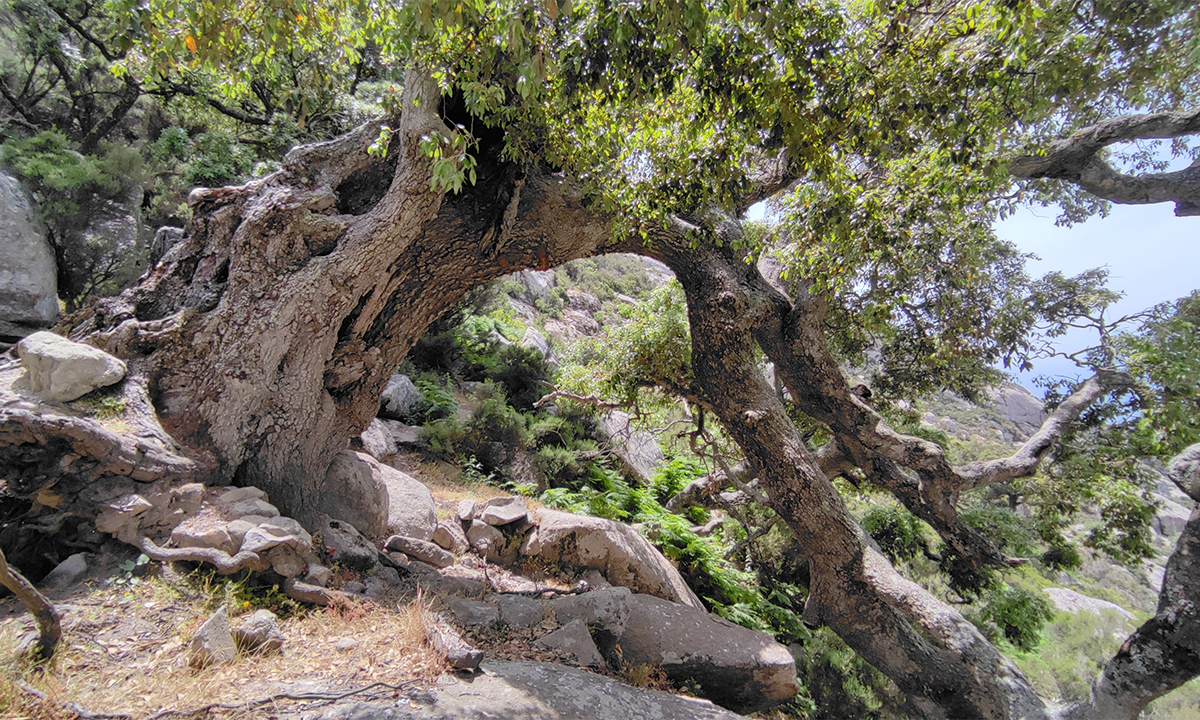
An international team of ecologists and botanists analyzed samples from oak trees in Italy’s low-lying Montecristo Island (off the northern Mediterranean coast) and the mountainous Aspromonte region (in the toe of the boot). Radiocarbon dating of the samples revealed many of the trees began growing there between 1400 and 1650, when Italy was ravaged by the Black Death.
Read more: “The Once and Future Woods”
The Montecristo data in particular showed a surge in trees in the 1400s, which the researchers attribute to reduced pressure from human activity and a wetter climate. There was a gentler spike in Aspromonte, and the oaks there took longer to repopulate. According to the researchers, human activity in the years preceding the Black Death led to fewer oaks taking root in Aspromonte, which delayed their recovery during the plague.
Interestingly, the researchers also found that the oak trees of similar ages showed a lot of variation in their trunk size, meaning that the size of the tree doesn’t necessarily correlate to its age. In fact, many of the oldest trees showed below average growth rates.
These ancient oak trees clearly still have plenty of stories to tell—whether humans are around or not. 
Enjoying Nautilus? Subscribe to our free newsletter.
Lead photo: Jordan Palli