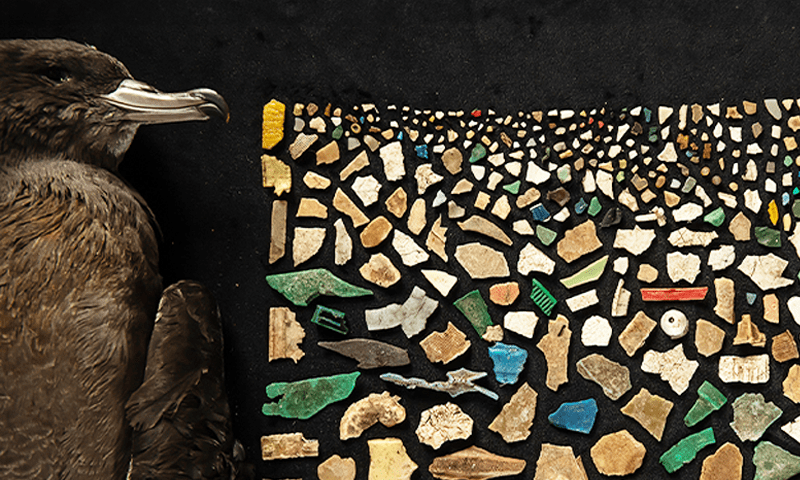
A dull brown bird appears to look proudly over a peculiar mosaic of colors and shapes—yet this shot is anything but idyllic. Instead, this flesh-footed shearwater (Puffinus carneipes) lays deceased next to the 403 pieces of plastic found lodged inside its digestive tract.
Ranging from grain-sized fragments to actual LEGO pieces and bottle tops, the roughly 8 million tons of plastic dropped by humans into oceans each year are increasingly polluting ecosystems and killing marine animals. For his stark depiction of the ocean plastics crisis, Australian-based photojournalist Justin Gilligan won the category prize for “The Bigger Picture” in the Natural History Museum’s annual Wildlife Photographer of the Year competition.
Gilligan has spent years documenting how plastic ends up in the stomachs of flesh-footed shearwaters in Australia, working in partnership with Adrift Lab and ornithologist Alex Bond. The team of researchers found this bird floating in the drift off Australia’s Lord Howe Island, home to only a couple hundred humans and tens of thousands more seabirds.
Flesh-footed shearwaters are among the world’s most plastic-contaminated bird species, and their populations on Lord Howe Island only underscore that fact: More than three quarters of adult shearwaters were found to have plastic in their digestive systems, while all fledglings on the Australian island had plastic in their guts.
Because shearling chicks rely on their parents for their diets, they are particularly vulnerable to consumption of plastic. After hatching, the chicks spend three months in their burrows while their parents collect and bring back food from the Tasman Sea—but often the parents bring them plastic instead. (Researchers believe they mistake the plastic bits for food or for pumice stone, which can aid in digestion.) By the end of their burrowing period, plastics can amount to up to 10 percent of a hatchling’s total bodyweight, bleed toxins into its bloodstream, and cause plasticosis, a scarring to the lining of the digestive tract.
Scientists are not certain why flesh-footed shearwaters are particularly vulnerable to plastic consumption, since other closely related birds on Lord Howe Island do not eat as much plastic or face as many related health issues. But to slow population loss, Bond and Adrift Lab have launched a rescue operation, pumping the stomachs of older hatchlings to remove debris. The larger challenge, of course, is to remove plastic debris from the oceans the birds rely on for food.