The oceans are teeming with life, but the sheer volume of water on our blue planet makes that life a bit frustrating to find at times. Traditional methods of locating sea creatures—cameras, direct observation, net catches, and so on—are far from exhaustive, and monitoring remote regions poses even more logistical difficulties. That means that even the most extensive surveys of ocean life are going to have some gaps.
Now, those gaps are being filled thanks to some infinitesimally small clues.
To get a more complete picture of life in our oceans, a team of researchers turned to environmental DNA, or eDNA. These DNA traces are left behind by marine organisms during the normal course of their lives, from fluids, shed cells, and the like. The eDNA is then scooped up in samples of seawater, filtered out, and matched to databases to determine which animals discarded them. In aquatic environments, eDNA tends to degrade relatively quickly, making it a good indicator that the species it belongs to was present in the area. All told, the team’s eDNA survey comprised more than 900 samples of water from a variety of depths ranging from the poles to the tropics, according to their study published in PLOS Biology.
Read more: “The Challenge of Deep Sea Taxonomy”
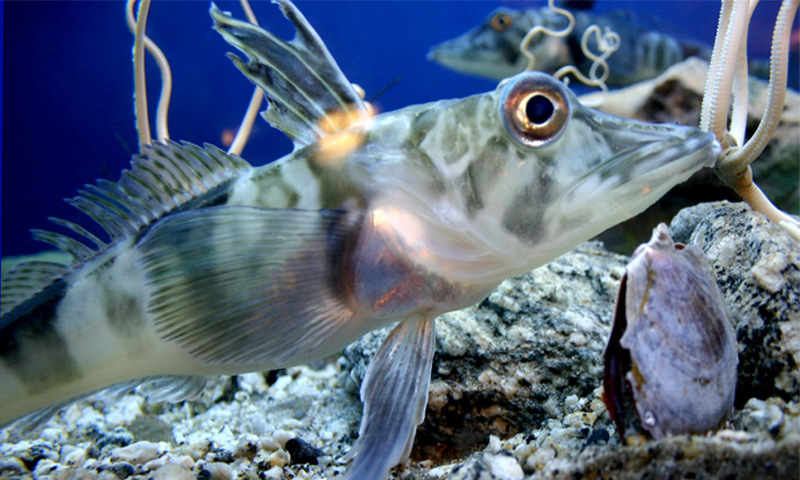
The team, from the University of Montpellier, France, and the Center National de la Recherche Scientifique, found that the geographic ranges of more than 93 percent of detected species had previously been underestimated, meaning those species actually live in a larger territory than previously thought. Additionally, some species were discovered to tolerate surprising environments. For example, the team found DNA from the crocodile icefish—a species believed to only inhabit the frigid waters of Antarctica—as far north as Patagonia in waters around 18 degrees Fahrenheit warmer.
These results have important implications for ocean conservation for a very simple reason: It’s impossible to fully grasp the threats to marine life without first fully grasping the scope of marine life. With this study, our net of understanding surrounding ocean life draws a little tighter. 
Enjoying Nautilus? Subscribe to our free newsletter.
Lead image: Marrabbio2 / Wikipedia