In the swampy center of Florida, 15 miles northwest of Orlando, lies Lake Apopka, a 30,000-acre monument to the transformative power of fish.
Apopka may be almost exactly the same size as nearby Disney World, but it’s far from a tourist attraction. For decades the lake served as an agricultural dumping ground for adjacent citrus groves and vegetable farms, which pumped Apopka full of pesticides and fertilizers. Nitrogen and phosphorus runoff spawned chronic algal blooms, turning water into pea soup and shading out aquatic vegetation. In the late 1990s, hundreds of pelicans, storks, and other birds died en masse after devouring pesticide-tainted fish. Alligators failed to breed. Farmworkers grew sick.
Over the years, the state tried various tactics to clean up Apopka, like buying up farmland to prevent more nitrogen and phosphorus from entering the lake. Though keeping out new pollutants helped, such measures did nothing to dispel the legacy of nutrients buried in sediment at the lake’s bottom. “The material at the bottom is very soft, and it’s easily mixed,” says John Higman, environmental scientist at the St. Johns River Water Management District, the regulatory agency that manages Apopka. “Even wind blowing across the lake stirs it up,” further stoking the algae blooms.
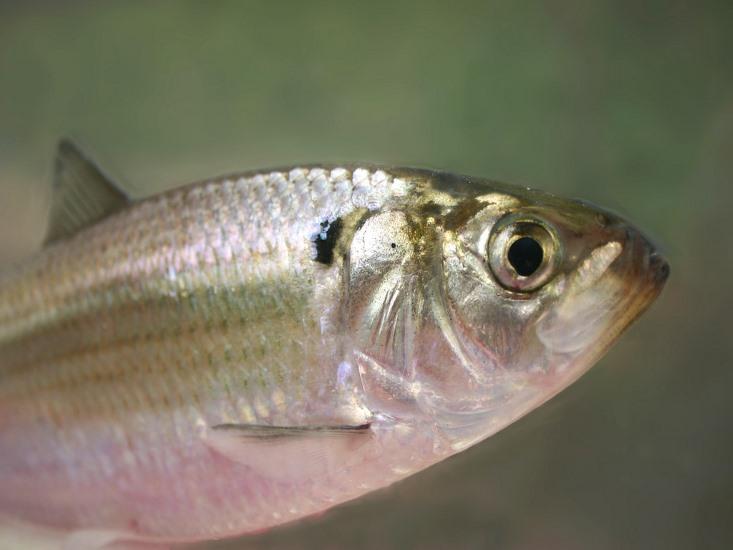
Lake Apopka’s pollution problems were exacerbated by the gizzard shad, a herring-like, plankton-eating fish that thrives in murky water. Though shad are native to Lake Apopka, they’d run amok, freed from predators, like black bass, that had been driven away by the poor water quality. As the shad grazed at the lake’s bottom, they stirred up more sediment; when they defecated, algae fed on the nutrient-rich waste, impairing water quality even further—just the way the shad liked it. In a sense, the fish functioned as ecosystem engineers, shaping the lake’s environment to meet their own requirements.
Scientists at the water management district thought there had to be a way to control gizzard shad and extract lingering nutrients from the lake. In the early 1990s, they hit upon an idea: Why not use the fish as pollution sponges?
The crux of the concept was this: As the shad hoovered up algae, they captured nitrogen and phosphorus in their scaly, silvery bodies. If the fish died naturally, those nutrients would remain in the lake, nourishing the despised algae and perpetuating the deleterious cycle. But if the shad were removed, the pollutants would come out with them, and the fish would no longer be around to stir up muck and poop out nutrients.
And while phosphorus comprises less than one percent of a gizzard shad’s body, the benefits of pulling out fish can add up. “If you remove a million pounds of fish, now we’re talking about thousands of pounds of nutrients,” Higman says.
The idea made good sense, but it faced one obstacle: What to do with a million pounds of gizzard shad? The fish offered lousy eating; they didn’t even make for tasty cat food. You certainly couldn’t dump their dead bodies back in the lake—taking them out was the whole point. Fortunately, the shad did have one productive use: as bait for catching crayfish and crabs. The water management district hired a private fish processor, which recruited an army of commercial fishermen, many from the Gulf of Mexico, to net the algae-sucking fish. Even for men accustomed to blood and slime, mucking about in the soupy lake made for dirty work. “My wife wants me to climb directly into the washing machine when I come home,’’ one fisherman told the Orlando Sentinel. (See the work involved in harvesting shad from Apopka in the video below.)
The project may have been filthy, but it worked. From 1990 to 2014, fishermen netted 21.5 million pounds of shad from Apopka, extracting some 150,000 pounds of phosphorus and 450,000 pounds of nitrogen in the process. Starved of nutrients, the algae blooms began to dissipate, and shafts of sunlight again penetrated the water. Today, says Higman, who oversees the harvest, aquatic vegetation flourishes on many swaths of Apopka’s bottom.
Encouraged by the progress, the water management district attempted similar projects in smaller Florida lakes, with even more impressive results. In Lake Denham, a two-year shad-removal program halved pollutant levels and improved water clarity from an opaque nine inches to three feet. In Lake Griffin, from which fishermen plucked 2.7 million pounds of gizzard shad between 2002 and 2008, the harvest effectively cancelled out 40 percent of the nutrients flowing into the lake, and fish like bass and crappie bounced back in numbers that surprised even Higman. “The gamefish returned to such an extent that they’re going to hold fishing contests,” he says.
Removing shad is, by itself, no panacea. In the cases of Lake Griffin and Lake Apopka, other initiatives, like purchasing farmlands and restoring marshes, have been just as important in improving lake health. In Lake Dora, a body of water that hadn’t benefited from those additional techniques, harvesting shad didn’t produce any noticeable water-quality benefits. (Granted, it’s also possible that the Lake Dora program simply didn’t haul out enough shad; scientists recommend eliminating 75 percent of biomass for optimal impact.)
“There’s always going to be the need to say, hey, we’ve got to stop pollution coming into the lake,” says Jim Bays, senior ecologist at the engineering firm CH2M Hill. “And the internal loading [pollution already in the lake] is so horrific in Lake Apopka that all they can do is chip away.”
Nonetheless, the Sunshine State’s success provides ample reason to believe that harvesting fish could alleviate water-quality crises elsewhere. According to the Environmental Protection Agency, around 20 percent of the United States’ lakes, and more than half its rivers, suffer from nitrogen and phosphorus pollution; all too often, these excess agricultural nutrients create “dead zones.” In the Gulf of Mexico, the dead zone that forms each summer often grows as large as New Jersey. In Lake Erie, a toxic algal bloom, spawned by agricultural runoff, deprived a half-million Ohioans of drinking water last summer.
Could strategic fish removals help mitigate such problems? Though Higman, too, cautions that fish harvests must be combined with other pollution-management tactics, he believes the strategy deserves a prominent place in the water-manager’s toolbox. Harvesting fish “is very applicable elsewhere,” he says. “It’s relatively inexpensive, it helps fishermen with their livelihood, and it improves water quality.” You could hardly ask more from a bit of fishing.
Ben Goldfarb is a Seattle-based environmental journalist and correspondent at High Country News. He tweets @ben_a_goldfarb.