Fragments of the storied Halley’s Comet are zinging into Earth’s atmosphere this week in the annual Eta Aquarids meteor shower, which will peak in the early dark of Tuesday morning.
The famous comet is still alive and well, of course. But over time, these icy, rocky bodies do break down, shedding bits and pieces of themselves. When the Earth orbits through these debris trails, some of the left-behind fragments enter our atmosphere and burn up, producing dazzling meteor showers.
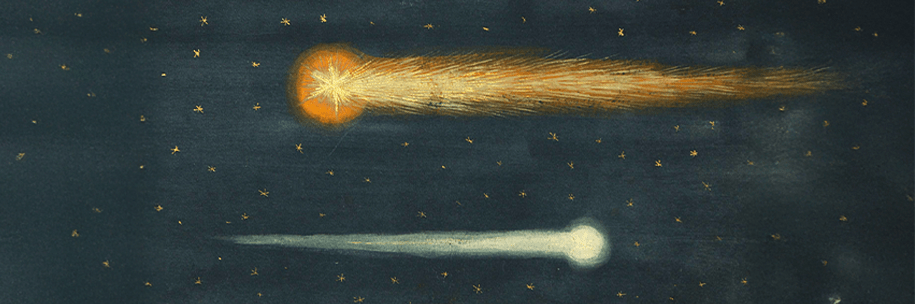
Named for the astronomer Edmond Halley in 1759, the source of the Eta Aquarids is a “close comet” (or near-Earth object, as it and more than 38,000 other comets and asteroids are known). And it has caught the eye of humanity across the ages. Mentions of it go back some two millennia. This illustration of it from the mid-1500s, which appears in the Book of Miracles, a 16th-century German manuscript, likely depicts the comet’s passage in 1456. It gives a sense of the visual power that celestial events would have had hundreds of years ago, before human ingenuity set nighttime ablaze with electricity.
Although the comet itself won’t be swinging back by Earth again until 2061 (at a safe distance of more than 40 million miles), its traces through our solar system bring us this meteor shower each year in early May and the Orionids meteor shower every October. The Eta Aquarids is visible from many parts of the globe, including the United States, although the busiest stretches of sky are in the Southern Hemisphere.
Some of the comet fragments from these showers occasionally end up down here on Earth. If you ever find yourself inspired to try to find one of these rare rocks from space, NASA cosmic dust curator Marc Fries gave us some tips on hunting for meteorites. But your best odds of seeing one are still just to look up. 
Lead image: Mattes / Wikimedia Commons