Runners can tell you that sometimes the last mile of a run seems to feel dramatically longer than the first. This perceptual distortion isn’t limited to brains addled by exercise—it’s a consistent feature of our minds.
When we look at the world, it certainly feels like we’re seeing things as they really are, our senses measuring reality in an objective way. But numerous experiments have shown that the way we see the world is influenced by what we can do with it.
This way of thinking was pioneered by psychologist James Gibson, who came up with the idea of “affordances”: A ball affords picking up, and a hallway affords walking along it. When we look at a button, we perceive the affordance of pressing it. These are not optical illusions, as such, but changes in how we see the world according to what we want and can do. Here are some fascinating examples.
The perceived height of a balcony is increased if you are afraid of falling. Hills look steeper if you’re elderly, tired, or wearing a heavy backpack (pdf); they look less steep after you consume a high-calorie drink. Because descending a hill is more dangerous than going up it, hills look steeper from the top than from the bottom. That’s also why kids on the ground might think a tree is not too high, but after they climb it, they’re not so sure.
Hungry men prefer the looks of women with more weight on them, while men who are full prefer thinner women. We can speculate on the reasons for this. It might be that hunger is associated with lean eating times, and during those times, someone with enough resources to put on weight might be at an advantage to someone who’s thinner. This is supported by the finding that in poor areas, cultural ideals of feminine beauty are heavier than those in more affluent cultures, where the ideal woman is relatively thinner.
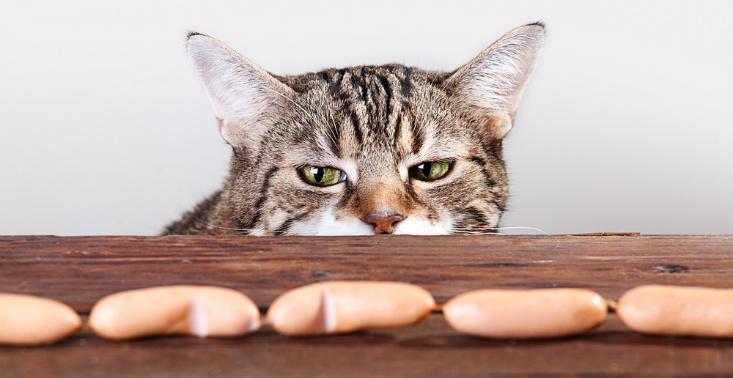
Food and drinks also look different according to our internal states. Thirsty people see bottles of water as being closer than people who aren’t thirsty. Your need for water makes the bottle look closer to encourage you to reach for it.
In general, we see desirable objects as closer. Dieters see muffins as being bigger (pdf) than non-dieters do. This raises an interesting question: If people want to diet, then shouldn’t the food look smaller, and less appealing? The answer could be that the changes in perception work according to our subconscious drives, and less by our explicit goals. When you are dieting, you are often at war with yourself. Part of you wants the muffin, and part of you doesn’t. Looks like the part that wants the muffin has more control over your perception.
Threatening things, such as spiders, are also perceived to be closer, and also larger and faster. At first glance, these two findings may seem mysterious, even contradictory: Why would frightening things and desirable things look closer? Certainly your mind isn’t encouraging you to reach out and touch the spider like it is in the muffin case. A desirable thing appearing closer encourages you to try to get it. A frightening thing appearing closer makes an already dangerous situation appear more urgent, encouraging you to get away. Hope and fear are compelling. It’s the middle ground that’s boring. So even though both good and bad things look closer, it makes sense because closeness encourages different behaviors in these cases.
Physiological states, such as low blood glucose, and social states, such as what kinds of friends are nearby, affect our perceptions of the world. We have evolved to manage the resources we have, and our perceptual system helps us do that by changing our perceptions depending on the available resources. At the end of a run, your energy stores are depleted, and your mind makes the last mile look longer to discourage you from wasting any more energy.
But it’s an illusion. A mile is a mile, no matter how tired you are.
Jim Davies is an associate professor at Carleton University and author of Riveted: The Science of Why Jokes Make Us Laugh, Movies Make Us Cry, and Religion Makes Us Feel One with the Universe.