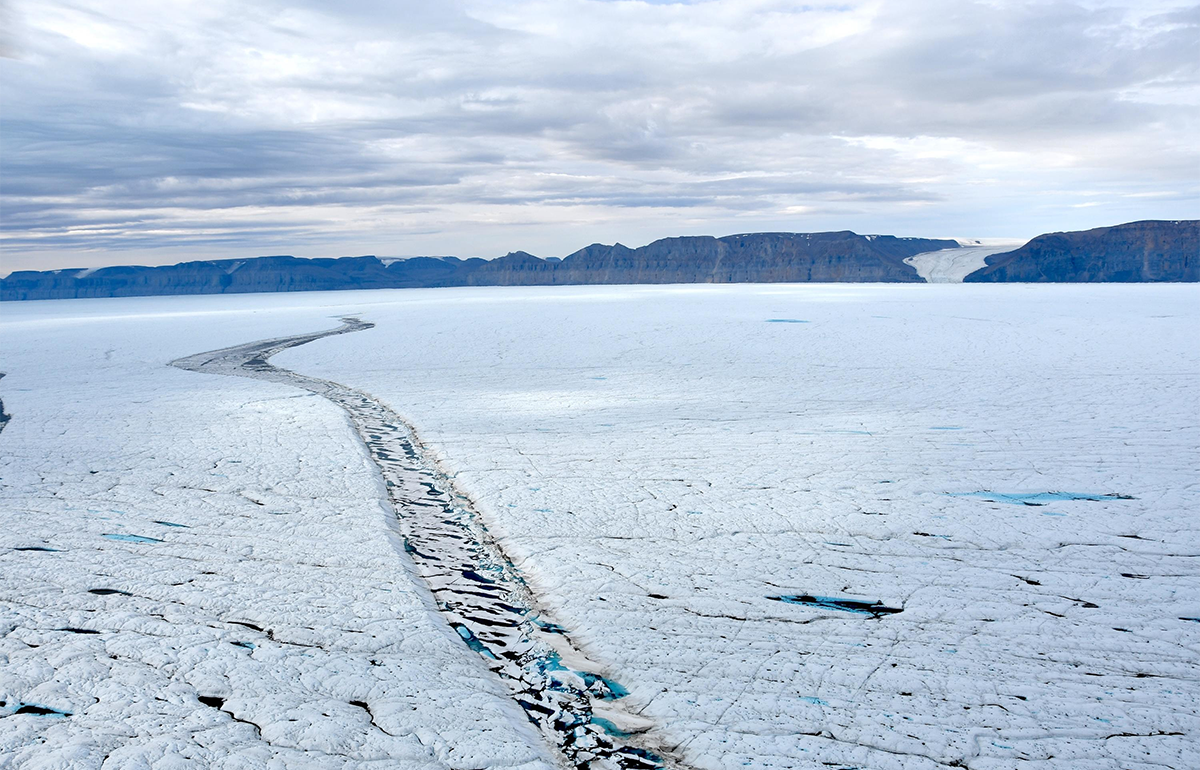
Nature photographer Jon McCormack notices patterns. He’s made a career out of noticing and documenting the patterns that flash across his field of view as he traverses the Earth, from southern Iceland, to Svalbard, to Antarctica. But, as he illustrates in his most recent book of photographs, Patterns: Art of the Natural World, he’s been seeing patterns change. It’s like the beautiful repeating forms he captures are shouting out a warning—the world is changing, and even impossibly solid forms are fragile under the touch of humanity.
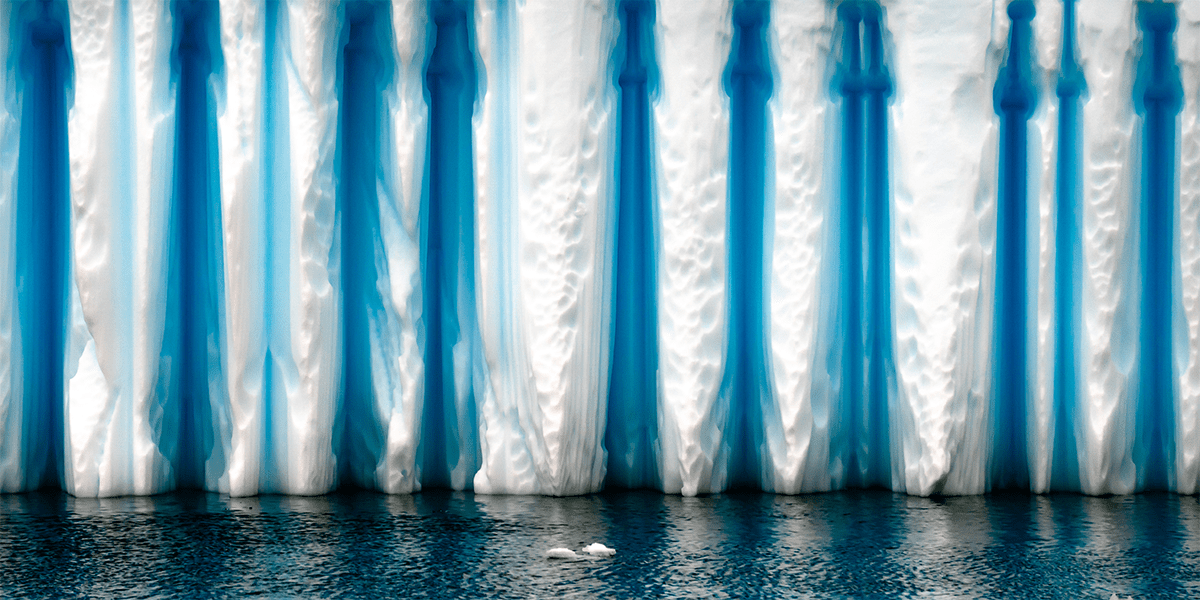
Such was the case as he sat in his cabin on a boat off the Antarctic Peninsula, exhausted from a day spent diving the icy waters of the Gerlach Strait. “I just started to see this pattern go by, and I did what every reasonable photographer would do,” McCormack recalls. “I just grabbed my camera and just like ran straight out to the deck.
Read more: “What Happens When Icebergs Collide With Art”
“This is a time that I can truly point to where that thing when awe happens and the vigilance of the sympathetic nervous system crashes and the parasympathetic nervous kind of unleash it at the same time,” he continues. “It drove that true sense of there is something much bigger here that I find in so much of our world.”
In the beauty and awe in those azure columns slowly processing past McCormack’s camera, a message was written. “It's just these stripes of this deep cobalt blue. But the reason that that happens is that's the old ice. That's ice that's been around for so long that the weight of the iceberg has actually compressed the ice and has squeezed out all of the air bubbles,” he says. “That ice is at the core of the berg. The only way that you get to see that is through the icebergs melting.”
McCormack adds that the images he brings to life are meant to share his wonder at the fragile patterns in the natural world—stunning and precarious. “I think we spend so much time as environmentalists telling people what not to do. You shouldn't drive cars and you shouldn't do this and you shouldn't do that,” he says. “I'm looking for a different way to think about that. I'm looking for people to be inspired by how staggering nature is and with a hope that we will realize that we're actually taking nature for granted.” 
Enjoying Nautilus? Subscribe to our free newsletter.
Lead photo copyright © Jon McCormack; courtesy of and published by Damiani Books, in the book Patterns. All proceeds of book sales will be donated to Vital Impacts, a nonprofit organization that uses visual storytelling to inspire environmental awareness.