As summer wanes, we’re entering curl-up-with-a-good-book-in-a-cozy-nook season. Bring it on, I say. All the better if it’s a nice, meaty title that gives your grey matter something to chew over. These books, hitting shelves soon, promise to provide just such stimulation, comfort, and challenge.
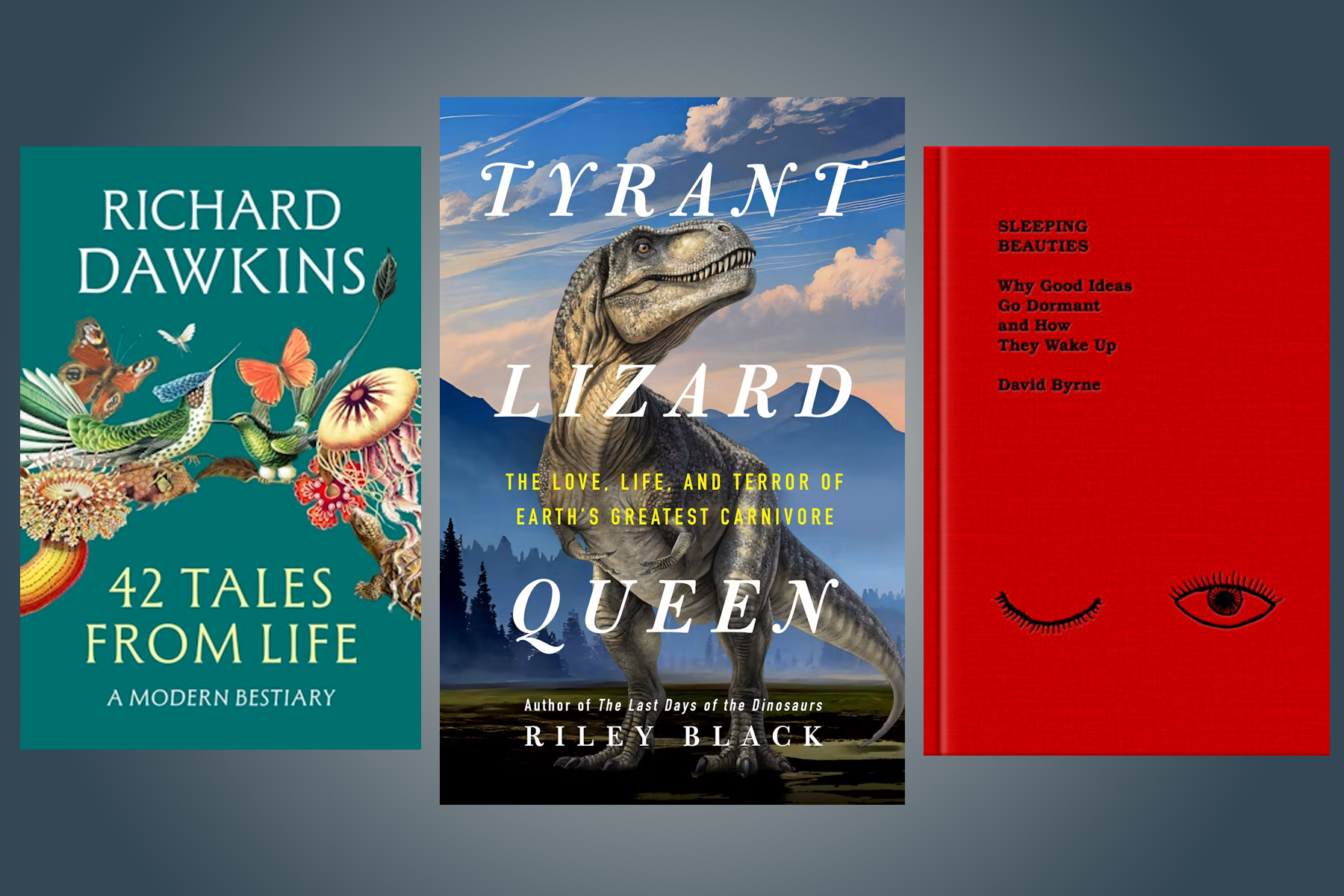
Tyrant Lizard Queen: The Love, Life, and Terror of Earth’s Greatest Carnivore by Riley Black
Recently, researchers have produced a plethora of insight into T. rex—the dinosaur species that stands alone as the spokesreptile of that once mighty branch of Earth’s tree of life. This year alone, we’ve learned why T. rexes had tiny arms, that they had body temperatures similar to humans (97 Fahrenheit), the walking speed of at least one adult T. rex (about 3.5 to 4.5 miles-per-hour), and that the massive beasts took from 35-40 years to grow to full, adult size. What a perfect time for award-winning science writer Riley Black to lead an evidence-based hike through the life of fictitious T. rex, Snaggletooth. In Tyrant Lizard Queen, Black follows Snaggletooth as she hatches, survives, plays, sleeps, mates, and nests in Cretaceous North America. Sign me up for this walk in the woods.
Why We Ask Why: The Science of Explanation and the Human Drive to Understand by Tania Lombrozo
Anyone who’s spent time with a toddler or a scientist knows that “whys” come fast and furious. One might argue that “Why?” is the singular question that separates humans from our fellow Earthlings. Princeton University psychologist Tania Lombrozo has tackled big questions on Nautilus before—how to attain existential comfort without religion and the diceyness of “playing God.” In her latest book, Why We Ask Why, she takes on the mother of all questions, asking why humans so often ask “Why?” With scientific and philosophical insight aplenty, this one seems like quite the read to wrap our questioning minds around.
The Taste of Rain in Buenos Aires by William Dowd
We at Nautilus have been waiting for this one for a few years. Our very own Kristen French talked with MIT-trained poet and science writer William Dowd in 2023 about his audacious project to recapture the wonder of reading—stolen from him through a condition called binocular vision disorder—by trying to seed his own dreams. With the help of an experimental dream inception device called Dormio, Dowd used unfamiliar poetry to try and influence the content of his nightly vision quests. The Taste of Rain in Buenos Aires details the results of this yearlong experiment. Each of Dowd’s 20 guided dreams metamorphoses into a prose poem on the page.
42 Tales from Life: A Modern Bestiary by Richard Dawkins
Fifty years after the publication of his most famous book, The Selfish Gene, famed evolutionary biologist Richard Dawkins adds to his impressive bibliography with what seems to be a less-loaded topic. In 42 Tales from Life, Dawkins presents a celebration of the evolution of animals where the protagonists are life’s extraordinary adaptations—the most intriguing physical traits and behaviors in Earth’s menagerie, as shaped by the creative process. The 42 vignettes are accompanied by the breathtaking art of Ernst Haekel, the 19th-century polymath whose botanical and zoological artwork has delighted viewers (including Dawkins) for decades.
On the Equality of All Things: Lessons on Physics and Philosophy by Carlo Rovelli
Unprecedented leaps in humanity’s understanding of the universe demand clear-eyed explanation. As science peels back more and more layers of our reality, theoretical physicist Carlo Rovelli has long been happy to oblige—to describe what we’re left with. His latest book, On the Equality of All Things, helps readers navigate our current era of perspective-shifting discovery by weaving together modern scientific insight and ancient philosophy. The nature of time, the illusion of cause and effect, the fragility of reality. Nothing is off limits.
Sleeping Beauties: Why Good Ideas Go Dormant and How They Wake Up by David Byrne
Same as it ever was. From iconic lyricist and Talking Heads frontman David Byrne, comes a new meditation on the life cycle of ideas. Sleeping Beauties charts the stuttering course that groundbreaking innovations took from ideation to actually breaking ground. Throughout history, artists, thinkers, scientists, and inventors have been stymied by circumstance, their transformative ideas forced to hibernate. But these same ideas often persevere and percolate, later reawaking to change our technologies or our views on the world. Byrne illustrates several such paths and offers a lens through which we might avoid sleeping on the next big thing.
Wireheads: An Unnatural History of Technology in the Brain by Mike Jay
Science has so much yet to learn about the brain. But as neuroscientific insights continue to pour in, we’ve not been shy about using technology to interact with the complex organ. Science historian Mike Jay, author of 2023’s Psychonauts, probes the intersection of brains and technology in his latest work, Wireheads. From mind-controlled raging bulls and pleasure-overloaded rats to CIA brainwashing and Elon Musk’s Neuralink, Jay explores the promise and peril of marrying brains with machines.
Worlds Unfolding: Science on the Page by Jennifer A. Watts, Daniel Lewis, Joel A. Klein, and Natalie Lawler
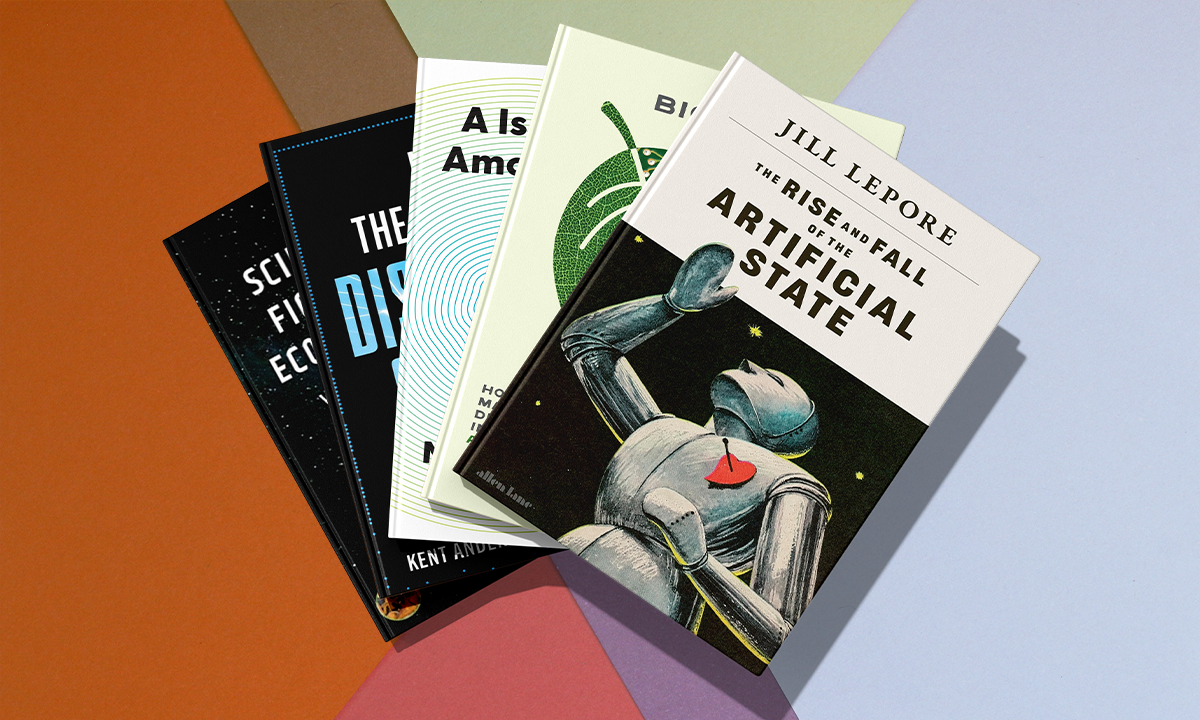
This five-volume set is a distillation of the Huntington Library’s collections on the history of science, medicine, and technology. It looks to be a fascinating compendium of human knowledge-seeking, cleverly segmented into neat categories: Above (astronomy, aviation, aerospace); Below (geology, mining, oceanography); Within (anatomy, medicine, electricity); Beyond (exploration, science fiction); and Alive (natural history, ecosystems). Add to these a booklet that includes an introduction by none other than Bill Nye, science guy, and these volumes could provide hours and hours of cozy reading. 
Enjoying Nautilus? Subscribe to our free newsletter.