As animals around the world contend with climate change, disease, and human destruction of their ecosystems, amphibians are particularly vulnerable. As of 2023, around 41 percent of amphibian species around the globe were classified as threatened—a higher proportion compared with mammals and birds. These creatures have thin, permeable skin, making them less able to regulate their temperature than other animals and more susceptible to compounding risks like infections and pollution.
One particularly nasty disease called chytridiomycosis, which is caused by fungus, has devastated amphibians practically everywhere but Asia—it’s thought to have aided in the decline of more than 500 species and wiped out 90.
To gauge the well-being of amphibian populations, it’s crucial to keep an eye on their hormone levels. Hormones help them reproduce and adapt to stress, two key factors in ensuring a species’ survival. But amphibian endocrine systems have remained elusive because it’s difficult to monitor them in a non-invasive way. Using needles to take blood samples, for instance, can be an extremely stressful experience for these sensitive creatures.
Read more: “A Model Toadlet”
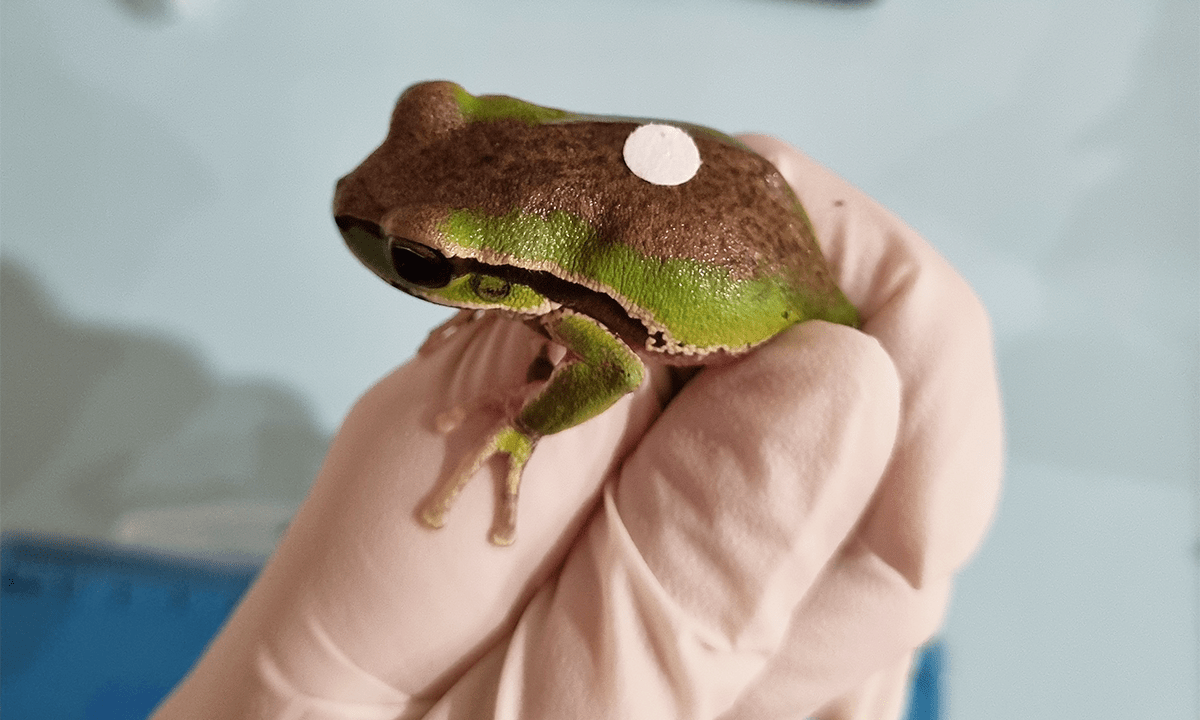
Now, scientists from Australia have proposed a more comfortable and convenient alternative: patches less than a centimeter in diameter to temporarily stick on their skin. They tested these patches on male Blue Mountains tree frogs, which they collected from Dharawal National Park in Australia, by applying them to the amphibians for just 60 seconds at a time. The team used these patches to continuously monitor testosterone concentrations over 12 hours in the frogs after boosting their levels of the hormone with medication.
The researchers concluded that “dermal patches are a viable, non-invasive tool for monitoring biologically relevant changes in amphibian steroid hormones,” the authors wrote in the study, which was published in Frontiers in Conservation Science. Further studies should test the approach with other types of hormones and species, the authors noted.
“This is a big step forward in helping us understand frog biology and improve conservation efforts,” said paper co-author Alicia Dimovski, an ecologist at La Trobe University, in a statement.
Dimovski said she now hopes that conservation programs can harness these tiny stickers when breeding amphibian species. They could also be used to better understand amphibians’ reproductive systems and track their reproduction in wild populations—research that could help aid their survival amid myriad dangers. 
Enjoying Nautilus? Subscribe to our free newsletter.
Lead image from Dimovski, A.M., et al. Frontiers in Conservation Science (2025).