Do you remember the first time, as a kid, you stood beneath a looming dinosaur skeleton at a museum? The moment of awe, maybe a tingle of fear. Of realizing that you could have—but for a gap of 65 million years or so—been lunch. Or at least just another mammal squashed underfoot.
It’s a weird thing, still, to be reminded that we’re just another animal. Nautilus editor at large Kevin Berger was thinking about this. So he called renowned primatologist and neuroscientist Robert Sapolsky at Stanford University and asked him. “What does it mean to see ourselves as animals?”
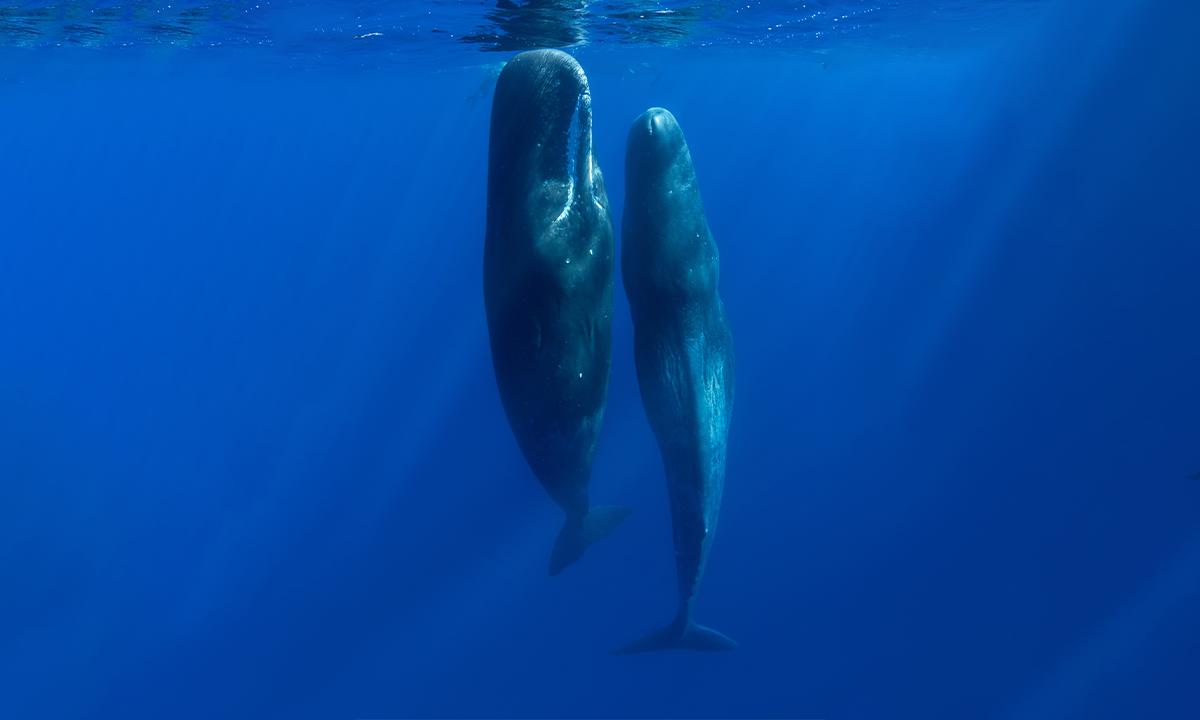
Maybe it’s a needed dose of humility. It’s also a reminder, Sapolsky said, that we have so much running through us that’s essentially the same as what runs through animals we might not fancy we have much in common with. Like the sea slug. “The biochemical pathway that a sea slug uses when it’s learning condition-avoidance is the same one that we use in the hippocampus,” Sapolsky said. “We use the same hormone, oxytocin … that a narwhal mother would use.” In short: “Evolution is amazing.”
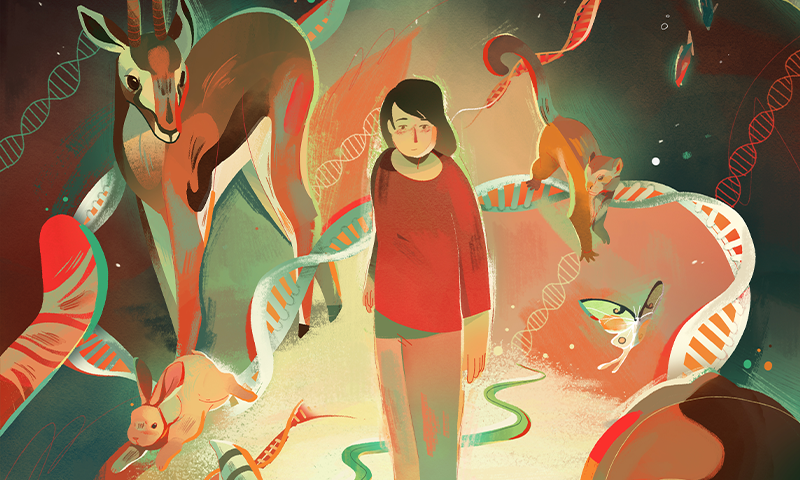
The further we go down, into DNA, the less we find that separates us. Some central genetic differences between us and chimpanzees seem to have more to do with how much hair we grow on our shoulders than those responsible for throwing signals in our newfangled brains. And as research out of neuroscientist Kenneth S. Kosik’s lab, at the University of California, Santa Barbara, has suggested, the blueprints for our brains might well have started in some of the earliest simple animals anyway, sea sponges.
But we needn’t always get down to neurons and base pairs and biochemicals to be reminded of our animalness. Sometimes it’s as simple as a 4-year-old Homo sapiens standing in quiet stillness, mouth agape, gazing up at the towering Barosaurus and Allosaurus in the foyer of the American Museum of Natural History, momentarily unaware of the buzz of other humanity around them. Many of us have been this child (including Mick Ellison, now a senior artist in paleontology at this very museum, who tells us about his craft later in this issue). And now I get to watch my own children in that moment. Such points connect us not just to these other—sometimes seemingly unknowable—animals, but also to each other. Because if there’s another thing we all have running through our DNA, it’s that thread of wanting to know.