I used to look at coral fossils and think, how great things must have been for these creatures back before humans began stirring up trouble for the planet, like extreme heat and pollution. But as I looked back into deep time, I realized that they had faced down formidable challenges before. The Ice Age was one such challenge.
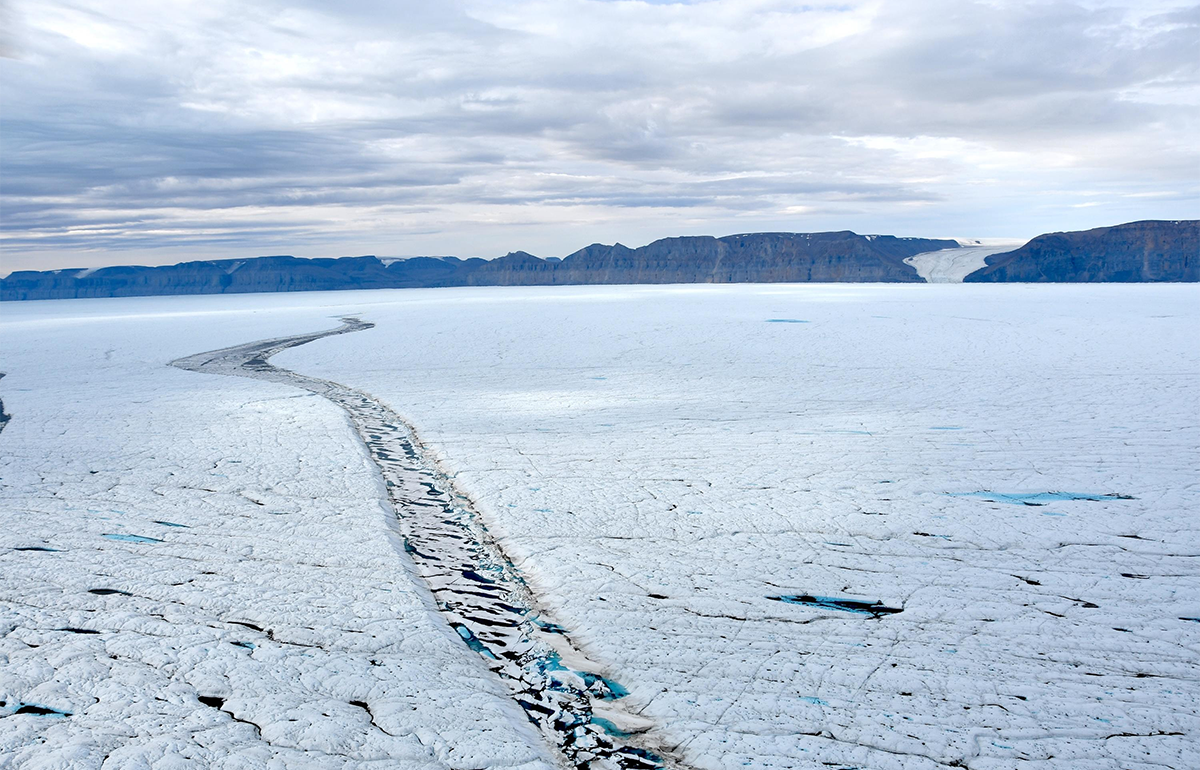
For the past 800,000 years, glacial-interglacial cycles have flip-flopped about every 100,000 years, which had an enormous effect on sea level. During interglacial periods, like today, ice sheets and glaciers are small, more water is in the ocean, and sea level is high. During glacial periods, water is trapped in ice, so sea level is low. Water also expands when warmed and contracts when cooled, amplifying the highs and lows.
These topsy-turvy sea levels were hard on reefs. When sea level fell, shallow water reefs were exposed to the air, and when sea level rose, reefs were plunged into deep water, sometimes so deep that corals’ symbiotic algae no longer had enough sunlight for photosynthesis. Stuck to the seafloor, mature corals that were either too deep or too exposed couldn’t evacuate. They died. But here’s the good news: Their offspring could escape. Corals start their lives as larvae floating in the ocean, and those larvae can settle down in new locations. Over generations, corals moved as sea level changed and new reefs popped up where conditions were right.
Glacial periods posed the greatest challenge for coral reefs because there were far fewer spaces where corals could survive. About 20,000 years ago, at the height of the last glacial period, sea level was 420 feet lower than it is today and corals had about 90 percent less habitat because of the shape of the seafloor. But, as far as we know, all but two coral species survived. In theory, reef life survived in refugia, pockets of safety where species shelter in place during difficult times.
The problems corals contend with today, like overheating oceans and slurries of nutrient-laden water washed off coasts, are very different ones. But it is heartening to know that corals’ adaptations helped them persist. Some of those adaptations may help them survive into the future.
People have been inventing technology to help us explore underwater for centuries, but it wasn’t until the 1950s that scuba diving really took off. Scuba equipment became increasingly available in the ’50s and ’60s and courses were organized to train new divers. With scuba, scientists were able to describe reef ecosystems in more detail than ever before.
While diving into reefs today almost certainly means visiting an ecosystem marked by change, most scientists believed until fairly recently that reefs were healthy when they first started eyeing them up close with scuba gear. The truth is though that they were suffering from human impacts long before we met them underwater.
Some conservationists are experimenting with probiotics to keep colonies healthy when the heat is on.
Reefs near populated coasts were most vulnerable by the time divers arrived. Overfishing and overharvesting of turtles in Caribbean colonies hundreds of years ago started to deplete reefs of species that play important roles in the health of these ecosystems. In areas where coastal cities and agriculture expanded, nutrients from sewage and fertilizers polluted the waters around reefs. Where deforestation caused erosion, sediment poured into the ocean and rained down on corals. In the Florida Keys, evidence suggests that entire reefs may have disappeared before scuba became widespread.
Early divers couldn’t see what was no longer there. Thankfully, other pieces of evidence from the past, like fossils and historical records, can help us figure out what healthy reefs looked like before we saw them through the looking glass of our scuba masks.
A coral’s microbiome includes an enormous diversity of bacteria, archaea, fungi, and even viruses. Exactly how microbiomes support coral health isn’t yet well understood, but what we do know is that a healthy microbiome can help corals survive times of stress. When the microbiome is disrupted, corals become more vulnerable to disease.
Looking to microbiomes as a possible source of coral resilience, researchers have found multiple microbes that help protect corals against heat stress. They have also identified microbes that just take up space in corals. But that can be helpful too if, by taking up space, they make it harder for harmful microbes to make a home there. In the Caribbean, researchers have found that elkhorn and staghorn corals were less likely to be affected by disease when they had high levels of a certain bacterium in their microbiome, possibly because it blocks access for harmful microbes.
The coral microbiome itself can be disrupted by heat stress, however. Corals that are resilient to heat tend to be able to maintain a stable microbiome, but the microbiomes of less resilient corals shift in hot water—helpful microbes decline and pathogens rise.
Some conservationists are experimenting with probiotics to keep colonies healthy when the heat is on. Others argue that it is too early for these measures, because we don’t yet know enough about which microbes are beneficial and whether it is even feasible to treat corals at a large scale.
Either way, microbes will likely be important partners for coral species long into the future. 
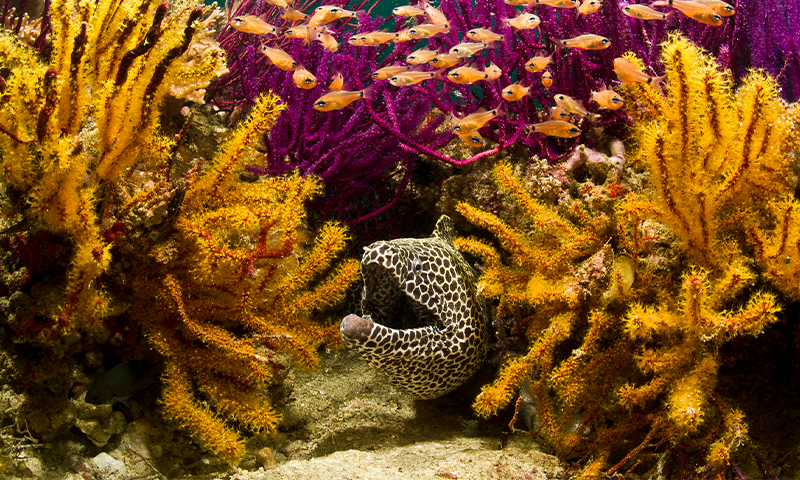
Lead photo by Warren Baverstock / Ocean Image Bank