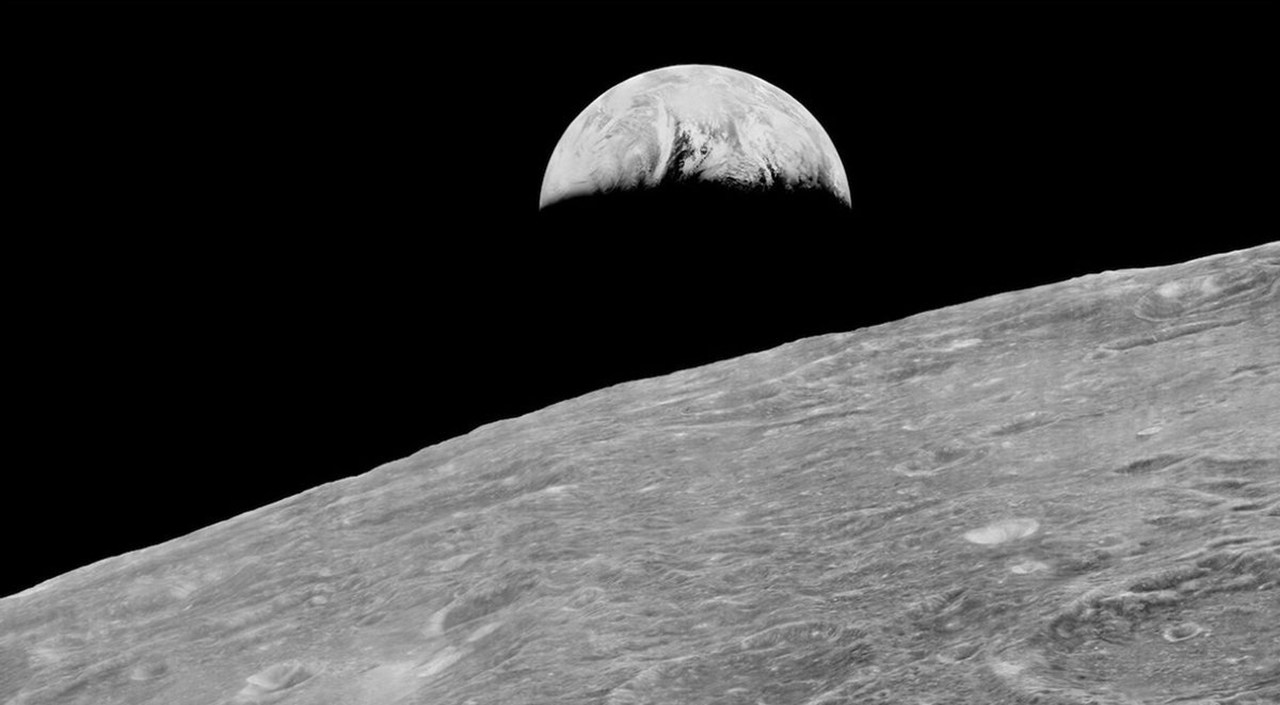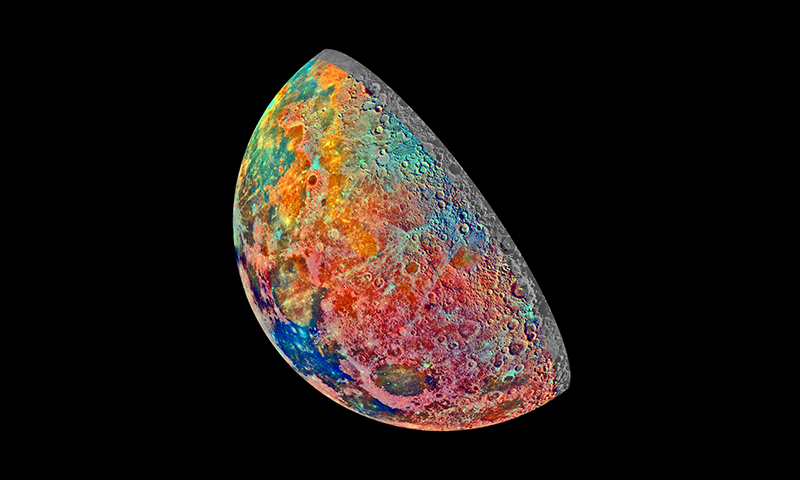
Since time immemorial, the moon has sparked something in humanity—love, longing, wonder, fear, and more. Now we can add one more human emotion to those that our luminous celestial neighbor coaxes from us: greed.
Astronomers have long known that the moon and its thin outer layer of soil, called regolith, contains a bevy of potentially useful resources. Now, companies are clamoring to claim their little piece of the lunar pie in the hopes of converting moon dust into a steady stream of profit.
Most recently, the hottest commodity on the moon seems to be helium-3, a stable isotope of the noble gas that solar winds have deposited on the moon in quantities that far exceed those found on Earth. Helium-3 could serve as fuel for future nuclear fusion reactors and, more immediately, as a crucial component of the high-tech refrigerators needed to cool quantum computers.
Recently, Bluefors, a cryogenics company based in Finland, inked a $300 million deal with a moon resource harvesting startup called Interlune to buy up to 265 gallons of helium-3 annually between 2028 and 2037. On the heels of that deal, Blue Origin, the aerospace company launched by Amazon founder Jeff Bezos, announced its plan to intricately map the resources harbored by the moon, including helium-3, water ice, and a bevy of rare earth elements and precious metals. The moon is also known to be abundant in many elements, especially iron, oxygen, and silicon.
Read more: “The Moon Is Full of Money”
But while companies and countries jockey to mine the moon, making such ventures financially feasible is another matter altogether. “The new moon race will not be won by whatever nation plants boots and flags on the lunar surface,” wrote Mustafa Bilal, a research assistant at Islamabad-based Centre for Aerospace & Security, in a recent SpaceNews piece, “but by the one building the infrastructure to sustain a long-term presence and reaping the economic dividends.”
The thing is, it’s incredibly expensive to travel to the moon, especially in spacecraft laden with the heavy-duty equipment that would be needed to extract resources, much less ferry those spoils and machines back to Earth. One 2004 estimate held that it costs about $1,000 per pound for a round trip from Earth to the lunar surface. And that is likely on the low side.
With technology advancing at a breakneck pace, the moon’s days as distant tugger of heartstrings are likely numbered. Let’s just hope any extraction of its wealth leaves a little something to continue hitting our eye like a big pizza pie. 
Enjoying Nautilus? Subscribe to our free newsletter.
Lead image: NASA/JPL