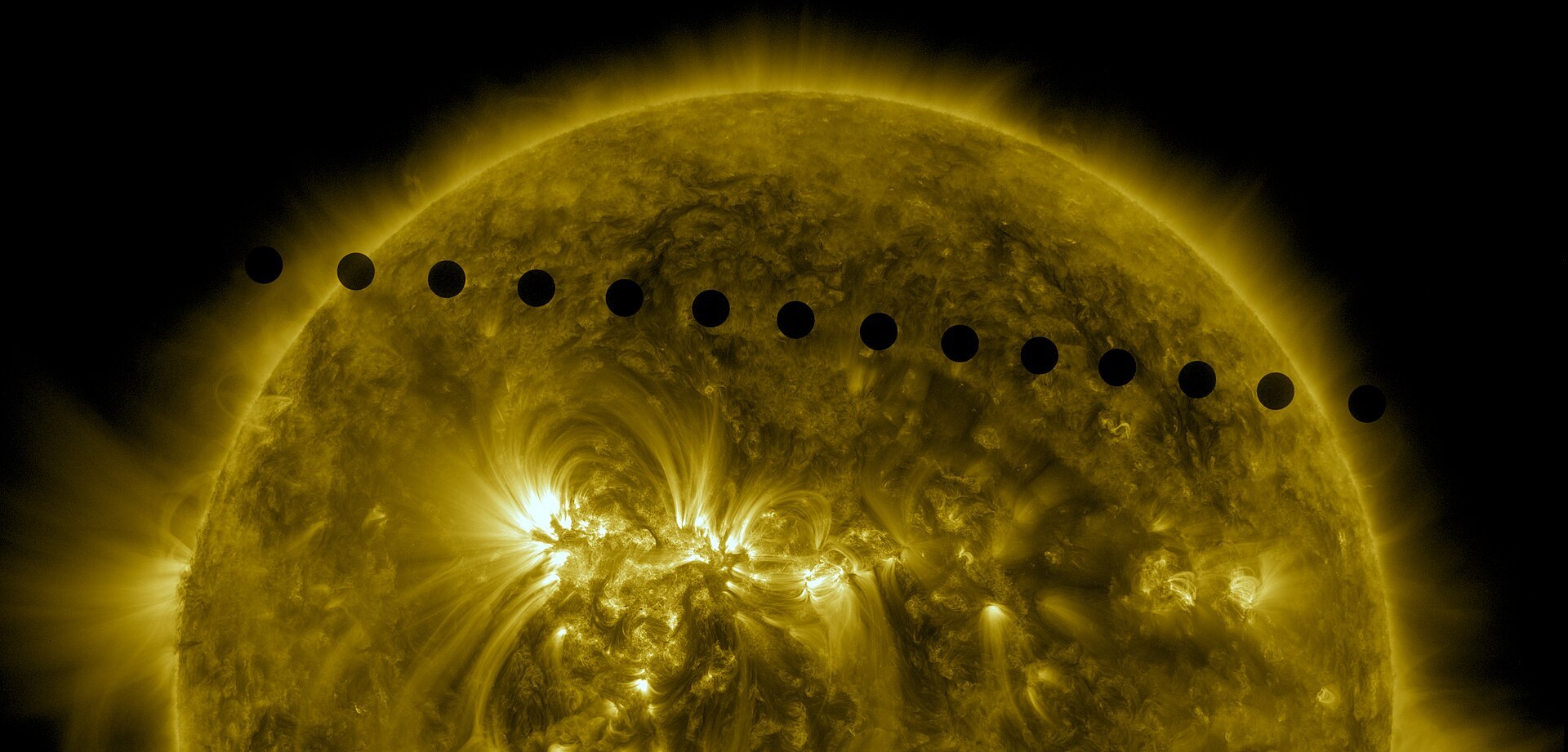
Above our heads churns a fiery furnace: The sun roils and boils, with streaks of plasma shooting thousands of miles from its surface and falling back like molten rain. But detailed observations of the ceaseless activity in the sun’s atmosphere, called its corona, have been impossible to collect from Earth, except during solar eclipses. Until now.
Astronomers recently recorded the most detailed images ever of the sun’s tempestuous corona. Using advanced optics they were able to remove atmospheric blur, caused by turbulence in the Earth’s atmosphere, which had made observation so difficult. They published their findings this week in Nature Astronomy.
The videos were recorded with the help of an adaptive optics system called Cona, which has a flexible mirror that can counteract the image degradation caused by atmospheric turbulence. Cona is installed at the Goode Solar Telescope, which is operated by the New Jersey Institute of Technology's Center for Solar-Terrestrial Research at Big Bear Solar Observatory in California. Adaptive optics systems like Cona, which have mirrors that can reshape themselves thousands of times per second, have been in use since the early 2000s to record crisp, detailed images of the sun. But this is the first time researchers have used such an approach to capture the wispy majesty of the sun’s corona.
Such detailed observations can help scientists probe the enigmatic dynamics and effects of the solar corona. Researchers have observed coronal features such as giant blobs of plasma called prominences, spiky projections called spicules, and massive arcs of plasma called loops, but the details of their behavior and the effects that they have on space weather have been hard to pin down.
The data they collect with Cona’s adaptive mirrors will help to “lift the veil on the mysteries of the corona,” the researchers write, bringing news of our nearest star down to Earth. 
Lead image: Coronal rain forms when hotter plasma in the sun’s corona cools down and becomes denser. Like raindrops on Earth, coronal rain is pulled down to the surface by gravity. Because the plasma is electrically charged, it follows the magnetic field lines, which make huge arches and loops, instead of falling in a straight line. Credit: Schmidt et al. / NJIT / NSO / AURA / NSF