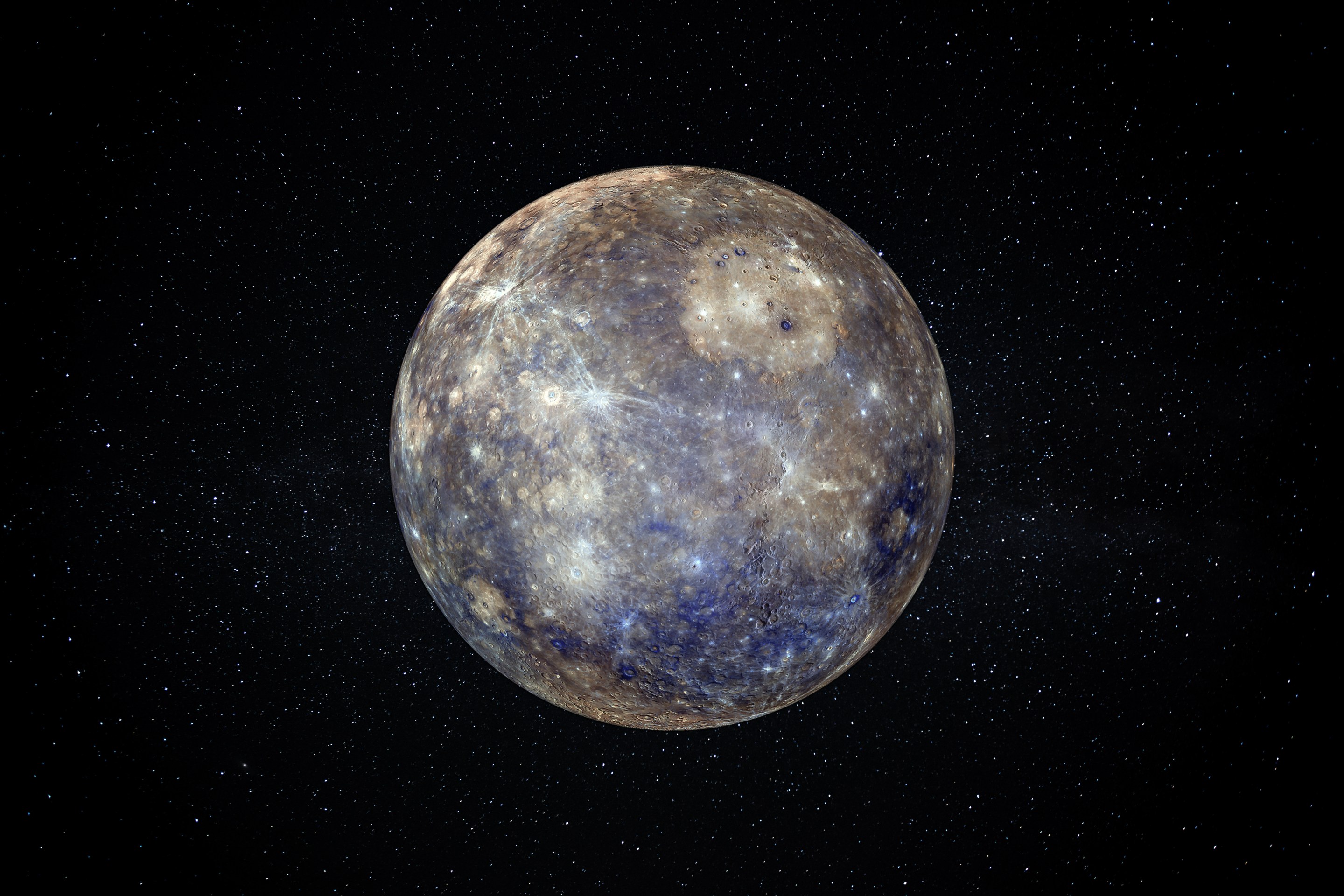
A wandering stranger blowing into town, disrupting everyone’s lives, and forever changing the shape of the future is a familiar Hollywood trope, but it might also be the story of our early solar system.
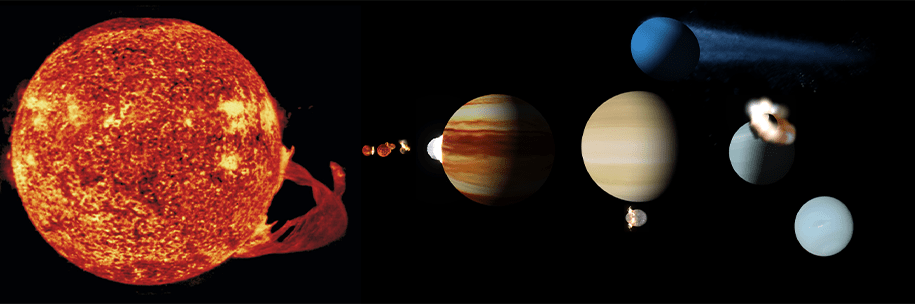
For years, astronomers have puzzled over how the planets in our solar system settled into their current positions. The orbits of the largest planets—Jupiter, Saturn, Uranus and Neptune—were once clustered closer together before a reshuffling gave them a little more breathing room, and changed their order, to boot. But what set this upheaval in motion?
New research from the Laboratoire d'Astrophysique de Bordeaux and the Planetary Science Institute offers a possible explanation—a rogue planet or brown dwarf. Astronomers Sean Raymond and Nathan Kaib (from those two institutions respectively) ran 3,000 computer simulations to determine what kind of celestial flyby would result in our current solar system.
Read more: “A Step-by-Step Guide to Our Solar System’s Demise”
Together the two researchers simulated visits by objects as small as Jupiter and as large as 10 of our suns passing by our sun at distances of between one and 1,000 astronomical units (one astronomical unit is the distance from the Earth to the sun). The astronomers found that only twenty of the simulations—around 1 percent—produced our solar system’s current orbital architecture. Objects that were too massive or too close ripped planets away or wildly distorted their orbital paths, while objects that were too small or too far away were too weak to change anything at all.
The astronomers determined that if a heavenly body swinging by was responsible for reordering the young solar system, it must have had a mass between 3 and 30 times that of Jupiter, which is equivalent to the size of a large planet or brown dwarf. It would have flown by at a distance from the sun of around 20 astronomical units—some 1.86 billion miles—close enough to shake things up without disrupting the fledgling planetary system altogether.
If not for this mysterious visitor, the night sky would look a little bit different. 
Enjoying Nautilus? Subscribe to our free newsletter.
Lead image: Mp152 / Wikimedia Commons