If you’re concerned about space debris and want to give yourself a heart attack, check out this anxiety inducing map of all the objects known to be orbiting Earth. What goes up must come down, and when these satellites are past their prime, many of them re-enter the atmosphere on a fiery, one-way trip back to terra firma.
“We’re now at a point where we have multiple satellites re-entering the atmosphere per day,” Johns Hopkins University’s Benjamin Fernando, who tracks space debris, told Nautilus last month. “There were tens of thousands fewer satellites 10 years ago than there are in orbit today—a problem that’s only going to get worse.”
Elon Musk, whose SpaceX and Starlink companies account for much of the debris that comes careening to Earth’s surface, is promising to ramp up launches—including orbital AI data centers—causing concern among scientists who study the effects of space debris.
Read more: “The Dark Side of Putting Mirrors in Space”
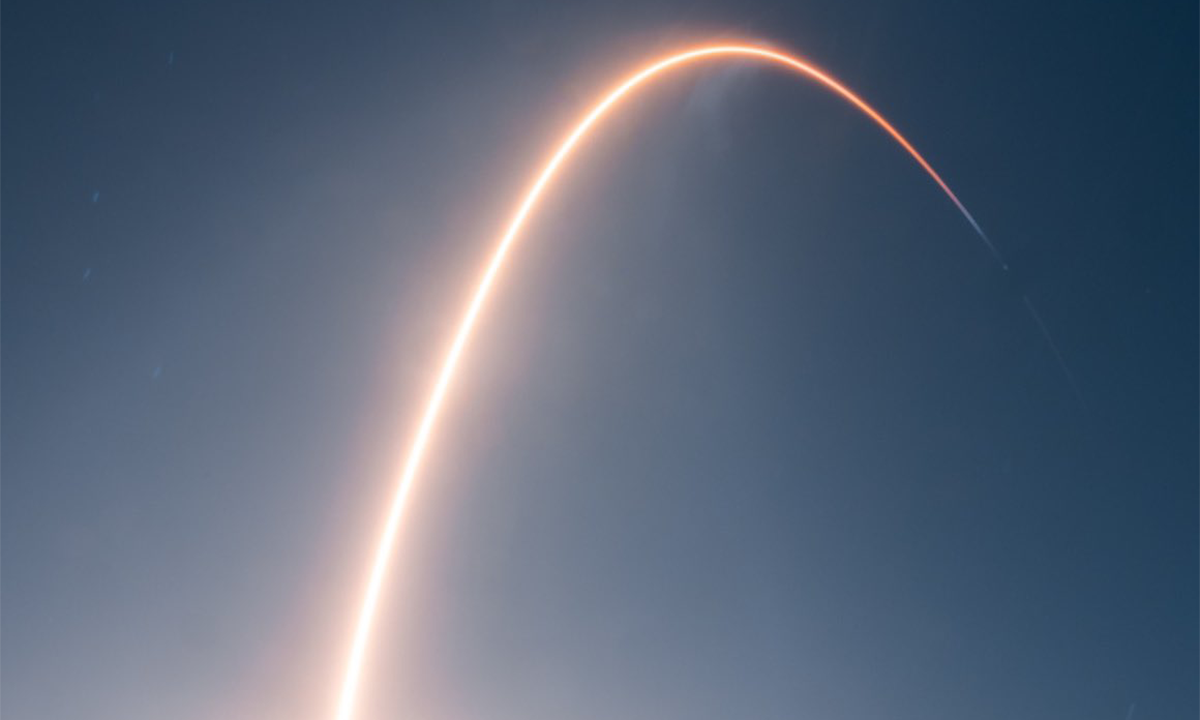
Robin Wing of the Leibniz Institute of Atmospheric Physics is one of those scientists. In February of last year when the upper stage of a SpaceX Falcon 9 rocket entered an uncontrolled descent sending a fireball streaking over the skies of Europe, he saw an opportunity.
Wing and his team fired a laser into the upper atmosphere to measure the concentration of lithium, a metal commonly used in spacecraft construction. There, they discovered an enormous plume with a concentration of lithium 10 times higher than normal levels, and published their findings in Communications Earth & Environment.
As the first known direct detection of upper-atmospheric pollution from space debris re-entry, the study represents a grim milestone. Unfortunately, the authors stress that not all potentially polluting material from space debris can be measured this way. They’re also uncertain of the long-term effect of this kind of atmospheric pollution.
“This is a new scientific field. It’s hard to speculate because it’s changing so quickly,” Wing told the BBC.
With satellite launches increasing by the day, we’re about to find out—one way or another. 
Enjoying Nautilus? Subscribe to our free newsletter.
Lead image: Frame Stock Footage / Shutterstock