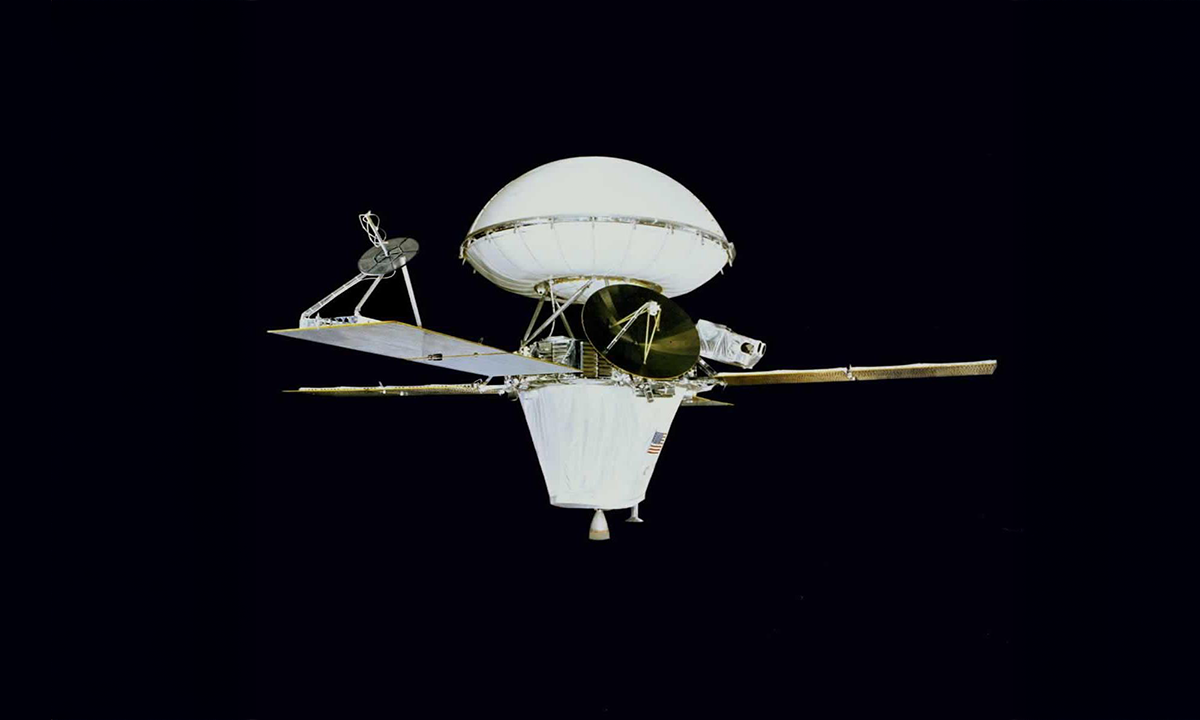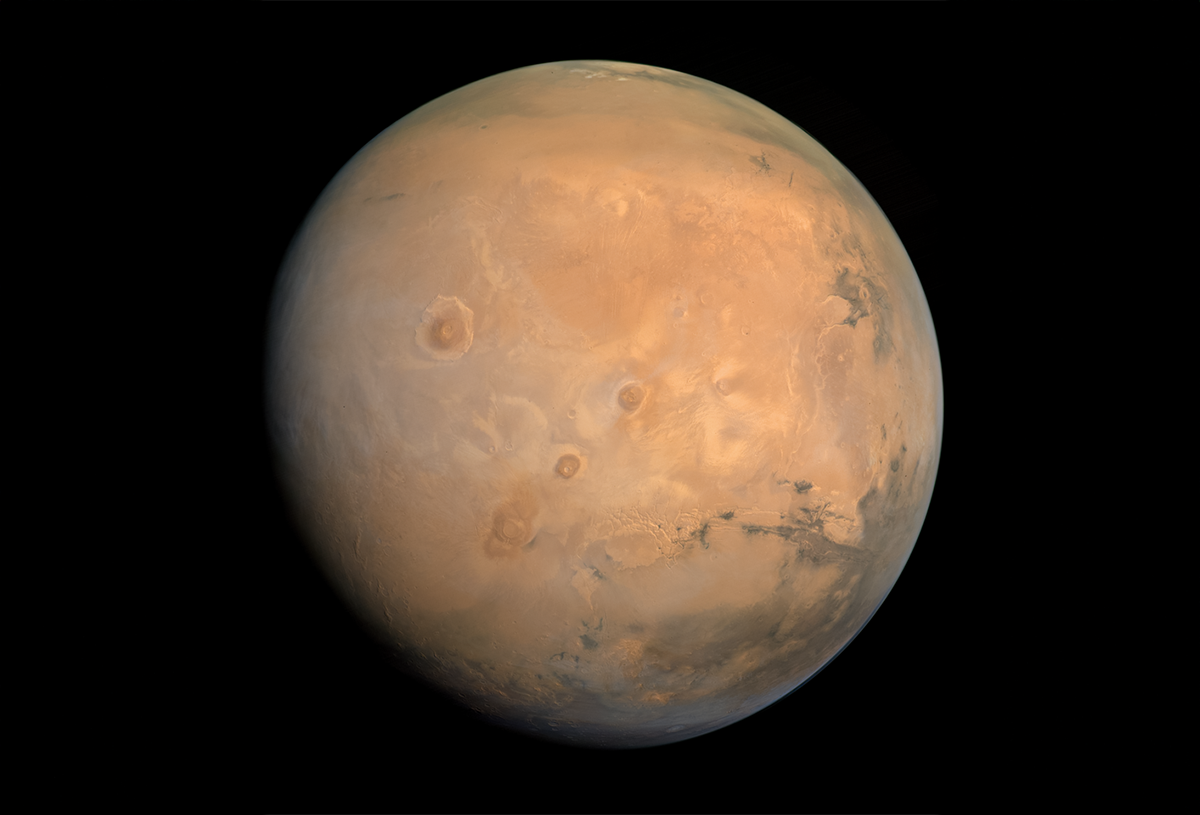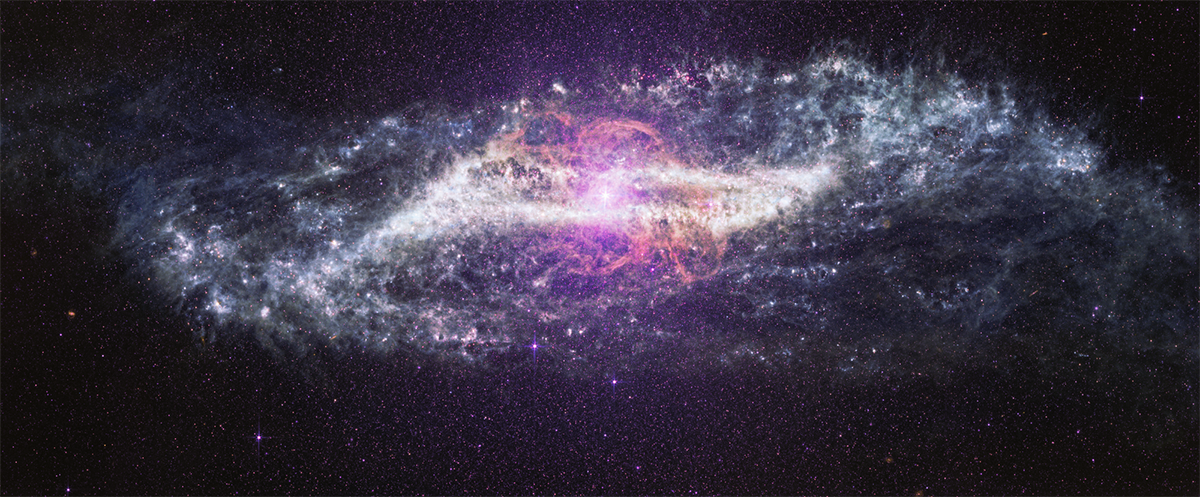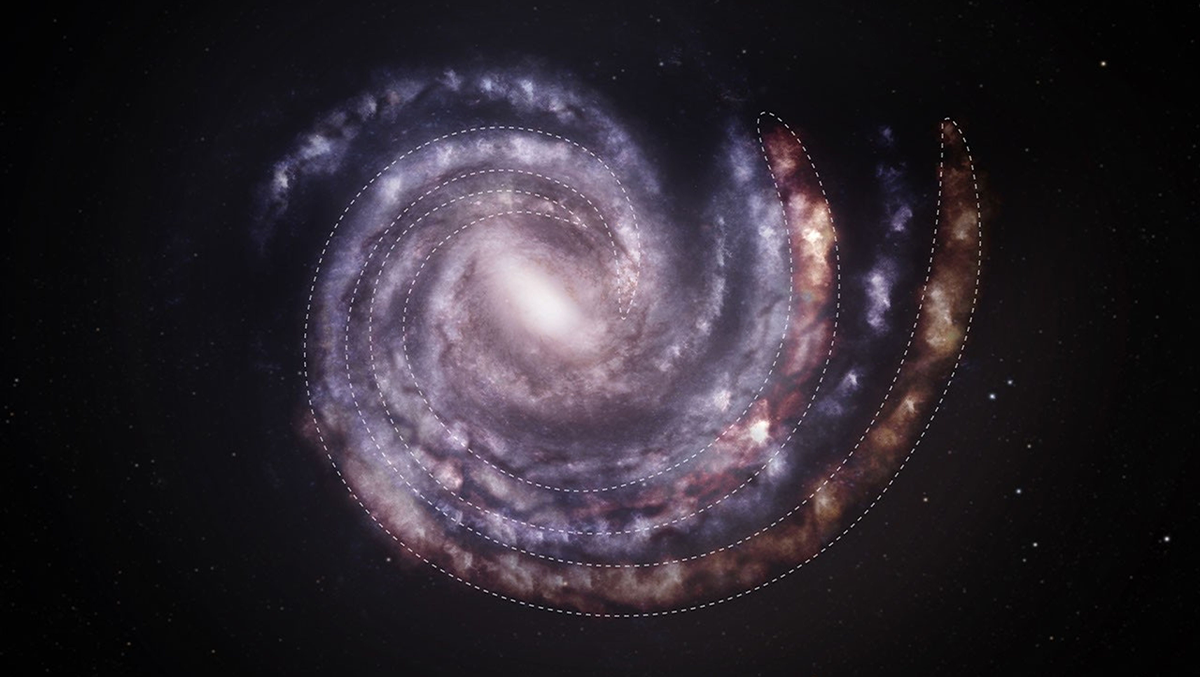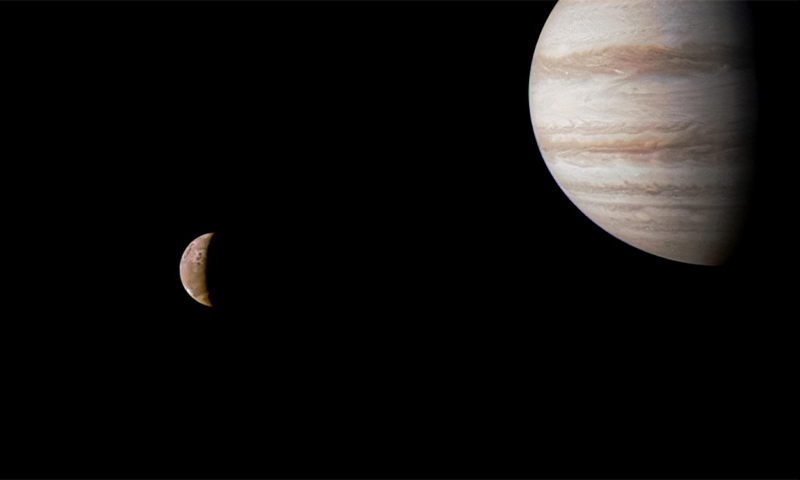
NASA’s mission to explore the origin and evolution of our solar system’s giant is 12 years old and still returning remarkable data and images. This July, the spacecraft Juno completed its 53rd flyby of Jupiter and captured the planet and its moon lo (above), one of Jupiter’s four large “Galilean” moons. (The latest total count of Jupiter moons is 95.) You wouldn’t know it by the placid image, but lo is the most volcanically active body in the known universe, NASA scientists tell us: It’s home to “hundreds of volcanoes, some erupting lava fountains dozens of miles high.” In September this year, Juno beamed back data from Jupiter’s North Pole region. The phantasmagoric image (below) pictures the intricate cloud formations and atmospheric features of the massive planet composed of mostly gases and liquids.
For the record, the image with the spacecraft Juno, below, is an artistic recreation. The image of Jupiter and lo is processed from a raw image taken by the JunoCam instrument, enhancing the contrast, color, and sharpness. The North Pole region image is an artistic recreation of data captured by JunoCam.