I’m in the business of small miracles,” said Ed Krupp, director of Griffith Observatory. “It’s a small miracle to turn visitors into observers, to put them eyeball to eyeball with the cosmos.”
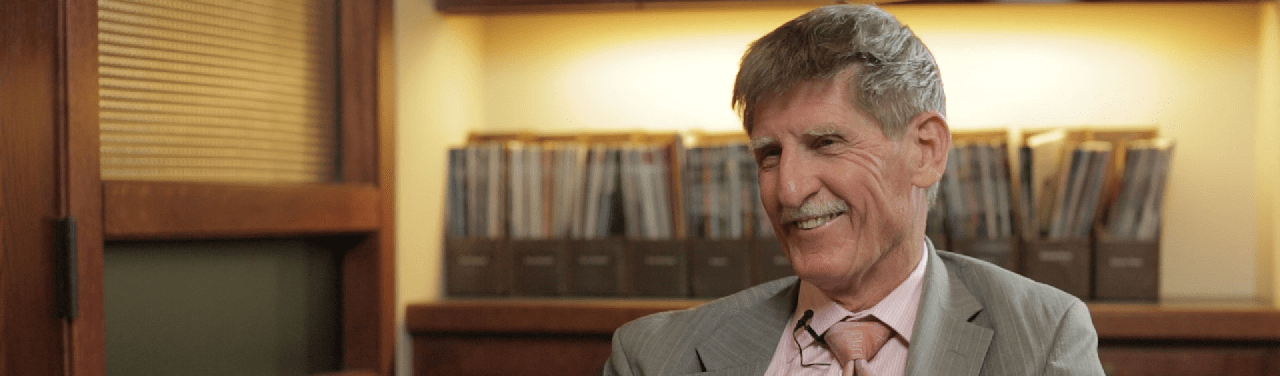
Few observatory directors have been performing small miracles as long as Krupp, 69, who this year is celebrating his 40th anniversary as director of the Los Angeles landmark. Seated in an administrative conference room in the observatory, perched atop Mount Hollywood, the metropolis sprawling outside his window, Krupp in conversation with Nautilus was ebullient, slightly sarcastic with a wonderful tendency to ramble. Central casting couldn’t find a better person to star in a movie about an eccentric and ingratiating astronomer than Krupp, who was wearing a pinstriped gray suit, pink shirt, and pink tie with a photo of Stonehenge on it.
Technically Krupp is an “archaeoastronomer.” (“Clearly it’s a word with too many vowels,” he said.) He specializes in ancient astronomy and has traveled the world studying archeological sites, such as Stonehenge, where ancient people created earthly monuments to the cosmos. In our accompanying interview, “When the Sky Explained Everything,” Krupp details what ancient cultures saw in the stars and planets, and how their observations gave birth to science and math. Here, in our video interview, Krupp gets personal about his passion for astronomy and heroes like Galileo. He explained for us how the “jig was up” for astrology 2,000 years ago, and what remains special about his job at the observatory.
What’s important about understanding ancient astronomy?
How do you think people in prehistoric times related to the night sky?
In ancient times, what was the relationship between astrology and astronomy?
Tell us about the “Hall of the Eye” at the Observatory.
You’ve said, “If Galileo had never pointed a telescope to the sky we wouldn’t have cell phones.” What did you mean?
How did you get involved in astronomy?
Were your parents scientists?
Where’s your favorite place to look at the stars?
Is there a dream of astronomy you would like to see realized?
If you weren’t a scientist, what would you be?