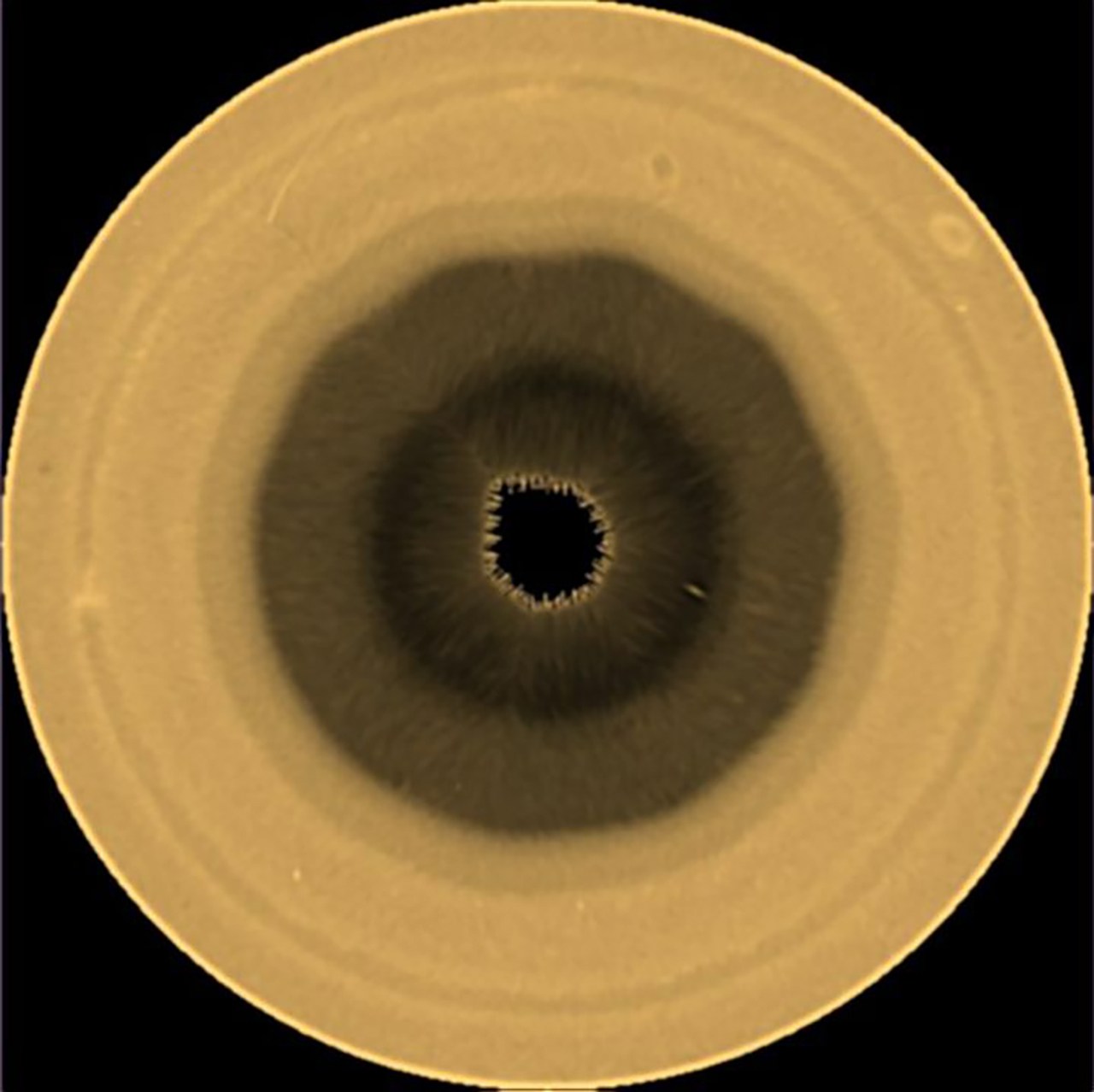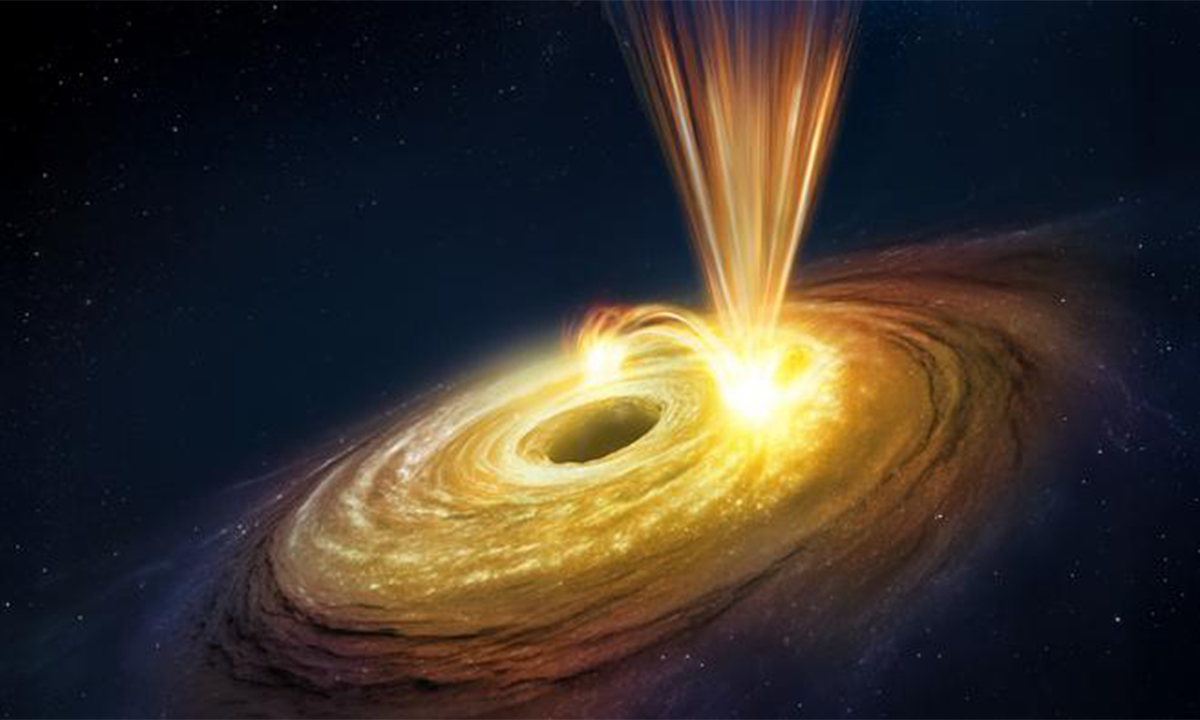
Deep in the heart of a spiral galaxy, 130 million light-years from Earth, lies a monster—a supermassive black hole 30 million times the mass of our sun. As this behemoth gobbles up matter, it casts off blasts of light and cosmic winds.
For the first time, astronomers were able to observe one of these explosions along with the blistering winds it generated, and the sheer scale of the phenomenon was almost unfathomable. The international team, led by Liyi Gu of the Space Research Organisation Netherlands, published their findings in Astronomy & Astrophysics.
Using X-ray telescopes from both NASA and the ESA, the scientists captured a sudden burst of light followed by cosmic winds blowing more than 130 million miles per hour—a fifth the speed of light. “We’ve not watched a black hole create winds this speedily before,” Gu said in a statement. “For the first time, we’ve seen how a rapid burst of X-ray light from a black hole immediately triggers ultra-fast winds, with these winds forming in just a single day.”
Read more: “Before There Were Stars”
The astronomers say the winds blasting from the black hole—which sits at the center of a spiral galaxy called NGC 3783—-resulted from its host galaxy’s active galactic nucleus (AGN) untwisting, creating a snarled magnetic field. The process is similar to the coronal mass ejections that occasionally erupt from the surface of the sun, but with one key difference. Our sun’s eruptions typically travel at only 3 million miles per hour—a snail’s pace compared to the blasts witnessed by the team.
Aside from showcasing the mind-boggling power of supermassive black holes, the researchers suggest this finding will help inform our understanding of how galaxies evolve. “Because they’re so influential, knowing more about the magnetism of AGNs, and how they whip up winds such as these, is key to understanding the history of galaxies throughout the universe,” said study co-author Camille Diez, an astrophysicist at the European Space Agency. 
Enjoying Nautilus? Subscribe to our free newsletter.
Lead image: European Space Agency (ESA)